Understanding Blue Light (Science Behind the Glow)
Understanding the impact of Blue Light and Eye Health is essential in an era where we spend 10+ hours in front of screens. In the modern digital landscape, few topics cause as much confusion and concern as Blue Light and Eye Health. We are constantly bombarded by warnings about the dangers of device screens, leading many to believe that the light emitted by our laptops and smartphones is actively destroying our eyes. But is the danger truly catastrophic, or is the reality far more nuanced? Securing your **Blue Light and Eye Health** is not about panic; it is about precision. The scientific consensus reveals that the most significant risks are not immediate retinal destruction, but rather chronic, low-grade issues: the acceleration of digital eye strain, the compounding of dry eye symptoms, and, most importantly, the profound disruption of our natural sleep-wake cycle (Circadian Rhythm).
Blue light belongs to the high-energy visible (HEV) spectrum with wavelengths between 380–500 nanometers.
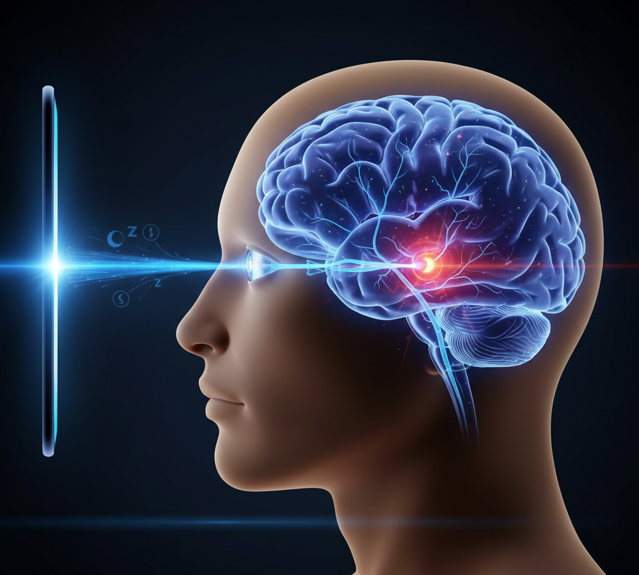
While natural blue light from the sun regulates our sleep-wake cycle, alertness, and mood, artificial blue light from digital screens (phones, monitors, LED lights) can cause visual fatigue and disrupt circadian rhythm.
In short:
- 🌞 Natural blue light = good for your biological rhythm.
- 💻 Artificial blue light = potentially harmful in excess.
GUNNAR Optiks Premium Glasses
The gold standard for maintaining Blue Light and Eye Health during long gaming or work sessions.
Check Price on Amazon →Myths vs. Facts about Blue Light
- ❌ Myth 1: Blue light is the main cause of blindness.
✅ Fact: No strong evidence links normal screen exposure directly to blindness. - ❌ Myth 2: Blue light glasses solve all eye problems.
✅ Fact: They help reduce strain but lifestyle changes are just as important. - ❌ Myth 3: Only young people/gamers need protection.
✅ Fact: Professionals, children, and seniors are equally at risk.
Immediate Impacts of Blue Light and Eye Health Disruption
- Digital eye strain: blurred vision, dryness, headaches.
- Sleep cycle disruption (melatonin suppression).
- Psychological fatigue (screen overload).
Quick Fatigue Check 🛡️
Are you suffering from Blue Light and Eye Health issues? Check all that apply:
Long-Term Risks (Debated & Under Research)
- Macular degeneration connection (what studies say).
- Possible retinal stress from cumulative exposure.
- Mental health and circadian rhythm effects.
💡 Did You Know?
Natural blue light from the sun helps regulate your body’s sleep–wake cycle, mood, and alertness — while artificial blue light from screens can disrupt it at night.
Proven Strategies for Protection
🖥️ Device Settings
Use Night Shift, Night Light, True Tone, or apps like f.lux and Iris to filter HEV light.
🕶️ Glasses & Filters
Modern blue light glasses come with anti-glare and UV filters.
You can also apply hardware or software screen filters.
💡 Ergonomic Adjustments
- Maintain screen at eye level, ~60 cm away.
- Keep room well-lit to reduce contrast.
- Adjust brightness to match ambient light.
🥗 Nutrition & Lifestyle
- Eat foods rich in lutein, zeaxanthin, and omega-3.
- Set screen-free hours before bedtime.
- Follow the 20-20-20 rule (every 20 minutes, look 20 feet away for 20 seconds).
Blue Light and Different Age Groups
- 👦 Children & Teens: Sensitive retinas, disrupted sleep cycles.
- 💻 Remote Workers: Long exposure post-pandemic increases digital strain.
- 🎮 Gamers: Extended night sessions heighten risk of visual fatigue.
- 👵 Seniors: Aging retinas and lens yellowing increase vulnerability.
Role of Employers & Schools
Forward-thinking companies now:
- Provide eye wellness programs.
- Install low blue light monitors.
- Encourage micro-breaks and digital hygiene.
Schools are adopting digital safety modules to teach children proper screen use.
Daily Habits Checklist for Eye Comfort
✅ Follow the 20-20-20 rule
✅ Stay hydrated and blink often
✅ Avoid screens 2 hours before sleep
✅ Maintain good indoor lighting
✅ Take eye breaks every hour
The Future of Blue Light Research & Technology
- 🖥️ OLED and E-Ink screens emit less harmful light.
- 🕶️ Smart glasses with adaptive filters are in development.
- 🔬 Ongoing research continues to separate myths from evidence.
❓ FAQ
Q1: Do I need blue light glasses if my phone has a filter?
A: Glasses offer extra protection, especially for long sessions or multiple screens.
Q2: Can blue light damage my eyes permanently?
A: Normal screen exposure doesn’t cause permanent damage, but prolonged unfiltered exposure may lead to strain or sleep disruption.
Q3: How many hours of screen time is “safe”?
A: Experts recommend limiting continuous screen time to 2 hours followed by a short break.
Q4: Can I reduce blue light naturally?
A: Yes — by spending time outdoors during daylight and maintaining a balanced diet rich in antioxidants.
Final Thoughts on Blue Light and Eye Health
Blue light isn’t inherently evil — it’s about balance, awareness, and smart habits. Protect your vision today to enjoy healthy eyes tomorrow.”
A Note from the Founder
"I started CVT because eye health is personal to me. After losing sight in my left eye due to a childhood injury and managing high intraocular pressure for decades, I’ve dedicated my life to finding the best ways to protect the vision we have. Every piece of advice on this site is researched with that same level of care and responsibility. Thank you for being here."