INTRODUCTION
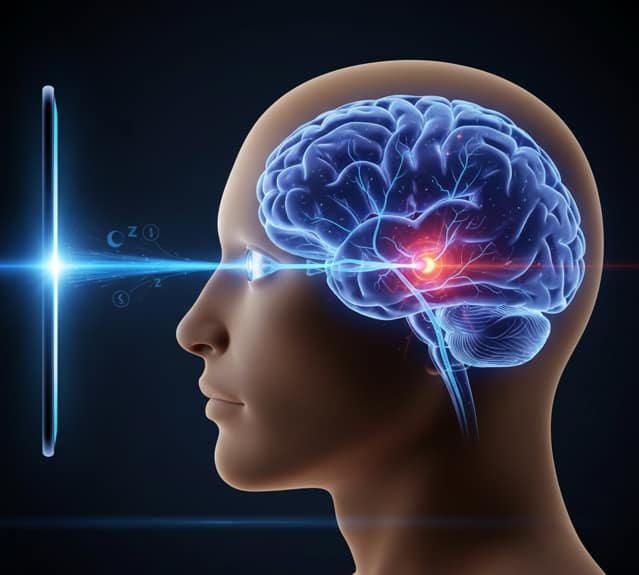
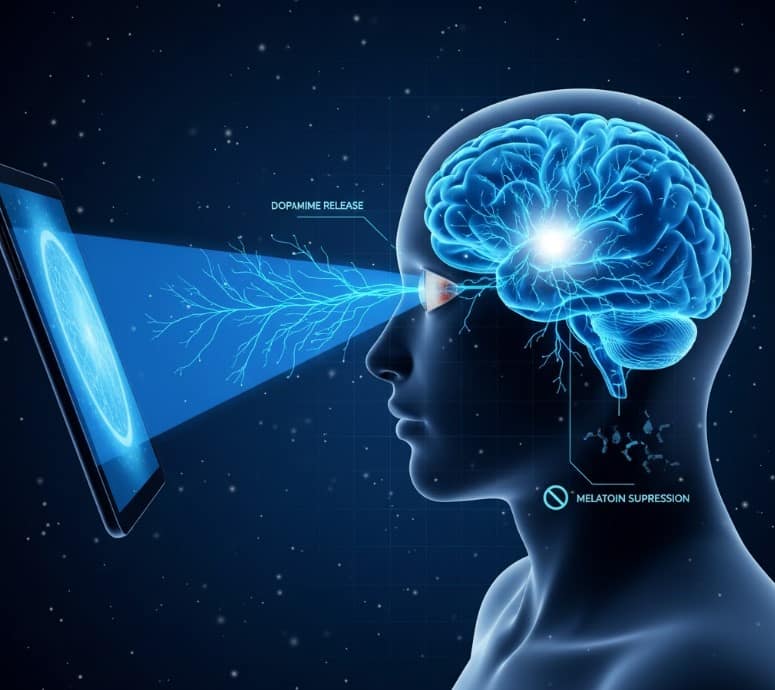
Blue light and the brain are more interconnected than most people realize. Every time you look at a screen—your phone, laptop, TV, or even LED lighting—you’re sending powerful biological signals directly to the visual system and, ultimately, to your brain’s circadian and cognitive centers.
In 2025, with average screen time reaching 8–11 hours per day, neurologists and eye doctors are warning about the rising effects of digital light exposure on vision clarity, sleep quality, hormone balance, neuroplasticity, mental focus, and even long-term neurological health.
This guide breaks down everything science really knows about how blue light interacts with your eyes and brain—and what you can do to protect yourself.
Featured Product: BenQ ScreenBar Halo

**The ultimate solution for digital eye strain.** The BenQ ScreenBar Halo effectively **reduces blue-light strain** and eliminates screen glare, improving focus without compromising your workspace lighting.
- ✅ Reduces harmful reflected glare
- ✅ Improves visual clarity and focus
- ✅ Auto-dimming for perfect brightness
1. What Exactly Is Blue Light? (And Why the Brain Responds to It)
Blue light is high-energy visible (HEV) light in the 400–500 nm wavelength range. It’s naturally present in sunlight, but today the largest sources are:
- Phone screens
- Laptop/desktop monitors
- LED and fluorescent bulbs
- Tablets
- Smart TVs
- Car dashboards
- VR headsets
What makes blue light different?
Blue wavelengths are biologically stimulating. They:
- Signal wakefulness
- Increase alertness
- Suppress melatonin
- Boost reaction time
- Influence emotional regulation
- Directly stimulate retinal ganglion cells
This means that your eyes are not just seeing blue light — your brain is reacting to it as a command.
2. How Blue Light Affects the Eyes Before It Reaches the Brain
Before blue light interacts with the brain, it passes through your eyes. And here’s where major visual problems begin:
2.1 Increased Digital Eye Strain
Blue light scatters more easily than other wavelengths, making it harder for the eye to focus on digital objects.
Symptoms include:
- Blurry vision
- Headaches
- Burning eyes
- Dryness
- Eye fatigue after short screen sessions
2.2 Reduced Blink Rate → Dry Eyes
Looking at screens reduces blinking by up to 60%, leading to evaporative dryness—one of the top causes of discomfort.
2.3 Retinal Oxidative Stress
Long-term exposure increases free radicals in retinal cells, contributing to inflammation.
2.4 Glare Sensitivity
Blue LEDs create strong glare, overstimulating the retinal cells and making bright screens uncomfortable in dark rooms.
All these visual pathways feed directly into the brain.
Blue light exposure after 10 PM suppresses melatonin **3× more** than daylight exposure and delays your sleep cycle by up to **90 minutes**.
3. Blue Light and the Brain: The Deep Biological Connection
This section uses your focus keyword prominently.
Your brain receives blue light signals from two unique retinal pathways:
3.1 The Visual Pathway (sight)
Light enters the eyes → retina → optic nerve → visual cortex.
This influences:
- Clarity
- Color perception
- Depth perception
- Visual processing
3.2 The Non-Visual Pathway (biological regulation)
This is the big one.
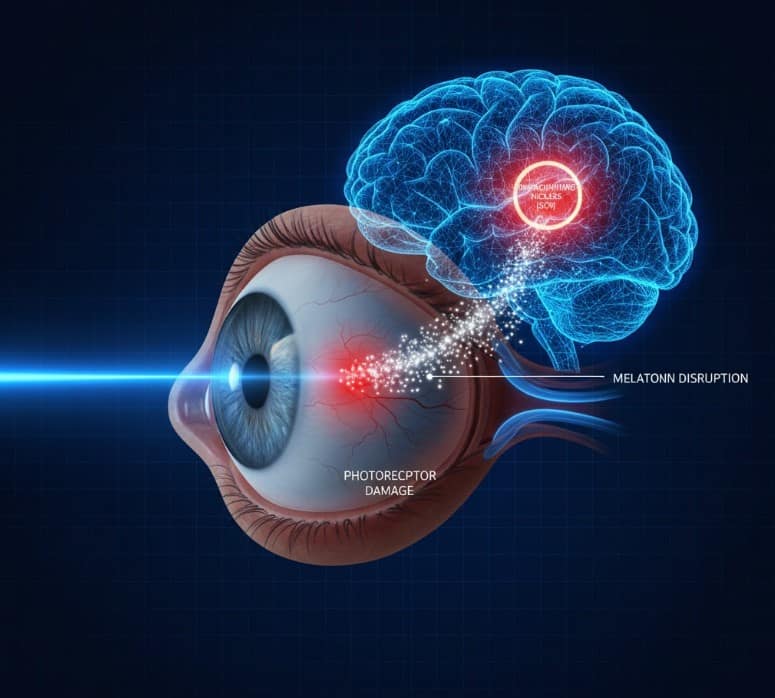
A special group of cells called intrinsically photosensitive retinal ganglion cells (ipRGCs) detect blue light and send signals to your suprachiasmatic nucleus (SCN)—the brain’s circadian clock.
This single pathway affects:
- Sleep cycles
- Melatonin production
- Blood pressure
- Heart rate
- Hormonal rhythms
- Cognitive performance
- Emotional regulation
Blue light and the brain are linked through this non-visual system.
And this is where nighttime screen use becomes a problem.
4. How Blue Light Disrupts Sleep and Hormones
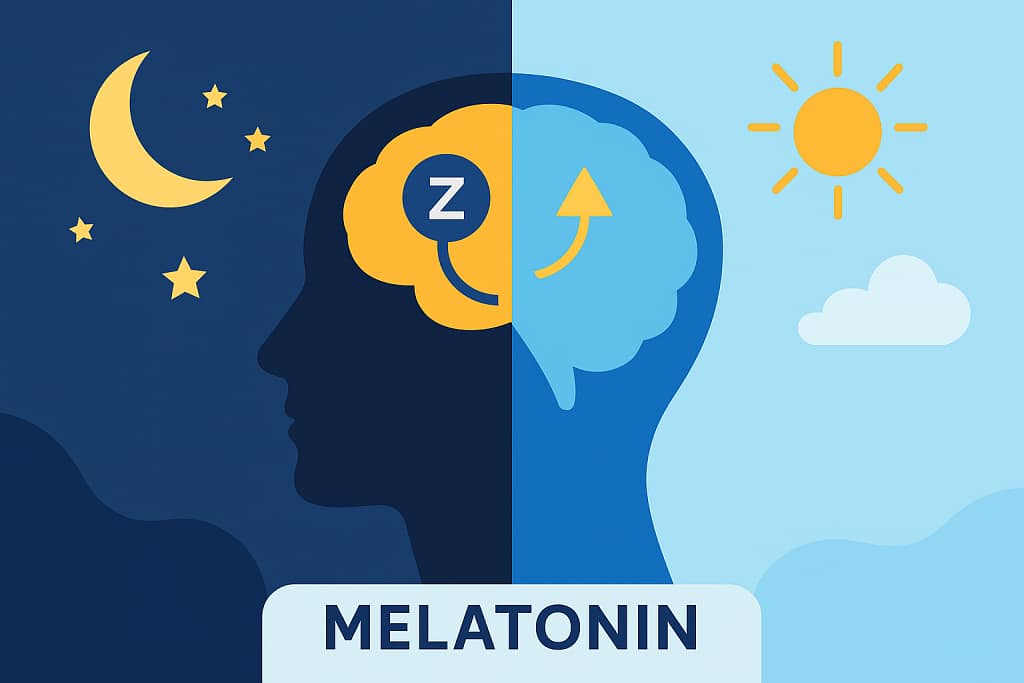
Blue light is the strongest suppressor of melatonin—your sleep hormone.
4.1 Using screens after 7–8 PM delays melatonin
Research shows even 15 minutes of screen time at night can delay melatonin by up to 40%.
4.2 Nighttime exposure → circadian disruption
Your brain believes it’s still daytime.
You stay alert.
You fall asleep later.
Your sleep becomes shallower.
4.3 Symptoms of circadian misalignment
- Difficulty falling asleep
- Morning fatigue
- Low mood
- Irritability
- Foggy brain
- Poor stress tolerance
4.4 Long-Term Risks
- Anxiety
- Depression
- Insulin resistance
- Weight gain
- Increased inflammation
5. Blue Light and Cognitive Performance: The Neuro-Visual Link
This is one of the most interesting areas of neuroscience.
5.1 Blue light boosts daytime cognitive performance
In the morning and afternoon, blue light can:
- Increase alertness
- Improve reaction time
- Enhance working memory
- Boost mental stamina
- Strengthen focus
5.2 But blue light harms nighttime performance
If used after 8 PM:
- Reduces concentration
- Impairs decision-making
- Increases mental fatigue
- Lowers creativity
- Triggers headaches
5.3 Blue Light → Dopamine Effects
Studies show blue light increases dopamine signaling in the retina.
This is why screens feel:
- Stimulating
- Addictive
- Rewarding
Your brain actually craves more.
6. Emotional & Neurological Consequences of Excessive Blue Light
6.1 Mood Disorders
Late-night screen exposure is linked to:
- Anxiety spikes
- Overthinking
- Stress hormone surges
- Emotional instability
6.2 Memory and Learning
Chronic blue light exposure reduces hippocampal neuroplasticity.
6.3 Eye-Brain Fatigue Loop
Eye strain → Brain strain → Reduced focus → More errors → Irritation → More screen use.
A self-perpetuating cycle.
6. Emotional & Neurological Consequences of Excessive Blue Light
6.1 Mood Disorders
Late-night screen exposure is linked to:
- Anxiety spikes
- Overthinking
- Stress hormone surges
- Emotional instability
6.2 Memory and Learning
Chronic blue light exposure reduces hippocampal neuroplasticity.
6.3 Eye-Brain Fatigue Loop
Eye strain → Brain strain → Reduced focus → More errors → Irritation → More screen use.
A self-perpetuating cycle.
7. Blue Light and Children’s Brain Development
Children’s eyes let more blue light reach the retina.
This impacts:
- attention
- sleep
- emotional stability
- learning performance
- visual development
Evening screen exposure = the most harmful.
8. Practical Ways to Protect Your Eyes & Brain from Blue Light
8.1 Reduce screen brightness by 20–30% at night
8.2 Use warm-tone lighting after sunset (≤ 2700K)
8.3 Install blue-light filters (Night Shift, Night Mode)
8.4 Wear high-quality blue-light glasses
8.5 Take 20-20-20 breaks every 20 minutes
8.6 Keep screens at eye level or slightly below
8.7 Avoid screens 90 minutes before sleep
8.8 Use a monitor light bar (reduces glare)
9. Who Is Most Affected?
- Office workers
- Gamers
- Students
- Night-shift workers
- Programmers
- Drivers at night
- People with migraines
- People with dry eyes
10. Blue Light Myths vs. Facts
Myth: Only phone screens cause damage
Fact: LEDs in your home emit as much blue light as laptops.
Myth: Blue light glasses “block all blue light”
Fact: They block harmful wavelengths, not the healthy daytime ones.
Myth: Blue light causes blindness
Fact: It contributes to digital strain, not irreversible damage.
11. FAQs
1. Does blue light harm the brain directly?
Yes — it influences circadian regulation, hormone cycles, neurotransmitters, and cognitive performance.
2. Can blue light cause headaches?
Absolutely. It increases glare, overstimulates the retina, and can trigger migraines.
3. Does blue light affect mood?
Yes. Night exposure increases cortisol and reduces melatonin, creating anxiety-like responses.
4. Do blue light glasses really work?
They reduce digital strain, improve comfort, and support melatonin production at night.
5. What color temperature is best at night?
Warm 1800–2700K lighting supports natural melatonin cycles.
12. Conclusion
The connection between blue light and the brain is undeniable: screens reshape how we sleep, think, focus, and even regulate our emotions. The goal isn’t to avoid technology, but to use it intelligently. By adjusting lighting, using filters, managing timing, and protecting your vision, you support not only healthier eyes — but a healthier brain.
A Note from the Founder
"I started CVT because eye health is personal to me. After losing sight in my left eye due to a childhood injury and managing high intraocular pressure for decades, I’ve dedicated my life to finding the best ways to protect the vision we have. Every piece of advice on this site is researched with that same level of care and responsibility. Thank you for being here."

