Introduction: The Invisible Cost of Our Digital Life
We live in a digital-first world. From the moment we wake up until we close our eyes at night, screens are our constant companions. However, the average adult now spends more than 7 to 9 hours per day staring at pixels.
This prolonged exposure has triggered a global health crisis: Digital Eye Strain (DES), also known as Computer Vision Syndrome (CVS). It’s not just “tired eyes”—it’s a complex condition that affects your productivity, sleep quality, and long-term ocular health.
In this updated guide, we dive deep into the biological causes of DES and provide a proven roadmap to protect your vision without giving up your digital lifestyle.
Did you know? 💡 Over 70% of office workers report symptoms of Digital Eye Strain, ranging from headaches to blurred vision.
In this comprehensive guide, we’ll cover:
- The causes of Digital Eye Strain
- The most common symptoms
- Proven prevention strategies backed by research
- Expert product recommendations to protect your vision

1. The Science: What Actually Happens to Your Eyes?
Most people think their eyes are just “tired,” but the biology is more specific:
- Muscle Fatigue (Accommodative Stress): Your eyes have tiny muscles (ciliary muscles) that must constantly contract to focus on near objects like screens. Keeping them contracted for hours is like holding a dumbbell at arm’s length—eventually, they fail and cause “heaviness.”
- The “Blink Gap”: Normally, we blink 15-20 times per minute. When staring at a screen, that rate drops to 5-7 times. This causes the tear film to evaporate, leaving your cornea exposed to air and irritation.
- Blue Light & Circadian Rhythm: High-energy visible (HEV) light from screens mimics daylight. Using screens at night tricks your brain into stopping melatonin production, leading to chronic insomnia.
What is Digital Eye Strain (Computer Vision Syndrome)?
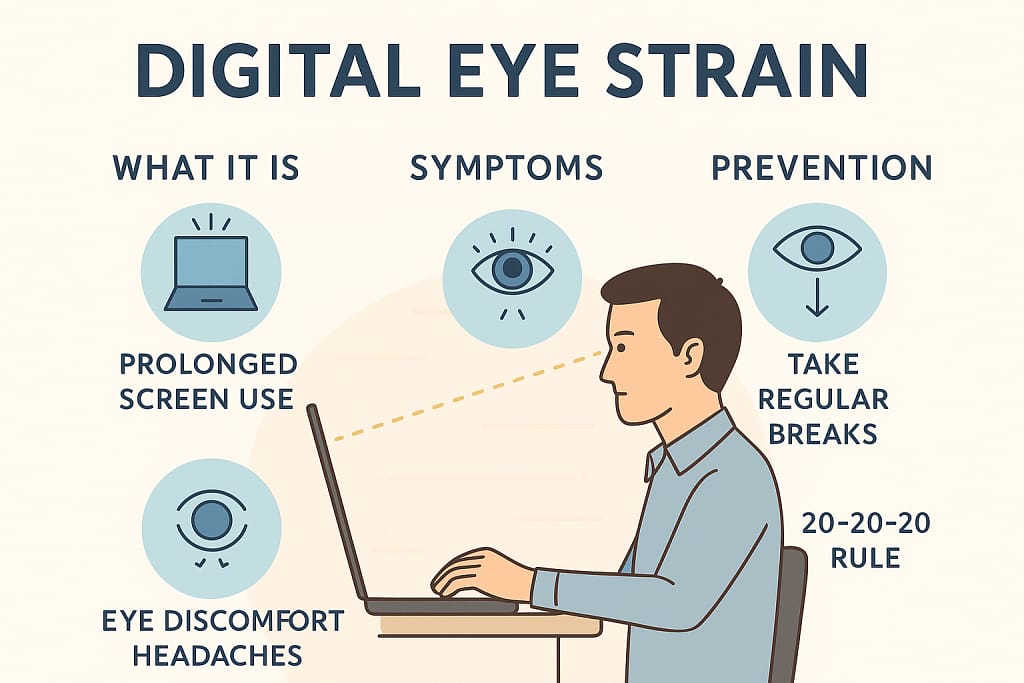
Digital Eye Strain is a collection of vision-related problems caused by extended use of digital devices like computers, smartphones, tablets, and gaming consoles. Unlike traditional eye fatigue, DES combines visual, muscular, and neurological strain.
Remember: Digital Eye Strain doesn’t cause permanent blindness, but if left unmanaged, it can worsen existing vision conditions like myopia, astigmatism, and presbyopia.
Causes of Digital Eye Strain
1. Blue Light Exposure
Screens emit high-energy blue light that contributes to fatigue, sleep disruption, and long-term retinal stress.
2. Reduced Blinking
While focused on screens, blinking rate drops by up to 60%, leading to dryness and irritation.
3. Poor Ergonomics
Wrong screen distance, poor posture, and bad lighting cause strain in the eyes, neck, and shoulders.
4. Extended Screen Time
Working or gaming for hours without breaks puts excessive stress on eye muscles.
5. Uncorrected Vision Issues
Mild astigmatism or presbyopia can significantly increase Digital Eye Strain symptoms.
Symptoms of Digital Eye Strain
Common symptoms include:
- Dry, red, or burning eyes
- Blurred or double vision
- Headaches (especially after long screen use)
- Eye fatigue or heaviness
- Neck and shoulder pain
- Difficulty focusing between near and far objects
- Sleep disruption
If you are experiencing multiple symptoms daily, it is crucial to look at the bigger picture. We have created a comprehensive Digital Eye Strain Hub where we deep dive into every aspect of computer vision syndrome, from advanced medical treatments to full environmental setups. This resource is designed to be your permanent home for eye health management.
Useful Tip: If you regularly work on screens, track your symptoms in a daily log. This helps identify patterns and triggers.
Proven Prevention Tips & Solutions
1. Apply the 20-20-20 Rule
Every 20 minutes, look at an object 20 feet away for at least 20 seconds. This relaxes eye muscles.
2. Optimize Screen Setup
- Keep monitor 20–28 inches away
- Position screen slightly below eye level
- Use anti-glare filters and proper room lighting
3. Use Artificial Tears
Frequent use of preservative-free eye drops prevents dryness.
4. Wear Blue Light Glasses
Filters harmful blue light, reducing eye fatigue and improving sleep.

Gunnar Optiks – Best for Gamers & Pros
- ✅ Patented Lens: Filters 65% of harmful blue light.
- ✅ Dry Eye Protection: Wraparound design keeps moisture in.
- ✅ Reduced Glare: High-contrast amber tint for focus.
5. Adjust Digital Settings
- Use dark mode or night filters
- Increase text size and contrast
- Match screen brightness to room light
6. Improve Nutrition & Hydration
Eat foods rich in lutein, zeaxanthin, omega-3s, and vitamin A.
7. Try Eye Exercises
Practice eye yoga, palming, and focusing drills to relax strained muscles.
Frequently Asked Questions (FAQ)
Q1: Can Digital Eye Strain cause permanent vision loss?
A: No, but it can worsen existing issues if untreated. Prevention is key.
Q2: Do children suffer from Digital Eye Strain?
A: Yes, especially due to online learning and gaming. Pediatric eye exams are recommended.
Q3: How long does Digital Eye Strain last?
A: Symptoms typically improve after resting your eyes but can last hours or even days if strain is chronic.
Q4: What’s the fastest way to relieve Digital Eye Strain?
A: Use artificial tears, take frequent breaks, and apply a warm compress.
Q5: Do blue light glasses really help?
A: Yes, they reduce glare, improve contrast, and prevent sleep disruption.
Key Takeaway
Digital Eye Strain (Computer Vision Syndrome) is no longer just a workplace issue — it affects students, professionals, and gamers alike. In 2025, your visual health is your primary currency. Whether you are a trader, a developer, or a gamer, your performance depends on how well you treat your eyes. Don’t wait for chronic pain to start—implement the 20-20-20 rule, optimize your hydration, and invest in quality protective gear today.
Remember: By applying the 20-20-20 rule, improving ergonomics, using protective eyewear, and nourishing your eyes, you can drastically reduce symptoms and protect your vision.
Our Top Pick for Instant Relief
For the best protection against digital strain in 2025, we recommend starting with Systane Complete PF – the gold standard in eye hydration.
Get It on Amazon →Did you know? 💡 Your eyes account for over 80% of the information you process daily — keeping them healthy means protecting your entire quality of life.
A Note from the Founder
"I started CVT because eye health is personal to me. After losing sight in my left eye due to a childhood injury and managing high intraocular pressure for decades, I’ve dedicated my life to finding the best ways to protect the vision we have. Every piece of advice on this site is researched with that same level of care and responsibility. Thank you for being here."

