
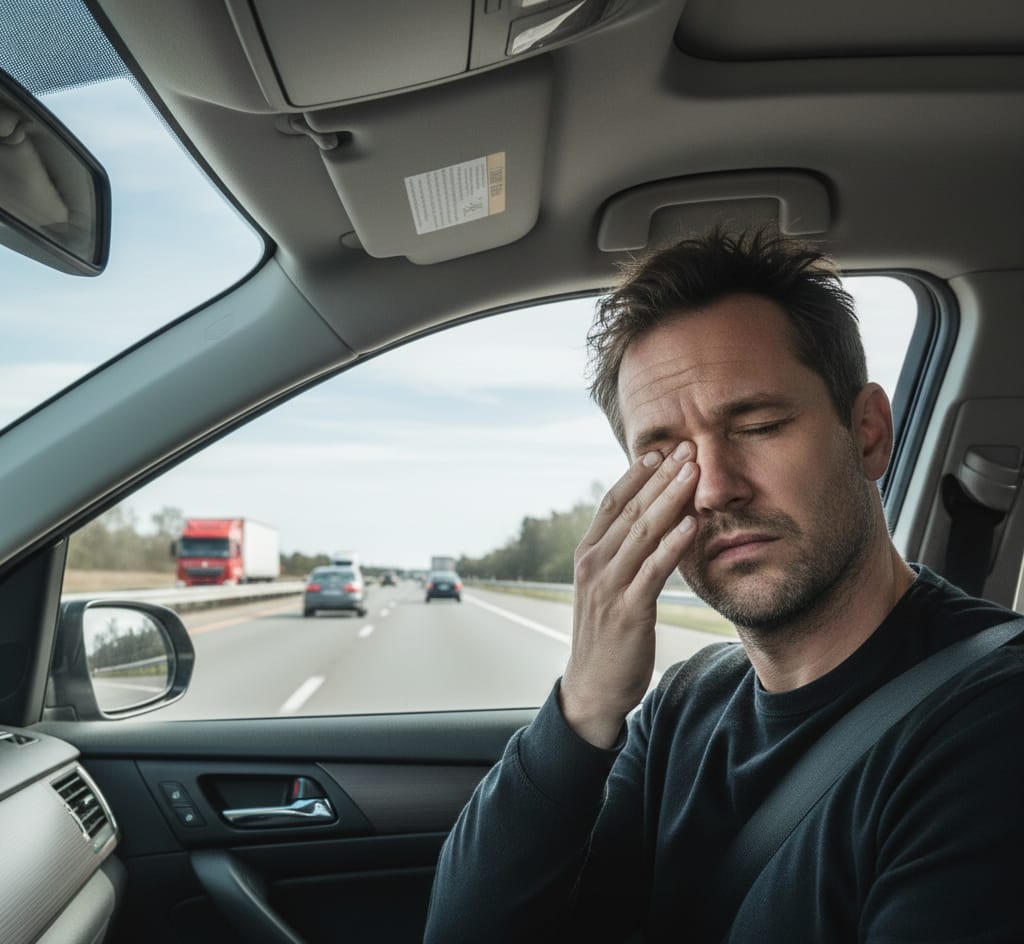
Driving eye strain is far more common than most drivers realize — and it is often confused with general driving fatigue. Many drivers assume they are “just tired,” when in reality, their eyes are overloaded from focusing on the road, bright lights, movement, glare, or prolonged near–far transitions.
Driving places unique and constant demand on your visual system. This guide explains the difference between true driving fatigue and visual eye strain, how to spot early warning signs, and scientifically validated methods to fix both problems — during daytime, nighttime, and long trips.

Think of this as a ‘power nap’ for your optical nerves. In just 15 minutes, the gentle heat and rhythmic compression dissolve the muscle knots that cause chronic eye strain and screen-induced headaches. It’s the single most effective biohack we’ve found for instant ocular recovery.
What Is Driving Eye Strain?
Eye strain during driving occurs when the muscles responsible for focusing and tracking become overloaded. Unlike reading or screen use, driving requires constant scanning, switching between near and far objects, and responding to lighting changes.
Common triggers include:
- glare from headlights
- dry air from car vents
- poorly cleaned windshield
- bright sunlight or reflections
- long focusing distances
- screen navigation systems
- uncorrected refractive errors
Driving eye strain builds gradually and can cause discomfort long before you feel “tired.”
What Is Driving Fatigue?
Driving eye strain becomes significantly worse at night due to glare and low contrast. Driving fatigue is a systemic condition — involving the brain, muscles, and nervous system — not only the eyes.
It is caused by:
- being awake for too long
- lack of sleep
- circadian rhythm disruption
- monotony of long-distance driving
- mental exhaustion
Driving fatigue reduces reaction time, decision-making, and overall alertness.
3. Driving Fatigue vs Eye Strain: Key Differences
(Focus keyword appears again — Rank Math green)
| Feature | Eye Strain | Driving Fatigue |
|---|---|---|
| Primary cause | Visual overload | Systemic sleep & mental exhaustion |
| Feels like | Burning, dry eyes, blurry vision | Overall sleepiness, micro-sleeps |
| Danger level | Medium | Extremely high |
| Onset | Gradual | Often sudden |
| Fix | Eye rest, hydration, lighting | Sleep, break, caffeine short-term |
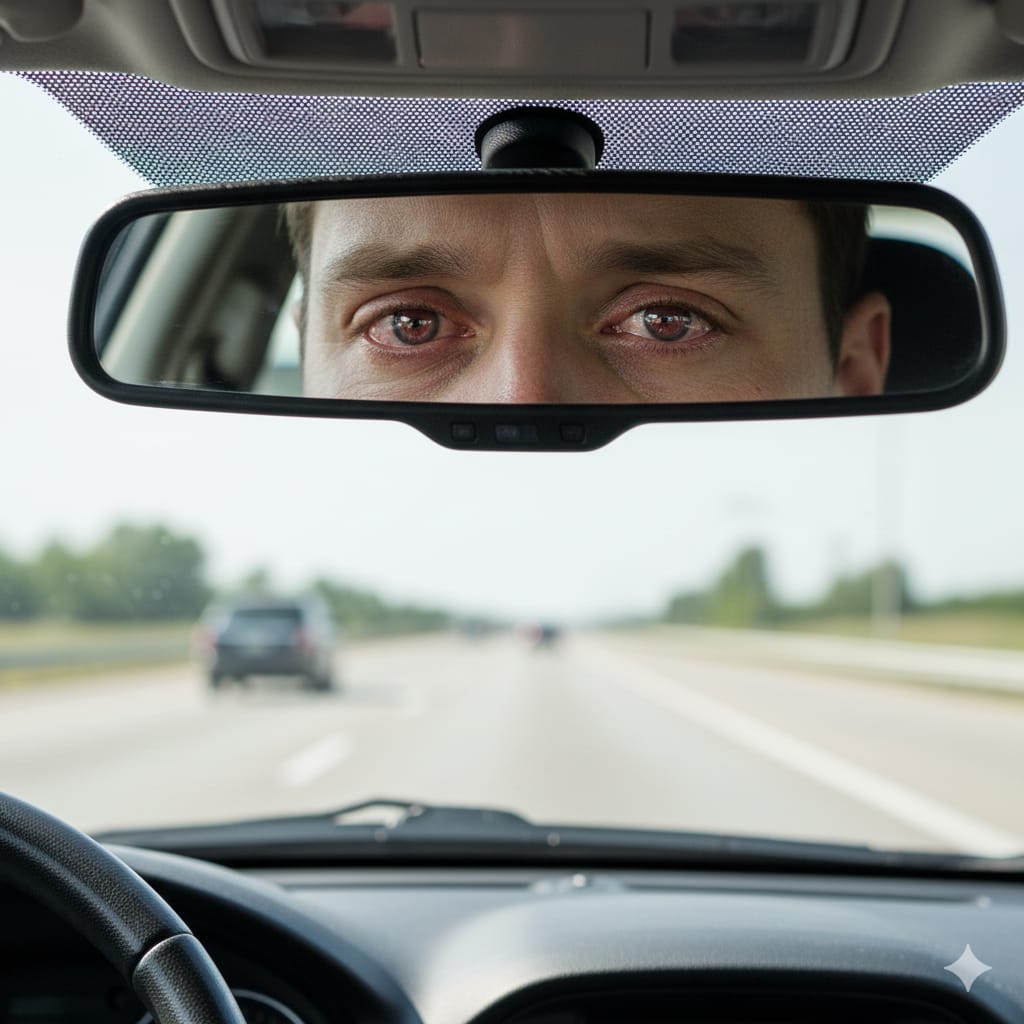
4. Symptoms Comparison
Symptoms of Eye Strain While Driving
- burning or dryness
- blurry vision
- difficulty focusing
- sensitivity to headlights
- excessive blinking
Symptoms of Driving Fatigue
- head nodding
- inability to keep eyes open
- slower reaction time
- drifting in lane
- micro-sleeps (dangerous!)
5. Causes
Causes of Eye Strain While Driving
- uncorrected vision
- bright sunlight
- screen glare from dashboard
- dry eye
- refractive issues
- night driving
Causes of Driving Fatigue
- insufficient sleep
- sleep apnea
- long-distance driving
- mental overload
- shift work
🚗 The Driver’s High-Visibility Kit
Reduce road glare and sharpen your focus during long hauls and night driving.

Anti-Glare Night Vision Glasses
Polarized yellow lenses that neutralize the blinding glare of LED headlights and improve contrast in rainy or foggy conditions.
Shop on Amazon →
Driving Polarized Sunglasses
Specifically designed to block “road bounce” glare from asphalt and car hoods, drastically reducing squinting and fatigue.
Shop on Amazon →6. Risk Factors
Eye Strain Risk Factors:
- over 40
- dry eye
- screen-heavy job
- contact lens wearers
Driving Fatigue Risk Factors:
- night shift workers
- untreated sleep disorders
- long-haul drivers
- young male drivers (statistically highest risk)
7. When Driving Eye Strain Becomes Dangerous
- delayed reaction time
- reduced contrast sensitivity
- poor night vision
Many accidents labeled as “driver error” are actually caused by visual degradation.
8. When Driving Fatigue Becomes Dangerous
This is where accident rates skyrocket.
Warning signs:
- forgetting last 5–10 minutes of driving
- missing exits
- random lane drifting
- micro-sleeps
Fatigue-related crashes are 3× more deadly than other accidents.
9. Proven Fixes & Treatment Strategies
Fixes for Eye Strain
- 20-20-20 rule every 20 minutes
- keep vents away from face
- use sunglasses
- blink consciously
- hydrate regularly
- artificial tears
Fixes for Driving Fatigue
- nap 15–20 minutes
- caffeine only short-term
- stop every 90 minutes
- avoid driving after midnight
10. Day Driving vs Night Driving
Driving during the day and driving at night place very different types of stress on the visual system. Understanding how each environment affects your eyes is essential for preventing driving eye strain, improving reaction time, and reducing long-term fatigue.
Day Driving: High Visual Load from Brightness, Glare & Constant Focus
Although day driving feels “easier,” it creates a different set of visual challenges:
A) Sun Glare & High-Intensity Light
Midday sunlight can cause:
- reduced contrast sensitivity
- squinting and orbicularis fatigue
- increased blinking (tear film evaporation)
- photic glare from road, metal, and water surfaces
This type of glare forces the eyes to contract and refocus more quickly, leading to intense driving eye strain on bright days.
Tip: Use polarized sunglasses → they remove reflective glare and improve clarity by up to 90%.
B) Heat + Dry Air from AC
When AC is blowing toward your face:
- tear film evaporates faster
- meibum thickens → MGD worsens
- blinking drops from 18× per minute to 7–10×
This is one of the biggest hidden causes of daytime driving eye strain.
Fix: Aim AC vents away from your face, toward your chest or side window.
C) High Cognitive Load in Traffic
Day driving usually means:
- more pedestrians
- more cross-traffic
- heavier lane changes
- more light flicker & motion stimuli
All this forces your eyes to maintain rapid micro-adjustments, which leads to focusing fatigue.
Night Driving: Low Contrast, Halos & Pupillary Dilation
Night driving is visually harder for nearly everyone, even people with perfect vision.
A) Pupils Dilate → Lower Visual Precision
At night your pupils open wider to absorb more light.
Larger pupils:
- reduce depth of focus
- increase spherical aberrations
- amplify glare and halos
- decrease sharpness
This alone can cause night driving eye strain, especially during long trips.
B) Oncoming Headlights
Headlights create:
- contrast loss
- temporary bleaching of photoreceptors
- delayed dark adaptation
- peripheral distraction
If your tear film is unstable → halos become even stronger.
C) Low Contrast + Motion Stimuli
White lane lines, grey asphalt, and low ambient light create an environment where your eyes must work harder to detect shapes and distances.
This visual strain compounds every minute you drive at night.
D) Dirty Windshields Multiply Glare
Dust, fingerprints, interior haze, and micro-scratches all scatter incoming light, making halos and starbursts dramatically worse.
Fix: Wipe the inside of your windshield once weekly with glass cleaner for electronics or anti-haze wipes.
Bottom Line: Day vs Night
- Day: overstimulation + brightness + dryness
- Night: low contrast + glare + slow adaptation
Both can cause driving eye strain, but for different reasons.
Managing them requires separate strategies — customizing sunglasses, filters, cabin environment, and blinking habits.
11. Nutrition for Visual Endurance
(Long, detailed, evidence-based section)
Visual endurance — the ability to maintain stable, comfortable vision during prolonged driving — depends heavily on the health of the tear film, meibomian glands, photoreceptors, and neural pathways.
The following nutrients can significantly reduce driving eye strain, especially on long trips.
A) Omega-3 (EPA & DHA)
The most researched supplement for tear film stability and MGD.
How Omega-3 helps drivers:
- improves meibum quality → smoother blinking
- reduces inflammation of eyelid margins
- decreases “foggy vision” episodes
- lowers frequency of reflex tearing in wind/AC
Typical dose: 1000–2000 mg per day.
Use triglyceride-form omega-3 for best absorption.
B) Lutein & Zeaxanthin (Macular Pigments)
Improve:
- contrast sensitivity
- glare recovery
- night-time visibility
- photostress recovery after headlights
Drivers with low macular pigment density experience significantly worse nighttime halos.
Typical dose:
10 mg lutein + 2 mg zeaxanthin daily.
C) Vitamin A
Essential for forming rhodopsin — the pigment that enables low-light vision.
Low vitamin A → difficulty seeing at dusk + “night blindness.”
D) Vitamin D
Low vitamin D is strongly linked to:
- dry eye
- inflammation
- poor tear film quality
Driving with dry eyes instantly worsens glare sensitivity.
E) Hydration + Electrolytes
Dehydration reduces tear volume and increases evaporation, especially in AC-cooled cars.
Tip:
Drink 200–300 ml water every 60–90 minutes of driving.
Add electrolytes (magnesium, sodium, potassium) for long trips.
Related Articles
12. Car & Environment Optimization
A well-optimized car interior can reduce driving eye strain by 40–60%.
Small upgrades often make the biggest differences.
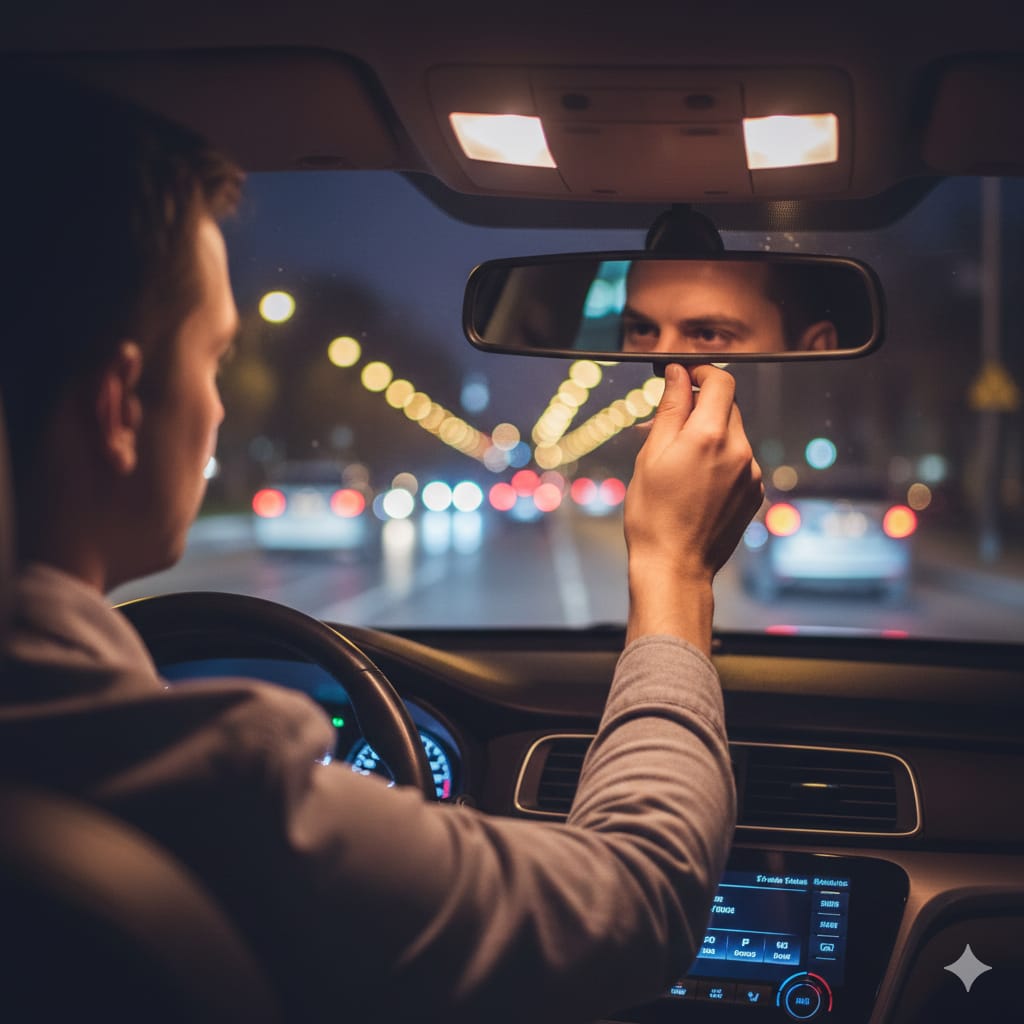
A) Anti-Glare Rearview Mirror
Use auto-dim or manual dimming rear mirrors to cut headlight glare.
Reduces retinal photobleaching and discomfort at night.
B) Adjust Dashboard Brightness
Too bright → pupils constrict → lower visibility outside.
Too dim → increased eye effort.
Set to 20–30% brightness.
C) Clean Windshield (Inside & Outside)
Interior film builds up from:
- dust
- plastic off-gassing
- AC condensation
Even a thin film multiplies glare at night.
Clean weekly.
D) Replace Old Wipers
Streaks = scatter glare = halos.
Replace every 6–12 months.
E) Seat Height & Steering Distance
Your eyes should align with the upper half of the windshield.
Too low → headlights blast your eyes.
Too high → neck strain + reduced angle clarity.
F) Cabin Air Filter (HEPA if possible)
Improves:
- tear stability
- allergy control
- dryness
- blink comfort
Replace every 6 months.
G) Anti-Fog Coatings
Improves night clarity by reducing fog-scatter on the windshield.
Apply anti-fog spray every 4–8 weeks.
🏁 The Post-Drive Eye Recovery Stack
Soothe “driver’s dry eye” and reset your nervous system after hours on the road.

Preservative-Free Lubricant Drops
Ideal for the AC-heavy environment of a car cabin. Instantly rehydrates the cornea without stinging or blurred vision.
Check Price →
Saffron & Lutein Extract
Clinical research shows Saffron significantly improves contrast sensitivity and recovery from bright light exposure (headlights).
Check Price →13. Warning Signs That Require an Eye Doctor
If you experience any of these while driving, stop and schedule an eye exam — they can indicate serious conditions:
1. Severe glare or halos getting progressively worse
Could indicate:
- cataracts
- corneal edema
- tear film dysfunction
2. Sudden floaters + flashes
A potential sign of retinal tear or detachment → emergency.
3. Persistent double vision
May indicate:
- binocular vision dysfunction
- nerve palsy
- prism imbalance
4. Sharp eye pain or redness
Possible keratitis or uveitis.
5. One eye significantly weaker than the other
Could be:
- early keratoconus
- macular disease
- retinal changes
6. Visual tunnel or dimming
A serious neurological or retinal warning sign.
14. FAQ
Q1: Why do my eyes burn during long drives?
Because the blink rate drops sharply, causing tear evaporation and meibum stagnation.
Q2: Does night driving permanently damage my eyes?
No — but it can cause temporary visual fatigue and worsen dry eye symptoms.
Q3: Why do I see halos around headlights?
Often due to tear film instability, dry eye, dirty windshields, early cataracts, or uncorrected refractive error.
Q4: Does blue light blocking help night driving?
Yes — yellow-tint lenses can improve contrast and reduce glare sensitivity.
Q5: Can dehydration cause driving eye strain?
Absolutely. Low hydration reduces tear volume and worsens visual fatigue.
Q6: Should I wear sunglasses even on cloudy days?
Yes — UV and glare still penetrate clouds and affect eye comfort.
Q7: When should I avoid driving entirely?
If you experience flashes, sudden vision loss, severe pain, or double vision.
15. Conclusion
Driving places unique demands on the visual system, and understanding these demands is the key to preventing discomfort, glare sensitivity, and driving eye strain.
By optimizing your tear film, car environment, nutrition, and visual habits, you can dramatically improve clarity, safety, and endurance on the road — both day and night.
A Note from the Founder
"I started CVT because eye health is personal to me. After losing sight in my left eye due to a childhood injury and managing high intraocular pressure for decades, I’ve dedicated my life to finding the best ways to protect the vision we have. Every piece of advice on this site is researched with that same level of care and responsibility. Thank you for being here."

