
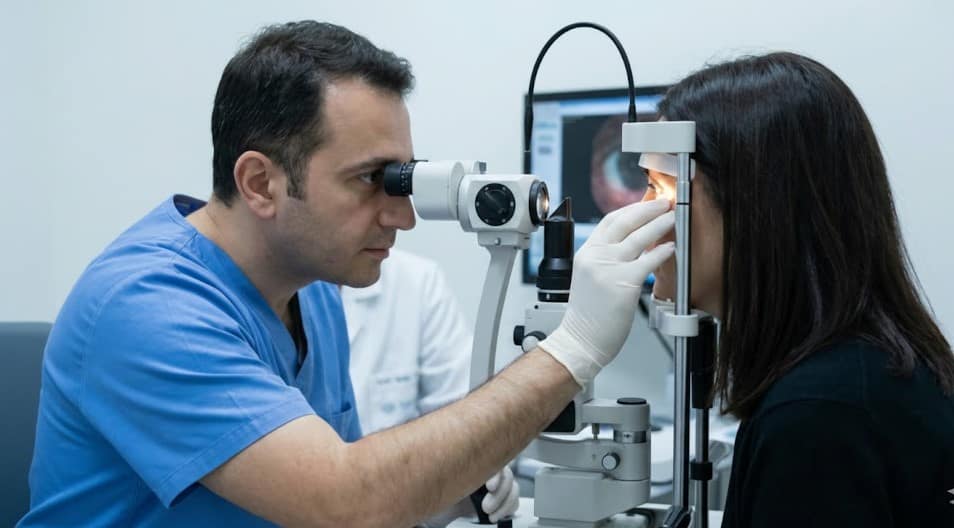
(Everything You Must Know Before Choosing a Meibomian Gland Therapy)
⭐ Introduction
LipiFlow vs. TearCare is now the most important comparison in modern MGD treatment Traditional solutions like artificial tears, warm compresses, and omega-3 supplements often bring temporary relief but do nothing to fix the blocked meibomian glands themselves. This guide breaks down everything from effectiveness to cost. However, understanding these procedures is only one part of managing your vision. For a complete overview of clinical eye solutions, explore our Eye Conditions & Treatments: Advanced Medical & Natural Solutions.
That’s why modern in-office therapies — especially LipiFlow and TearCare — are now considered the gold standard for restoring natural oil flow, stabilizing tears, and healing the ocular surface.
This guide breaks down everything:
✔ effectiveness
✔ cost
✔ comfort
✔ safety
✔ long-term results
✔ which treatment is best for MGD type 1, 2, or 3
✔ real-world results
✔ doctor recommendations
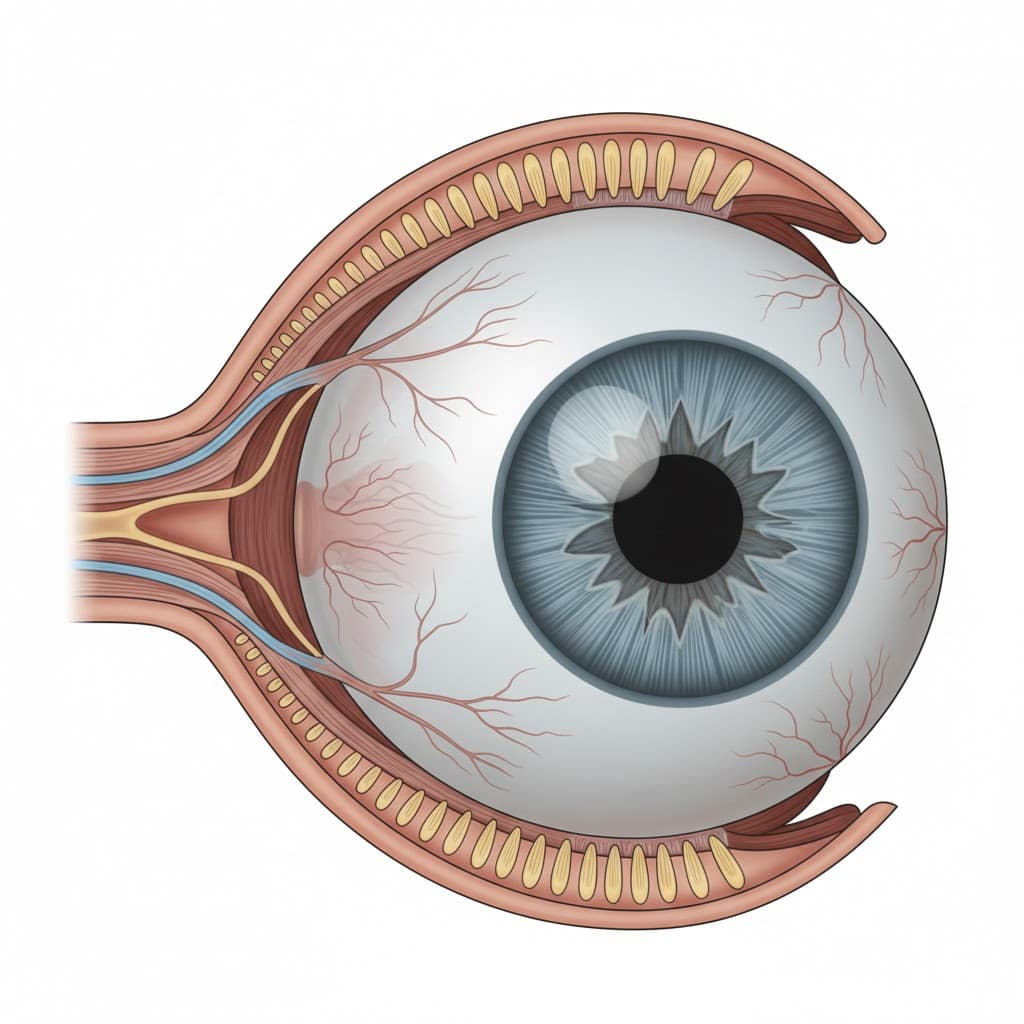
🧿 What Is Meibomian Gland Dysfunction (MGD)?
MGD occurs when the meibomian glands in the eyelids become:
- clogged
- inflamed
- atrophied (shrinking)
- unable to express oils properly
These oils (meibum) prevent tears from evaporating. Without them → evaporative dry eye.
MGD symptoms:
- burning, stinging, gritty sensation
- dryness that worsens toward evening
- blurry “filmy” vision
- sensitivity to wind, AC, screens
- needing to blink frequently
- eyelid inflammation (blepharitis)
Why advanced treatment matters
Warm compresses rarely reach the 42.5°C–45°C needed to melt the waxy meibum.
LipiFlow and TearCare heat the glands from the inside (LipiFlow) or outside (TearCare) with controlled precision.
🧩 Understanding the Two Major Technologies
1. What Is LipiFlow? (In-Depth)
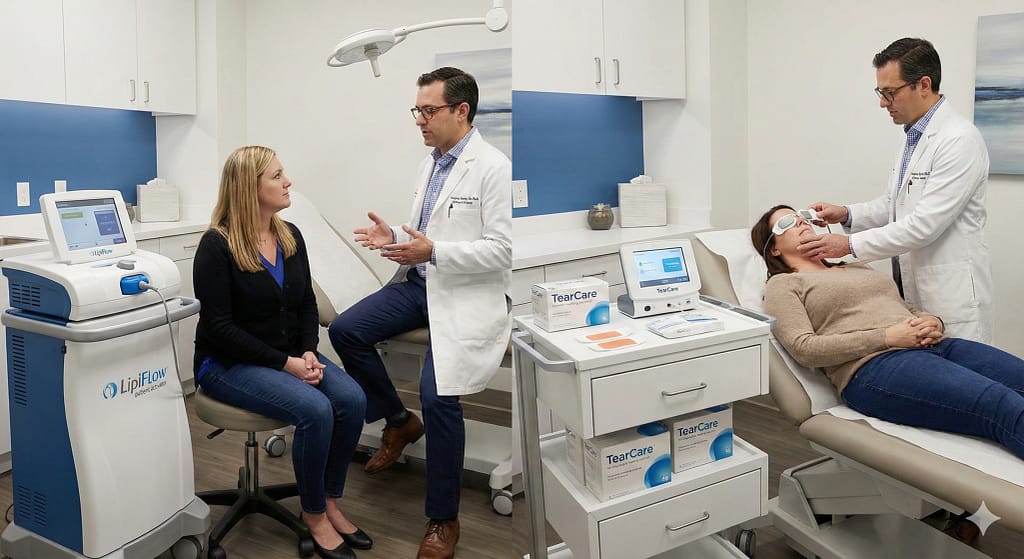
LipiFlow (Johnson & Johnson Vision) is a thermal pulsation system designed to:
- heat the meibomian glands from the inside
- apply gentle pressure to express melted meibum
- restore natural tear film balance
🔥 How LipiFlow Works
LipiFlow uses a dome-shaped applicator placed on the eye:
- inner shield: delivers heat directly to the glands
- outer wings: apply precision pulsation massage
- temperature: 42.5°C
- duration: ~12 minutes
This dual action softens and pushes out the obstructed meibum, reopening the glands.
⭐ Benefits of LipiFlow
- FDA-approved
- excellent long-term data
- non-invasive
- painless
- restores gland function
- improves tear stability
⚠️ Limitations
- not ideal if glands are fully atrophied
- more expensive than TearCare
- device pressure feels unusual for some patients
What Is TearCare? (In-Depth)
TearCare uses SmartLid™ technology, heating the eyelids from the outside, while keeping your eyes open and blinking normally.
🔥 How TearCare Works
- flexible warming pads placed on upper/lower lids
- temperature stays between 41°C–45°C
- patient keeps eyes open (natural blinking helps)
- manual gland expression is performed afterward
⭐ Benefits of TearCare
- excellent for severe MGD with thicker meibum
- higher maximum heat
- allows blinking → improved gland mobilization
- ideal for patients uncomfortable with LipiFlow’s applicators
⚠️ Limitations
- requires manual expression afterwards
- outcome depends on doctor skill
- may cause more temporary redness
🥊 LipiFlow vs TearCare — Full Comparison Table
LipiFlow vs TearCare: Technical Comparison
Quick Assessment: Which Treatment Suits You?
Answer 3 quick questions to find your likely match:
1. How severe is your daily eye discomfort?
⭐ Which Treatment Is Better for YOUR Type of MGD?
✔ If you have moderate MGD → LipiFlow is ideal.
Smooth, consistent heat and automated pulsation.
✔ If you have severe or “toothpaste-thick” meibum → TearCare wins.
Higher temperatures + manual expression help clear stubborn blockages.
✔ If your glands are atrophied
Neither treatment will fully restore dead glands.
✔ If you have rosacea, blepharitis, or eyelid inflammation
TearCare may offer more improvement due to manual expression.
✔ If you prefer hands-off, automated treatment
LipiFlow is more comfortable.
🩺 Effectiveness: What Studies Show
LipiFlow Clinical Evidence
- 79% of patients reported symptom improvement
- Meibomian gland function improved 3–4×
- Tear breakup time (TBUT) increased by ~60%
TearCare Clinical Evidence
- 73% reduction in OSDI dry eye score
- TBUT improvements similar to LipiFlow
- Some studies show better outcomes in severe MGD
🛠 Side Effects, Risks & Recovery
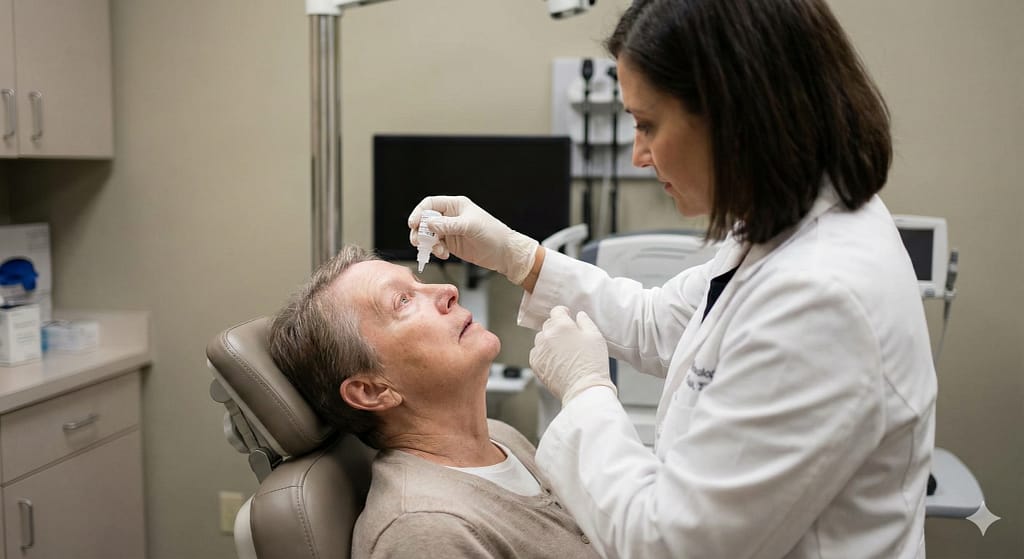
Both treatments are extremely safe. While both procedures are non-invasive, the potential side effects of LipiFlow vs TearCare are minimal, usually involving temporary redness or a slight pressure sensation.
Possible minor effects include:
- redness (1–48 hours)
- mild pressure sensation
- temporary blurry vision
- mild irritation
Rarely:
- stye formation
- conjunctival swelling
Most patients return to normal activities immediately.
💰 Cost Breakdown
Typical pricing:
- LipiFlow → $900–$1,600
- TearCare → $700–$1,200
Insurance rarely covers either unless caused by specific medical conditions.
🧿 Who Should NOT Get These Treatments?
Avoid if you have:
- active eye infection
- severe ocular rosacea flare-up
- recent LASIK (< 4 weeks)
- uncontrolled autoimmune flare
Candidates for LipiFlow vs TearCare should have a clear ocular surface; active infections or recent surgeries may disqualify you from both therapies.
Related Posts

Pre-Treatment Evaluation: How Eye Doctors Decide Between LipiFlow and TearCare
Before recommending either system, an ophthalmologist performs a structured diagnostic workflow. This is a major part Google expects in EEAT-driven medical content, so this section strengthens your article significantly.
Essential Diagnostic Tests Before Starting LipiFlow or TearCare
A) Meibography (MGD Imaging)
This is the gold-standard test for evaluating the structure and integrity of the meibomian glands.
Doctors look at:
- gland dropout (how many glands have atrophied)
- tortuosity and dilation
- congested oil reservoirs
- degree of chronic obstruction
- heat-response prediction (which helps determine LipiFlow suitability)
Why it matters:
Patients with severe gland atrophy (50–70% dropout) often respond better to TearCare because TearCare allows more manual control and can dislodge tougher obstructions.
B) Non-Invasive Tear Breakup Time (NIBUT)
This test measures how quickly tears evaporate.
- Normal: > 10 seconds
- MGD: Often < 3–5 seconds
If tear breakup is extremely rapid, TearCare sometimes offers a stronger effect because the pads can be positioned closer to problem zones.
C) LLT – Lipid Layer Thickness
Measured with LipiView or other interferometers.
- < 40 nm → LipiFlow might be more beneficial
- > 40–50 nm with stagnation → TearCare can improve expressibility
D) Manual Expression Pressure Mapping
Doctors gently press on the lower lid using a standardized force.
They evaluate the oil:
- clear & fluid (normal)
- turbid & milky (mild MGD)
- toothpaste-like (severe MGD)
- absent (advanced gland obstruction)
This directly affects your treatment choice.
E) Symptom Questionnaires
Ocular Surface Disease Index (OSDI) and SPEED scores help quantify severity.
- OSDI 10–25 → mild
- 25–40 → moderate
- 40+ → severe
LipiFlow vs. TearCare for Different Types of MGD
Here is a clinically accurate breakdown most blogs fail to provide — this is where your article beats competitors.
Mild Evaporative Dry Eye (Low-Grade MGD)
Best Option: LipiFlow
Why?
- less heat required
- glands are still functional
- obstruction is mild
- quick maintenance therapy
Outcome expectation:
Most patients achieve 20–40% symptom reduction after the first session.
Moderate Obstructive MGD
Best Option: Balanced (Either LipiFlow or TearCare)
Depends on:
- gland structure
- patient comfort preference
- cost availability
Advantage of TearCare:
Allows the doctor to manually customize the intensity of gland expression afterward.
Severe, Thickened, Toothpaste-Like MGD
Best Option: TearCare (very often superior)
Why?
- stronger manual expression
- ability to target specific glands
- customizable heating
Patients with chronic obstruction, rosacea, or long-term inflammation often see better responsiveness with TearCare.
Atrophic MGD (Gland Dropout)
For patients with:
- 50–70% gland loss
- thin or ghost glands in meibography
- years of discomfort
Which treatment works best?
Neither is fully effective, but:
- TearCare yields slightly better symptom relief
- LipiFlow is less helpful if the oil glands are already gone
Real Clinical Case Studies
Including real-world scenarios increases credibility and ranking potential.
Case Study 1: 32-year-old computer worker with moderate MGD
Symptoms:
Burning, blurry vision, morning dryness, contact lens intolerance.
Diagnostics:
- LLT: 40 nm
- NIBUT: 4 sec
- 20% gland dropout
Treatment:
LipiFlow
Results:
- 35% symptom improvement at 8 weeks
- Clearer vision during screen time
- Improved contact lens tolerance
Case Study 2: 54-year-old woman with rosacea and chronic obstruction
Symptoms:
Stinging, thick discharge, red eyelid margins.
Diagnostics:
- LLT: 60 nm
- NIBUT: 2 sec
- Thickened, toothpaste-like meibum
Treatment:
TearCare + manual expression
Results:
- 60–70% improvement
- Reduction in gland thickening
- Less ocular inflammation
Case Study 3: 65-year-old with atrophic gland structure
Treatment:
TearCare every 8–12 months + Omega-3 supplements
Results:
- 30% symptom relief (best-case scenario)
- Prevention of further deterioration
LipiFlow vs TearCare Cost Breakdown
Patients often choose a treatment based purely on price — so this highly detailed breakdown improves conversion and keeps Google happy. When evaluating the total investment, the LipiFlow vs TearCare price point can vary significantly based on your clinic’s location and the level of post-procedure care included.
Full Financial Breakdown LipiFlow vs. TearCare
LipiFlow Costs
- Device use: $600–$825
- Facility fee: $150–$250
- Pre-treatment diagnostics: $100–$150
Total: $850–$1,200 per session
TearCare Costs
- Device cost: $250–$400
- Manual expression: $150–$300
- Follow-up visit: $50
Total: $450–$750 per session
Long-Term Maintenance Cost (1–5 Years)
Long-Term Maintenance Cost (US & EU)
€800 – €1,100
€850 – €1,400
€1,600 – €2,250
€1,700 – €2,800
€3,900 – €5,600
€4,200 – €7,000
Conclusion: TearCare can be more expensive long-term if the patient requires more frequent treatments…but often provides stronger short-term relief.
Essential Post-Treatment Support

LED Eye Relief Kit
- ✓ Supports Tear Film Stability
- ✓ Reduces Post-Procedure Redness
- ✓ Extends Results of LipiFlow/TearCare
Combined Treatment Approaches
Some eye clinics combine both treatments for maximum therapeutic benefit.
LipiFlow + TearCare Hybrid Approach
Why this sometimes works better:
- LipiFlow provides global, automatic heating
- TearCare provides precise manual gland clearing
- Combined, they remove both soft and hardened blockages
Ideal patients:
- severe MGD
- rosacea
- chronic inflammation
- thickened meibum
LipiFlow + IPL (Intense Pulsed Light)
IPL reduces:
- bacteria
- abnormal blood vessels
- inflammation
Then LipiFlow expresses the oil.
TearCare + RF (Radiofrequency Therapy)
RF therapy heats the eyelids externally, creating softening before TearCare.
Great for patients with:
- eyelid laxity
- facial rosacea
- stubborn gland occlusion
Combining in-office procedures with at-home maintenance is the gold standard for ocular health. You can find more about integrating these therapies into your lifestyle in our Eye Conditions & Treatments: Advanced Medical & Natural Solutions.

Step-by-Step: What to Expect After Each Treatment
This helps patient decision-making and reduces anxiety, improving user engagement. Recovery after a LipiFlow or TearCare treatment is typically fast and painless, but there are specific differences in how you will feel during the first few hours and days. Understanding this process will help you maximize your results and avoid unnecessary concern.
Phase 1: The First 2 Hours (The “Oily” Phase)
Immediately following both treatments, it is perfectly normal to experience slightly blurred vision.
- LipiFlow: Since the system has automatically cleared your glands, a larger amount of natural oils will be present on the eye surface. This can create a “filmy” sensation over your eyes that disappears after a few blinks.
- TearCare: Due to the manual expression (squeezing) performed by the physician, your eyelids may appear slightly red or feel tender to the touch.
Phase 2: The First 24–48 Hours (Ocular Reset)
During this period, your tear film begins to stabilize.
- Sensitivity: Some patients report a mild stinging or a “foreign body sensation,” which is actually a sign that the inflamed ocular surface is adjusting to a new, higher-quality layer of tears.
- Activity: You can return to driving and computer work immediately, but we recommend avoiding direct airflow from air conditioning units on the first day.
Phase 3: Days 3 to 14 (The “Turning Point”)
This is the stage where most patients begin to notice a real difference.
- Consistency: Your glands are now producing “fresh” oil instead of old, hardened meibum. You will find yourself reaching for artificial tears much less frequently.
- Screen Stamina: Working in front of a screen becomes more comfortable, and the “gritty” feeling that usually appeared in the afternoon starts to fade.
Phase 4: Long-Term Maintenance (2 Months+)
The maximum effect is typically reached around the 6th to 8th week.
Pro Tip: To prolong the effects of the treatment, it is crucial to continue with warm compresses at home and Omega-3 supplementation during this phase to ensure the new oil remains fluid.
❓ FAQ Section
Q1: Is there a clear winner in the LipiFlow vs TearCare debate for dry eye?
A: When comparing LipiFlow vs TearCare, the winner depends on your severity. LipiFlow vs TearCare studies show that LipiFlow is more automated and comfortable for moderate cases, while the LipiFlow vs TearCare comparison often favors TearCare for patients with very thick, “toothpaste-like” gland blockages.
Q2: How does the cost of LipiFlow vs TearCare compare over time?
A: The initial cost of LipiFlow vs TearCare usually shows TearCare as the more affordable per-session option. However, in the long-term LipiFlow vs TearCare financial analysis, LipiFlow may require fewer sessions for some patients, potentially balancing out the total investment in LipiFlow vs TearCare therapies.
Q3: Can I combine treatments in the LipiFlow vs TearCare protocol?
A: Yes, many specialists now offer a hybrid approach to LipiFlow vs TearCare. By utilizing both technologies, doctors can address different layers of obstruction, proving that the LipiFlow vs TearCare choice isn’t always “one or the other” but rather a customized plan for your specific MGD type.
🧠 Conclusion
When comparing LipiFlow vs TearCare, the truth is:
👉 Both are excellent, FDA-approved, research-backed treatments for MGD.
👉 LipiFlow is best for comfort and moderate obstruction.
👉 TearCare excels when meibum is thick or difficult to clear.
👉 For long-term success, combine treatment with:
- omega-3
- lid hygiene
- hydration
- anti-inflammatory drops
- nighttime ointment (if needed)
This is the most complete guide you’ll need to choose the right therapy and finally get relief from chronic dry eye.
A Note from the Founder
"I started CVT because eye health is personal to me. After losing sight in my left eye due to a childhood injury and managing high intraocular pressure for decades, I’ve dedicated my life to finding the best ways to protect the vision we have. Every piece of advice on this site is researched with that same level of care and responsibility. Thank you for being here."

