
Introduction: Why Your Eyes Are Aging Faster Than the Rest of You
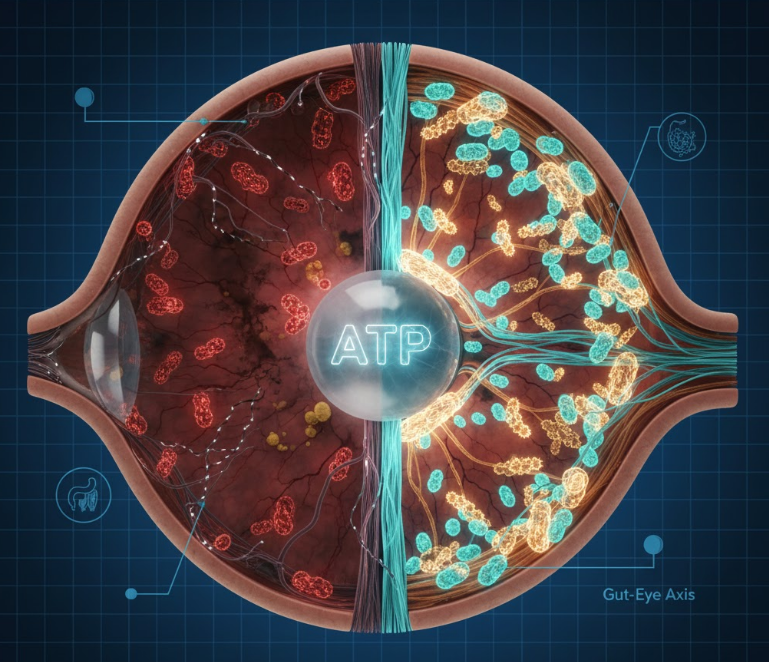
In the world of biohacking and longevity, securing your Mitochondrial Eye Health is emerging as the single most critical strategy for preventing age-related vision loss. Inside every cell in your body are tiny, powerful energy factories called mitochondria. They generate the ATP (Adenosine Triphosphate) that fuels every function, from blinking to sight itself. Your eyes—especially the retina and optic nerve—have the highest metabolic rate and the highest concentration of mitochondria in the entire body. They are energy hogs.
The bad news? Mitochondria are fragile. As we age, they get damaged by oxidative stress, slow down, and malfunction. This mitochondrial decline isn’t just a sign of aging; it’s the direct driver of the world’s leading causes of blindness: Age-related Macular Degeneration (AMD), Glaucoma, and Cataracts.
Welcome to the ultimate biohacking protocol for vision. By focusing on boosting your Mitochondrial Eye Health, you can slow down cellular aging, restore clarity, and secure your long-term vision against the most insidious chronic diseases.
The Engine of Vision: Why the Eye is a Mitochondrial Battlefield
To appreciate the crisis of cellular aging, we must first understand the extraordinary energy demands of the eye:
- The Photoreceptors: The rods and cones in your retina are constantly converting light into electrical signals. This process requires a colossal amount of ATP, meaning the cells in the outer retina are packed with mitochondria.
- The Optic Nerve: This is the high-speed cable connecting the eye to the brain. Its neurons require constant energy to transmit signals, making the optic nerve highly susceptible to mitochondrial damage, a key factor in Glaucoma.
- The Lens and Cornea: While the lens is avascular (no blood supply), its ability to maintain clarity and transparency relies on active transport systems fueled by mitochondria, preventing conditions like cataracts.
When mitochondria fail, these high-energy functions degrade. The result is a slow, insidious loss of function that defines age-related eye disease.
Mitochondrial Dysfunction and Ocular Disease: The Breakdown
- Age-related Macular Degeneration (AMD): Damaged mitochondria in the Retinal Pigment Epithelial (RPE) cells—the cells that support the photoreceptors—can no longer clear cellular waste effectively. This leads to the buildup of deposits (drusen) and subsequent RPE cell death, the hallmark of AMD.
- Glaucoma: The optic nerve is starved of energy due to mitochondrial malfunction. The lack of energy makes the nerve cells vulnerable to pressure, leading to optic nerve atrophy and irreversible vision loss.
- Cataracts: As mitochondrial activity in the lens cells decreases, the cellular structure breaks down, leading to the aggregation of proteins and clouding of the lens.

The Core Protocol: 3 Essential Steps for Mitochondrial Eye Health
To fight cellular aging, we must adopt a comprehensive protocol that focuses on three actions: Fuel, Repair, and Cleanse.
Step 1: Fuel – Providing the Essential Power Components
This step involves supplying the raw materials mitochondria need to create energy efficiently.
A. Coenzyme Q10 (CoQ10)
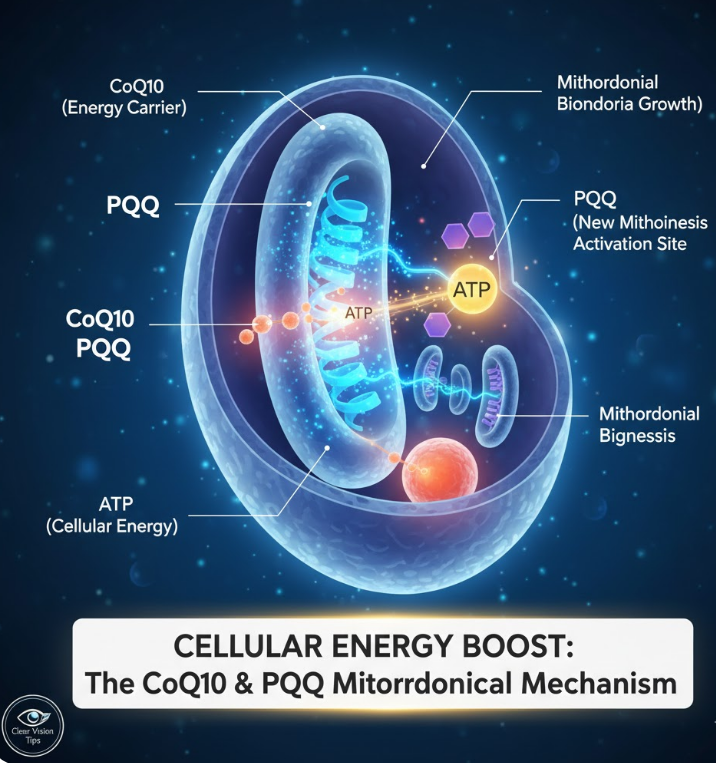
CoQ10 is a fat-soluble molecule essential for the electron transport chain (the process that makes ATP). Supplementing with the highly bioavailable form, ubiquinol, can directly boost energy production in stressed retinal cells.
B. Pyrroloquinoline Quinone (PQQ)
PQQ is the “Mitochondrial Builder.” It doesn’t just improve existing mitochondrial function; it actively stimulates the growth of new, healthy mitochondria (a process called mitochondrial biogenesis). Pairing PQQ with CoQ10 provides a powerful synergy for longevity.
C. Alpha Lipoic Acid (ALA)
ALA acts as an essential cofactor in the Krebs cycle (part of energy production) and is a powerful antioxidant that helps recycle other antioxidants, protecting the mitochondria from free radical damage.
DID YOU KNOW? The retina has the highest oxygen consumption rate of any tissue in the entire body. This incredibly high metabolic activity means the retina is highly vulnerable to oxidative stress and mitochondrial damage, making targeted support for **Mitochondrial Eye Health** an absolute necessity for preventing AMD.
(Source: For detailed research on retinal metabolism and aging, see the Nature Journal of Eye Health , which links energy metabolism failure to age-related vision loss.)
Step 2: Repair – Boosting Cellular Defense
Protecting mitochondria requires a robust shield against oxidative damage and inflammation.
A. NAD+ Precursors (NMN & NR)
NAD+ is a critical coenzyme that regulates hundreds of cellular processes, including mitochondrial repair. Levels of NAD+ decline sharply with age. Supplementing with precursors like NMN (Nicotinamide Mononucleotide) or NR (Nicotinamide Riboside) helps restore cellular vitality and activates longevity genes (sirtuins) that repair damaged mitochondria.
B. Astaxanthin (The Ocular Powerhouse)
Astaxanthin is the most powerful natural antioxidant found in the world. Its unique structure allows it to span the entire cell membrane, protecting both the inside and outside of the mitochondrial wall from free radicals—an unparalleled defense system for retinal cells.
Step 3: Cleanse – Activating Autophagy and Renewal
The body’s natural cleaning process is called autophagy, where it removes old, damaged organelles (like mitochondria) and recycles the components. This is essential for renewing the cellular landscape.
A. Intermittent Fasting (IF)
Restricting your eating window (e.g., 16 hours of fasting followed by 8 hours of eating) is the most powerful natural activator of autophagy. This metabolic stress signals the body to clean out damaged retinal cells and replace them with healthy ones.
B. Exercise
High-intensity exercise (HIIT) is proven to trigger mitochondrial biogenesis (the growth of new mitochondria) and enhance autophagy, making physical activity a non-negotiable part of any Mitochondrial Eye Health protocol.
🛠️ Recommended Biohacking Gear: Optimized Mitochondrial Support
To achieve therapeutic levels of the compounds needed to reverse mitochondrial decline, supplementation is highly recommended. We look for blends that combine the most effective bioavailable forms.
FEATURED BIOHACK: ULTIMATE MITOCHONDRIAL COMPLEX
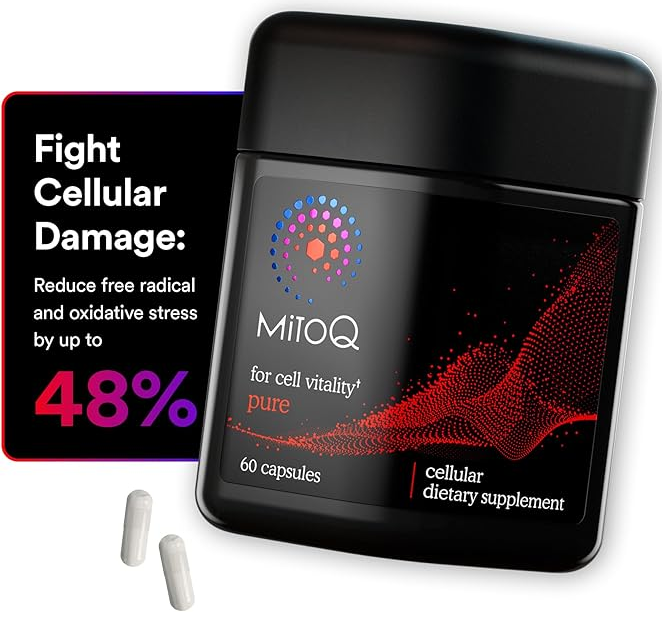
Target cellular aging at the source. This advanced formula combines high-absorption **Ubiquinol (CoQ10), PQQ, and NAD+ precursors** to repair damaged mitochondria and stimulate new growth, directly supporting **Mitochondrial Eye Health**.
 See Top-Rated Mitochondrial Complex →
Frequently Asked Questions (FAQ) About Mitochondrial Eye Health
1. Why is the retina more vulnerable to mitochondrial damage than other tissues?
The retina consumes oxygen and energy at an extremely high rate—higher than the brain or the heart. This massive metabolic demand generates a high volume of reactive oxygen species (free radicals), which directly damage the mitochondria over time. This makes the retina an early target for age-related mitochondrial decline.
2. Is the reduced form of CoQ10 (Ubiquinol) necessary for **Mitochondrial Eye Health**?
Yes, especially after the age of 40. The body converts CoQ10 into its active form, Ubiquinol. As we age, this conversion process becomes less efficient. Supplementing directly with Ubiquinol ensures maximum absorption and immediate availability for energy production and antioxidant protection in the eye’s high-demand cells.
3. Can exercise really help reverse cellular aging in the eye?
Absolutely. High-intensity exercise triggers mitochondrial biogenesis—the creation of new, healthy mitochondria. It also activates autophagy, the cellular cleanup process that removes old, damaged mitochondria. This systemic effect benefits every high-energy organ, including the retina, making exercise a powerful tool for **Mitochondrial Eye Health**.
Conclusion: Your Vision Longevity Strategy
Your eyes are the most metabolically demanding organs you own. Treating age-related vision problems with outdated methods is futile if you ignore the root cause: mitochondrial decline. By implementing the simple three-step protocol—Fueling, Repairing, and Cleansing your mitochondria—you are no longer just reacting to vision loss. You are taking proactive control over your cellular aging, ensuring your Mitochondrial Eye Health remains robust for decades to come, securing your ultimate vision longevity.
A Note from the Founder
"I started CVT because eye health is personal to me. After losing sight in my left eye due to a childhood injury and managing high intraocular pressure for decades, I’ve dedicated my life to finding the best ways to protect the vision we have. Every piece of advice on this site is researched with that same level of care and responsibility. Thank you for being here."