
Introduction: The Hidden Muscles Behind Your Vision
We routinely train every muscle in our body but often neglect the most critical ones: the extraocular muscles. In modern era, ocular fitness is no longer a luxury; it is a necessity.
Ocular Fitness is the proactive process of applying targeted exercises and visual techniques to restore the strength, flexibility, and coordination of your eye muscles. This practice is not about “curing” vision problems like myopia, but about significantly improving comfort, focus, and visual endurance in a high-demand world.
This comprehensive guide details the anatomy of your eye’s mechanics, explains why standard screen habits destroy your stamina, and provides 10 Proven Exercises that form the ultimate Ocular Fitness Protocol for peak visual performance.
The Anatomy of Ocular Fatigue
To train the eyes, you must first understand the primary muscles involved and the specific actions that cause them to fatigue:
1. The Extraocular Muscles (Movement and Tracking)
Six muscles surround each eyeball, enabling fast and precise movements (saccades) and smooth tracking (pursuits). These muscles become stiff and weak when they are primarily used in a small, static range (like staring at a monitor).
2. The Ciliary Muscles (Focus/Accommodation)
These tiny muscles inside the eye control the shape of the lens. When you look at something close (e.g., a phone), the ciliary muscles contract to increase the curvature of the lens.
- Accommodation Spasm: Prolonged near work causes the ciliary muscle to lock up in a contracted state, leading to temporary blurring of distance vision and the deep, dull ache associated with digital strain.
3. Convergence Muscles (Coordination)
These muscles ensure both eyes work together to maintain single vision, especially during close reading. Fatigue here leads to double vision or the need to constantly re-focus.
Quick Test: Are Your Eye Muscles Overworked?
Check for these “Muscle Cramp” signs:
Insight: If you checked 2 or more, you likely have Accommodation Spasm. The following Ocular Fitness protocol is designed to “unlock” those muscles.
If your muscles are indeed locked in a spasm, basic exercises are only the beginning. For those serious about high-performance vision, our Vision Therapy & Advanced Biohacking Hub covers the medical-grade hardware and neuro-plasticity protocols that take your visual stamina to a professional level.
10 Proven Exercises for Your Ocular Fitness Protocol
These exercises, often derived from behavioral vision therapy, are designed to relax the ciliary muscles, strengthen coordination, and improve focusing flexibility.
1. The Ciliary Muscle Release (Palming)
- Goal: Maximum relaxation of the ciliary muscle.
- How: Rub your palms together briskly until warm. Gently cup your hands over your closed eyes, blocking all light. Relax and breathe deeply for 60 seconds. The warmth and darkness help release tension.
2. Near/Far Focus Switch (Pencil Push-Ups)
- Goal: Improve focusing flexibility (accommodation).
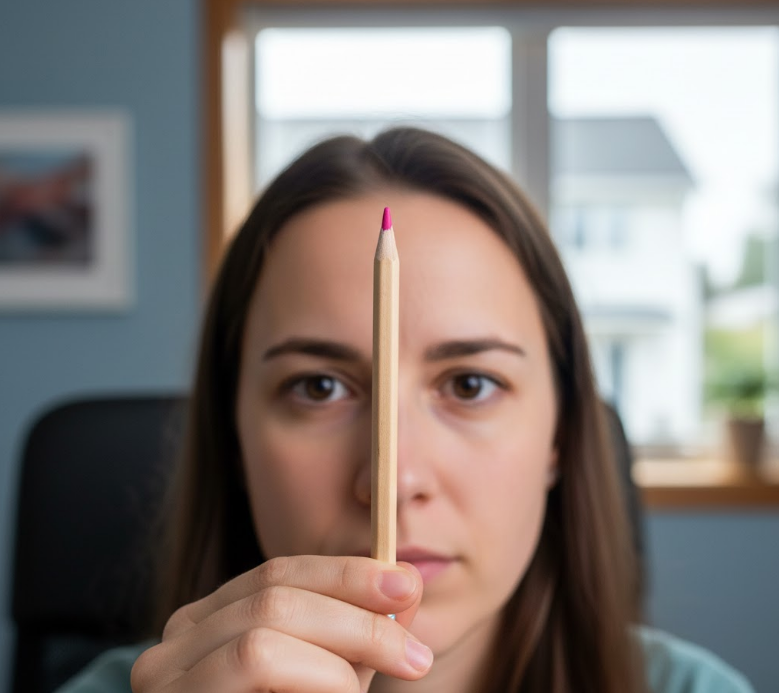
- How: Hold a pencil or finger at arm’s length. Focus on it for 5 seconds. Immediately switch focus to an object across the room (20 feet or more) for 5 seconds. Repeat 10–15 times.
3. Figure-Eight Tracking
- Goal: Enhance smooth pursuit and muscle flexibility.
- How: Imagine a large figure-eight lying on its side (infinity sign, $\infty$) about 10 feet away. Without moving your head, slowly trace the figure-eight with your eyes. Trace in one direction for 30 seconds, then reverse.
4. Convergence/Divergence Training (The Nose Touch)
- Goal: Strengthen coordination and convergence muscles.
- How: Slowly move a small object (like a pencil eraser) from arm’s length straight towards the bridge of your nose. Keep focus on the object until it becomes double. Stop, regain single vision, and slowly move it back out. Repeat 10 times.
TOOLS FOR PEAK OCULAR FITNESS
Essential aids to support muscle health and reduce digital strain during training.
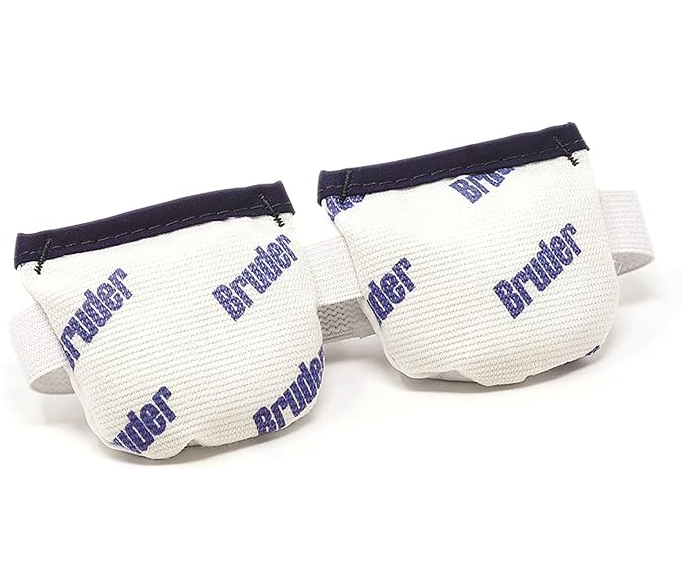
**Moist Heat Eye Compress** – Use after exercises to relax the overworked ciliary and extraocular muscles.
Check Price →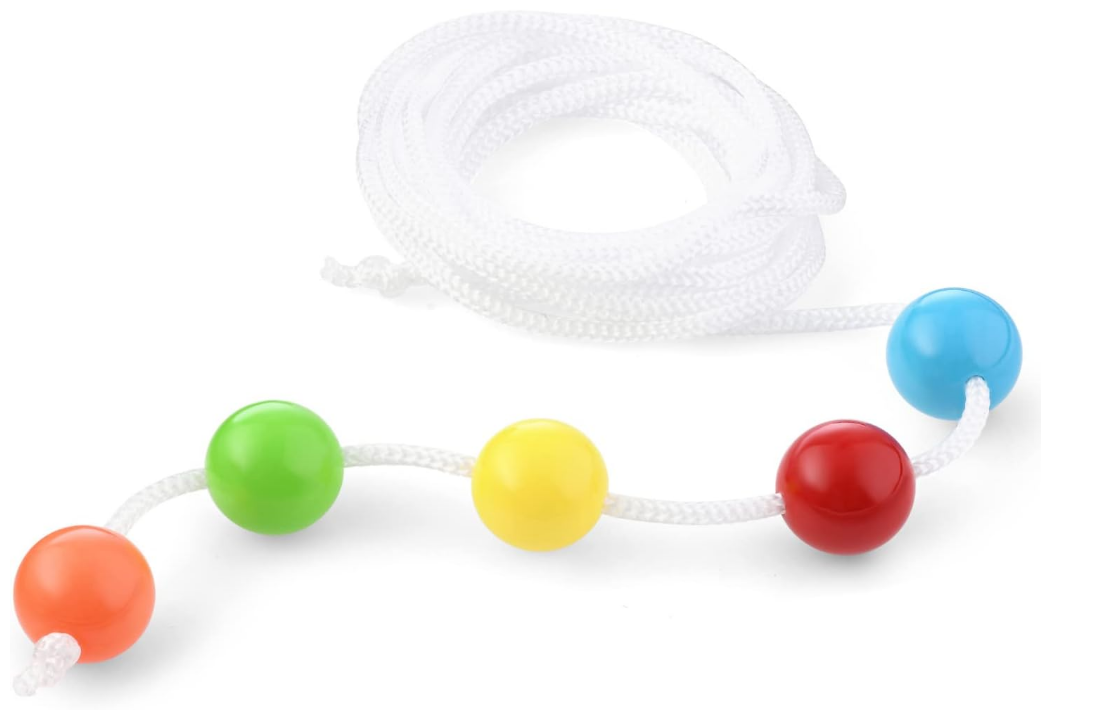
**Brock String / Vision Therapy Kit** – Advanced tools for convergence and fusion training (Exercise #4).
Shop Training Kits →5. Peripheral Awareness
- Goal: Reduce tunnel vision caused by screens.
- How: Stare straight ahead at a fixed point across the room. While maintaining focus, try to become aware of everything you can see in your periphery (above, below, and to the sides) without moving your eyes. Hold for 30 seconds.
6. The Alphabet Saccades
- Goal: Improve rapid, accurate eye movements.
- How: Tape a printed alphabet or random number grid to a wall. Rapidly shift your gaze from letter to letter in sequence (A to Z), emphasizing quick, precise jumps. Do not move your head.
7. Blinking Drill
- Goal: Restore the tear film and fight dry eye.
- How: Stare ahead. Blink normally (softly) 10 times. Then blink forcefully (tightly squeezing the lids) 10 times. Repeat three cycles.
8. Window Chart Exercise (Fusion)
- Goal: Improve binocular fusion (eyes working together).
- How: Look out a window pane. Focus on a distant object (outside) and then shift focus to a tiny spot on the window glass (near). Hold each for 5 seconds. Repeat for 2 minutes.
The Role of Lifestyle and Vision Hygiene
Ocular Fitness is not just about exercises; it’s about maintaining a lifestyle that supports visual endurance.
1. The 20-20-20 Rule (The Foundation)
Every 20 minutes, look at something 20 feet away for 20 seconds. This is the simplest, most effective exercise to force accommodation muscles to relax.
2. Dynamic Viewing and Peripheral Training
Consciously seek out dynamic visual environments. Walk outdoors, focus on trees swaying in the wind, or watch moving cars. This forces the eyes to engage full-range tracking muscles, countering the static tunnel vision of screen work.
3. Posture and the Cervical Spine
Poor posture causes the neck muscles (Cervicogenic connection) to refer pain to the eyes. Ensure your screen is at or slightly below eye level and practice chin tucks to relieve tension that mimics ocular strain.
Related Articles on Vision Performance
Frequently Asked Questions About Ocular Fitness
Q1: What exactly is Ocular Fitness and why is it important?
A1: Ocular Fitness is the practice of strengthening the six extraocular muscles and the internal ciliary muscles through targeted drills. It is vital in the digital age because staring at screens for hours causes these muscles to become stiff and weak, leading to chronic eye strain and headaches.
Q2: Can Ocular Fitness exercises improve my focus at work?
A2: Yes! By improving your “accommodation flexibility” through an Ocular Fitness protocol, your eyes can switch focus between a computer screen and distant objects much faster and with less effort, significantly reducing mental fatigue during work hours.
Q3: Is Ocular Fitness a replacement for wearing glasses?
A3: No. Ocular Fitness is designed to improve muscle coordination and stamina, not to change the physical shape of the eye (which causes myopia or astigmatism). However, it can make wearing glasses more comfortable by reducing the underlying muscular tension.
Q4: How often should I update my Ocular Fitness routine?
A4: Just like any workout, your eyes adapt over time. You should cycle through different Ocular Fitness exercises every few weeks—alternating between tracking, focusing, and peripheral awareness drills—to keep the neural pathways challenged and responsive.
Q5: Can Ocular Fitness help with dry eye symptoms?
A5: Indirectly, yes. Part of a complete Ocular Fitness routine includes “blinking drills” which help restore the natural tear film. By strengthening the muscles and increasing awareness, you naturally blink more often, which is the best defense against digital dryness.
Conclusion: Investing in Lifelong Visual Stamina
Ocular Fitness is the indispensable component of digital-age health. By dedicating just 10–15 minutes daily to this protocol, you actively condition the muscles responsible for focus and tracking. This practice not only minimizes the draining symptoms of digital eye strain but increases your visual stamina, ensuring your eyes are as resilient and sharp as the rest of your body. Investing in your eye muscles is investing in lifelong clarity and productivity.
Finish Your Workout with
Elite Ocular Recovery
Professional athletes never skip recovery. Your eyes shouldn’t either. The iRestore Executive System rejuvenates your vision at a cellular level.
Trusted by 10,000+ Biohackers for peak ocular performance.
A Note from the Founder
"I started CVT because eye health is personal to me. After losing sight in my left eye due to a childhood injury and managing high intraocular pressure for decades, I’ve dedicated my life to finding the best ways to protect the vision we have. Every piece of advice on this site is researched with that same level of care and responsibility. Thank you for being here."