
🧠 INTRODUCTION
Poor blood circulation and eye health are deeply connected — yet rarely discussed in standard eye care.
If your vision becomes blurry without explanation, your eyes feel heavy or pressured, or you see floaters despite “normal eye exams,” your eyes may not be getting enough oxygen and nutrients.
The eyes are one of the most metabolically active organs in the body. Even slight reductions in blood flow can cause noticeable visual symptoms long before serious disease appears.
This guide explains:
- How circulation affects vision
- The warning signs of poor ocular blood flow
- Why standard eye exams often miss it
- And how to restore healthy circulation naturally
1️⃣ Why Your Eyes Depend on Blood Flow
Your eyes require constant delivery of:
- Oxygen
- Glucose
- Micronutrients
- Anti-inflammatory compounds
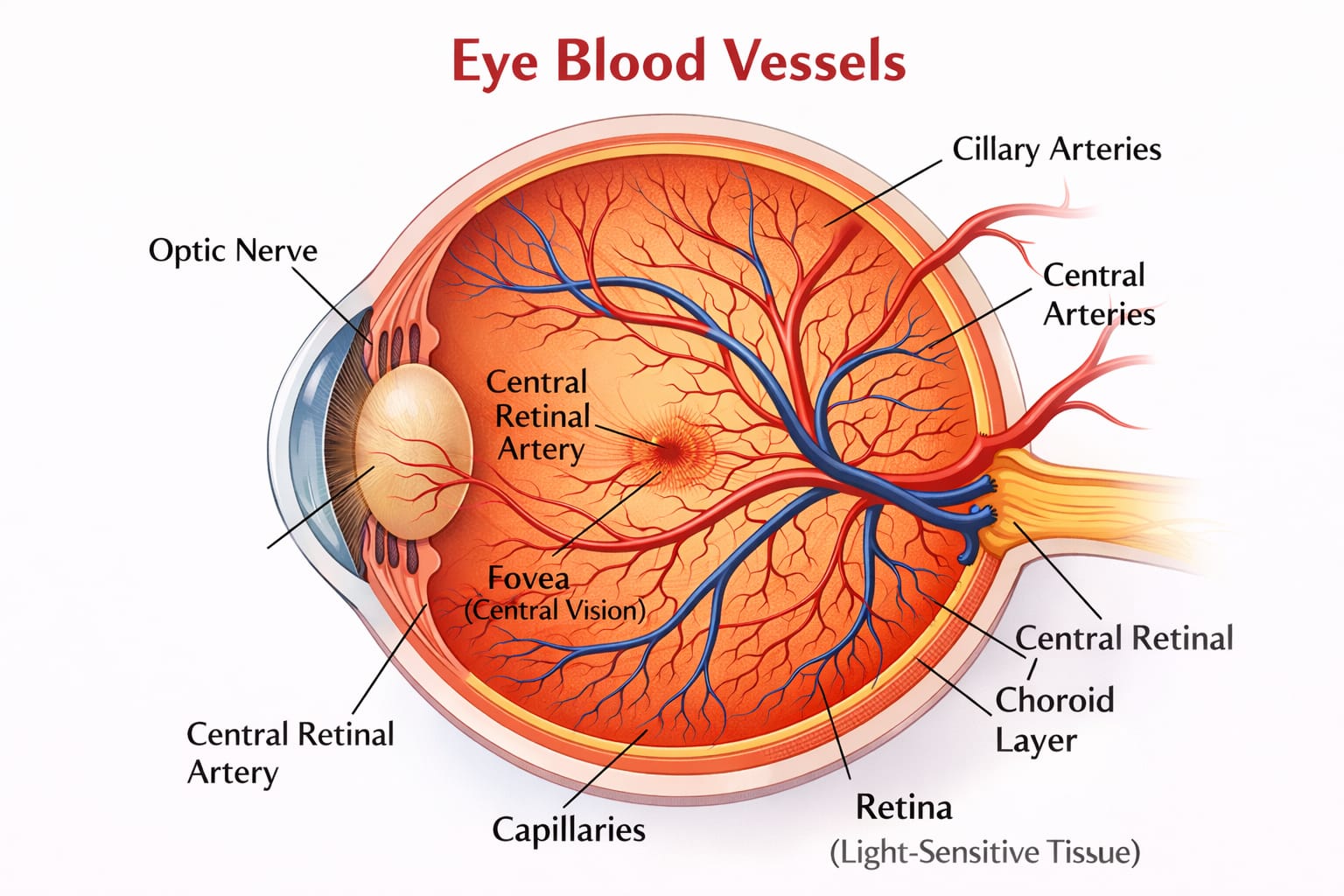
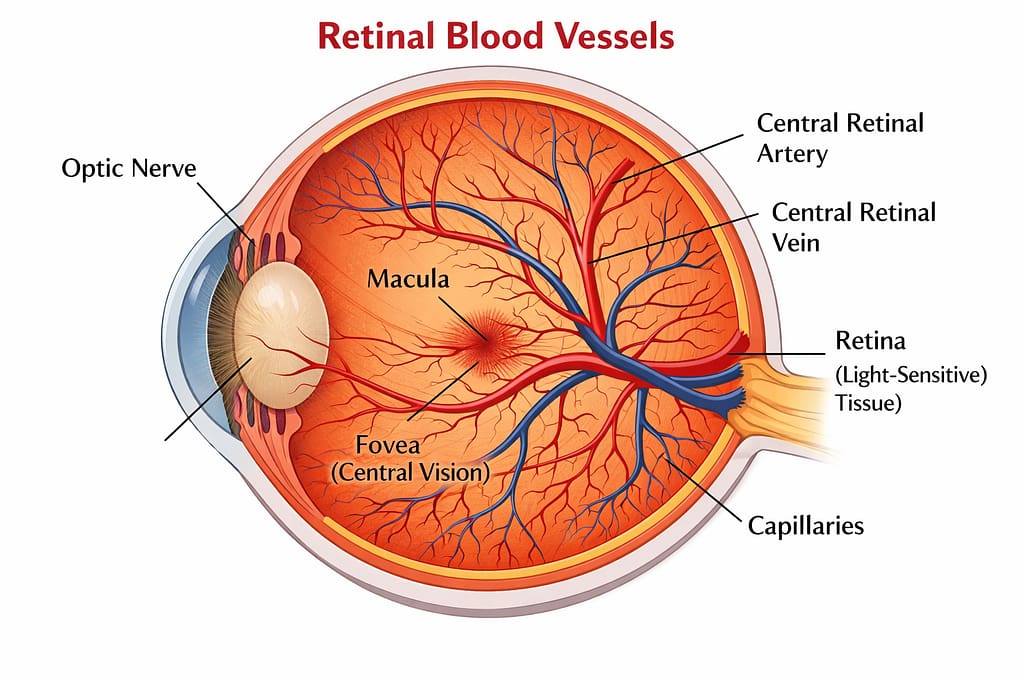
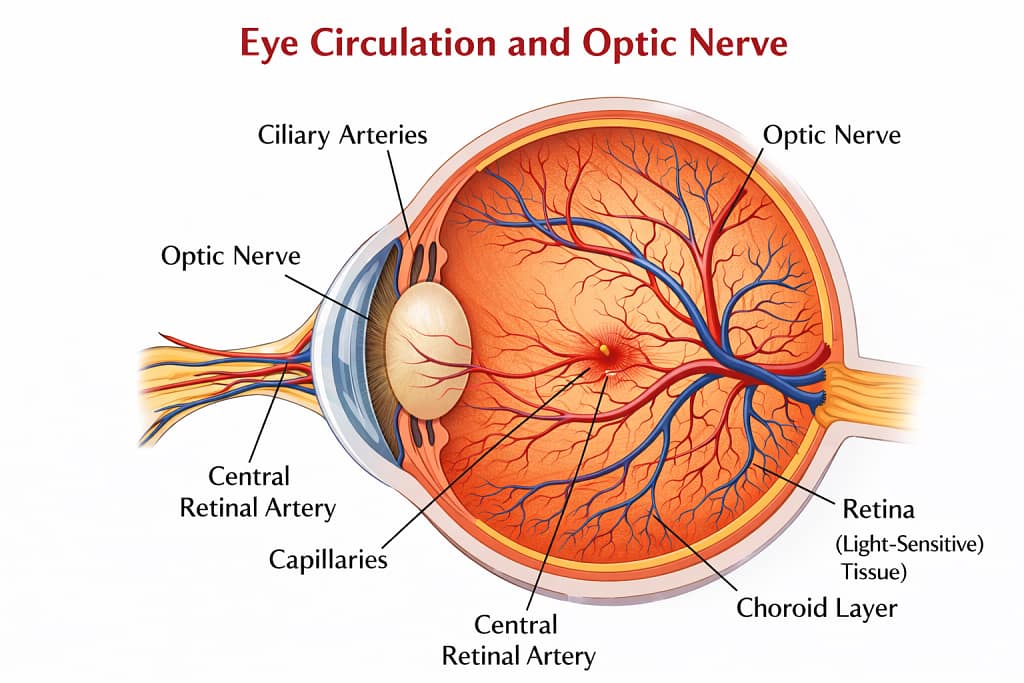
Blood flow supports:
- Retina
- Optic nerve
- Choroid layer
- Ciliary body
⚠️ Any reduction → immediate visual symptoms. Optimizing your ocular blood flow is not just about moving your body; it’s about providing the systemic foundation your eyes need to thrive every single day. To understand how circulation integrates with nutrition and the core pillars of preventative care, explore our Vision Health Basics: Complete Guide to Eye Care & Nutrition.
The retina consumes more oxygen per gram than the brain. Even minor circulation issues can affect vision before other organs.
2️⃣ Early Eye Symptoms of Poor Circulation
Common early signs include:
- Blurry vision that comes and goes
- Pressure behind the eyes
- Difficulty focusing
- Floaters that increase with fatigue
- Light sensitivity
- Dull eye pain
These symptoms often worsen:
- In cold weather
- After sitting too long
- During stress
- With dehydration
3️⃣ Floaters & Circulation (Hidden Link)
Reduced blood flow → oxidative stress → vitreous degeneration.
Poor circulation accelerates:
- Collagen breakdown
- Microvascular damage
- Inflammatory debris
➡️ Result: more floaters, especially with fatigue.
If floaters worsen during stress or fatigue, read our in-depth guide on eye floaters and circulation-related triggers.
4️⃣ Cold Hands, Cold Feet & Blurry Vision
Peripheral circulation problems often correlate with retinal hypoperfusion. Studies from the Mayo Clinic suggest that conditions like Raynaud’s can be a systemic indicator of how your body manages microcirculation, including the vessels in your eyes.
This is common in:
- Raynaud’s syndrome
- Low blood pressure
- Autonomic imbalance
⚠️ If your hands are cold and vision blurs, circulation is likely the root issue.
5️⃣ Poor Circulation vs Eye Diseases (Critical Section)
Poor blood flow contributes to:
- Glaucoma progression
- Diabetic retinopathy
- Optic neuropathy
- Age-related macular degeneration
But symptoms often appear years earlier.
| Symptom | Structural (Needs Glasses) | Circulatory (Blood Flow) |
|---|---|---|
| Blurry Vision | Constant; doesn’t change much. | Fluctuates; worse when tired/sitting. |
| Eye Fatigue | Improves immediately with rest. | Lingers; feels like “pressure” or “heaviness.” |
| Floaters | Usually permanent “specks.” | Become much more visible during stress. |
| Focusing | Hard to see near or far objects. | “Brain fog” for the eyes; slow focus shifts. |
6️⃣ Screen Use, Sitting & Circulatory Eye Stress
Long sitting causes:
- Reduced cardiac output
- Slower cranial blood flow
- Venous congestion
➡️ Eyes become oxygen-starved.
Just 30 minutes of uninterrupted sitting reduces blood flow to the head and eyes by up to 20%.
7️⃣ How to Restore Eye Circulation Naturally
Core strategies:
- Movement every 30–60 minutes
- Deep nasal breathing
- Omega-3 fatty acids
- Magnesium
- Hydration
- Neck mobility

8️⃣ Neck Tension & Eye Blood Flow
Tight neck muscles compress:
- Vertebral arteries
- Venous drainage
➡️ Leading to:
- Eye pressure
- Headaches
- Visual fatigue
9️⃣ Hydration & Blood Viscosity
Dehydration thickens blood → reduced microcirculation.
Many people with dry eyes also have:
- Low plasma volume
- Poor tear perfusion

❓ FAQ SECTION
Q1: Can poor blood circulation and eye health cause vision to fluctuate?
A: Yes, the link between poor blood circulation and eye health is responsible for many cases of intermittent blurry vision. When oxygen delivery to the retina is reduced, your visual cells cannot process light efficiently, leading to sight that worsens with fatigue or prolonged sitting.
Q2: How can I improve poor blood circulation and eye health naturally?
A: Improving poor blood circulation and eye health starts with movement and hydration. Simple habits like taking neck mobility breaks, practicing deep nasal breathing, and ensuring adequate Omega-3 intake can significantly enhance the microcirculation that supports your optic nerve.
Q3: Does sitting too long affect poor blood circulation and eye health?
A: Absolutely. Prolonged sitting is a major contributor to poor blood circulation and eye health issues because it reduces overall cardiac output and leads to venous congestion in the head and neck, effectively “starving” your eyes of fresh, oxygenated blood.
✅ CONCLUSION
Poor blood circulation and eye health are inseparable.
If your vision fluctuates, feels pressured, or worsens with fatigue, circulation — not glasses — may be the missing link.
Supporting vascular health is one of the most powerful, overlooked strategies for long-term visual clarity.
A Note from the Founder
"I started CVT because eye health is personal to me. After losing sight in my left eye due to a childhood injury and managing high intraocular pressure for decades, I’ve dedicated my life to finding the best ways to protect the vision we have. Every piece of advice on this site is researched with that same level of care and responsibility. Thank you for being here."

