🌍 Introduction: Your Eyes Are the Window to Your Brain
The connection between Eye Health and Brain Health is one of the most exciting frontiers in modern medicine. While we often treat them as separate, the reality is that Eye Health and Brain Health are deeply intertwined, with the retina serving as a direct extension of the central nervous system. To learn more about how symptoms manifest, visit our Eye Symptoms & Relief HUB.
The saying “the eyes are the window to the soul” may be poetic — but scientifically, the eyes are the window to the brain.
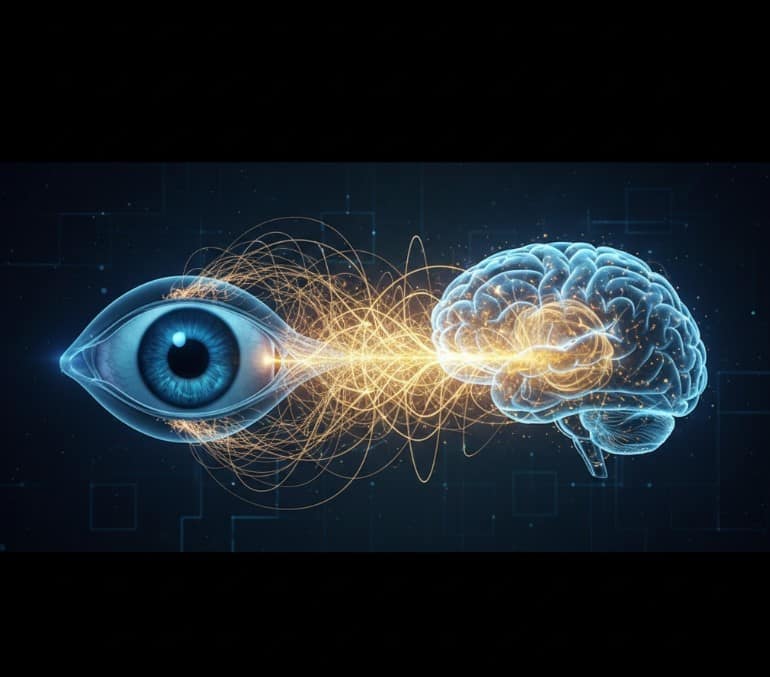
Every time you see something, your eyes and brain collaborate in real-time: the retina captures light, converts it into electrical signals, and sends those messages to the visual cortex through the optic nerve.
But what happens when this delicate communication breaks down?
Modern research shows that many neurological diseases first appear as eye symptoms — sometimes years before other signs. Alzheimer’s, Parkinson’s, Multiple Sclerosis (MS), and even stroke can manifest as blurred vision, color perception changes, or loss of contrast sensitivity.
This article explores the fascinating link between the eyes and the brain — and how protecting one can safeguard the other.
🔬 1. The Eye-Brain Connection: A Biological Overview
The retina, located at the back of the eye, is technically an extension of the brain.
During early embryonic development, the retina forms from the same tissue as the brain — making it part of the central nervous system (CNS).
- The Optic Nerve is composed of over a million nerve fibers that directly link the eyes and brain.
- The Visual Cortex, located in the occipital lobe, interprets all visual signals — color, shape, movement, and depth.
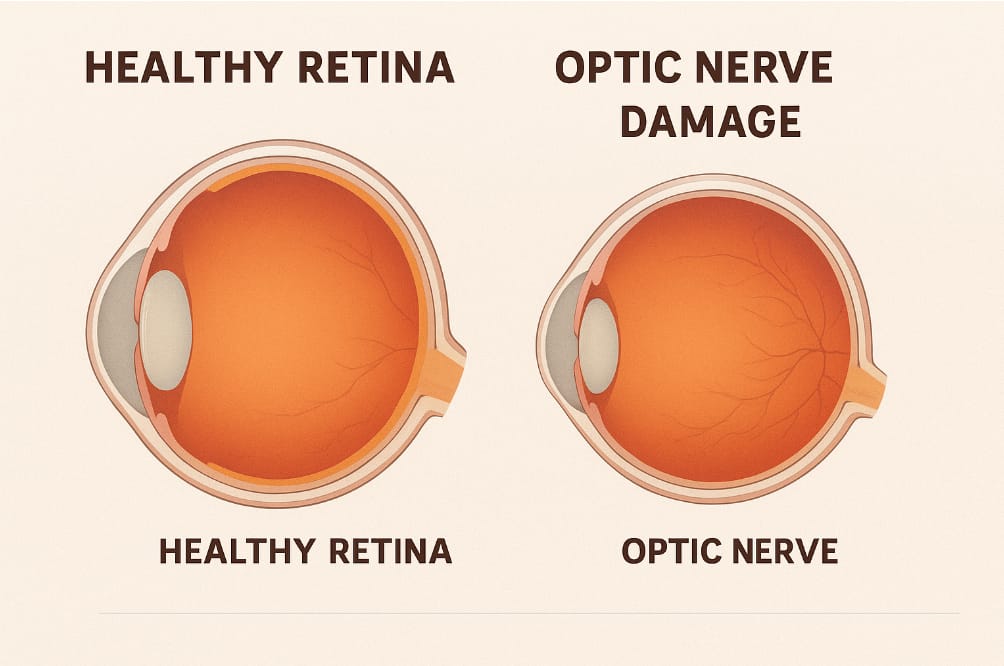
- Blood Vessels in the Retina mirror those in the brain, meaning changes in one often indicate problems in the other.
This intimate link means that the state of your retina and optic nerve can reflect your neurological health. This shared embryonic origin is the fundamental reason why Eye Health and Brain Health cannot be managed in isolation
🧩 2. How the Eyes Reflect Brain Health
Eye exams can reveal changes in blood vessels, nerve layers, and optic fibers that mimic processes happening in the brain.
In fact, ophthalmologists often say: “The retina is the only place in the body where we can directly see the brain’s blood vessels.”
For example:
- Retinal vessel narrowing may indicate early hypertension or stroke risk.
- Optic nerve swelling can suggest intracranial pressure or MS.
- Color vision loss might signal neurodegeneration in visual pathways.
⚠️ 3. Neurological Conditions First Detected Through Eye Exams
Many doctors are now using retinal scans to evaluate Eye Health and Brain Health as a way to detect Alzheimer’s up to 7 years early.
🧠 1. Alzheimer’s Disease
Patients often experience:
- Decreased contrast sensitivity
- Difficulty distinguishing colors
- Retinal thinning visible on OCT scans
Researchers found that changes in the retinal nerve fiber layer (RNFL) occur years before memory loss begins — making eye exams a potential tool for early detection.
🧩 2. Parkinson’s Disease
Eye-related symptoms include:
- Reduced blink rate
- Blurry or double vision
- Problems with eye movement control
Studies show Parkinson’s patients have dopamine deficiency not only in the brain but also in the retina, leading to slower visual processing.
⚡ 3. Multiple Sclerosis (MS)
MS causes inflammation and demyelination (loss of nerve insulation).
Eye-related effects include:
- Optic neuritis (painful vision loss in one eye)
- Color desaturation
- Visual field defects
OCT imaging helps monitor nerve fiber loss and disease progression.
🧬 4. Stroke and Vascular Brain Disorders
A sudden loss of vision in one eye can be a mini-stroke (TIA).
Eye exams can detect microaneurysms and vascular occlusions linked to brain blood flow issues.
👁️ 4. Early Vision Symptoms You Shouldn’t Ignore
Certain vision changes should always prompt neurological evaluation:
- Sudden blurred or double vision
- Loss of peripheral (side) vision
- Difficulty tracking moving objects
- Frequent visual “auras” or flashes
- Eye pain with movement
- Color fading or distorted contrast
These may indicate neurodegenerative or vascular conditions affecting the visual system. If you are experiencing any of these sudden visual changes, it is vital to act quickly. Explore our Eye Symptoms & Relief HUB for a deeper look at managing specific conditions and finding professional guidance for your vision recovery.
🔍 5. How Modern Imaging Reveals Brain Disease Through the Eyes
The latest ophthalmic technologies allow doctors to see the brain through the eyes:
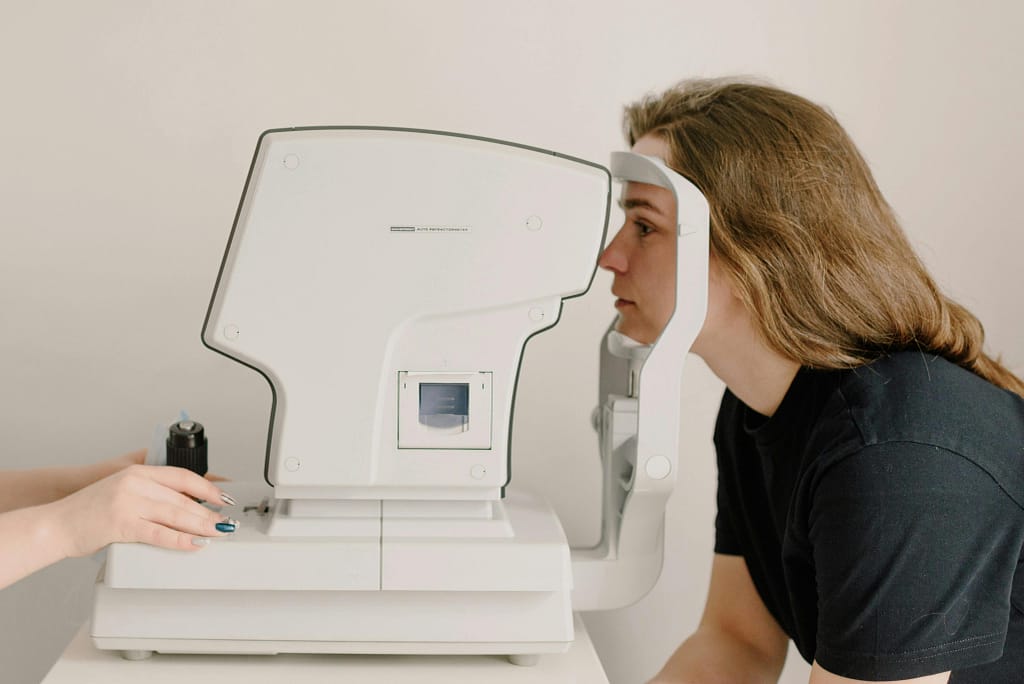
- Optical Coherence Tomography (OCT): Detects thinning of retinal nerve fibers.
- Fundus Photography: Captures blood vessel changes related to hypertension or dementia.
- Retinal Scanning AI: Machine learning algorithms can predict cognitive decline from retinal images.
Clinical studies hosted by the National Institutes of Health (NIH) prove that retinal scans are a non-invasive way to measure brain health. In 2024, several studies confirmed that AI-based retinal imaging can predict Alzheimer’s up to 7 years before diagnosis.
🧘 6. Protecting Both Eye and Brain Health
The same habits that protect your eyes also protect your brain. Maintaining healthy blood pressure is the first step in biohacking your Eye Health and Brain Health for long-term longevity.
Both organs rely on blood flow, antioxidants, oxygen, and neural activity.
Key protective habits:
- Maintain healthy blood pressure and glucose
- Avoid smoking
- Exercise regularly (improves blood circulation)
- Get 7–8 hours of sleep
- Manage stress (reduces cortisol damage)
🥗 7. Nutrition and Lifestyle for a Strong Eye-Brain Axis
Nutrition is the cornerstone of neuro-visual health.
Deficiencies in omega-3s, lutein, vitamin B12, and antioxidants accelerate both cognitive and visual decline.
| Nutrient | Function | Food Source |
|---|---|---|
| Omega-3 DHA | Supports retinal and neuronal membranes | Salmon, flaxseed |
| Lutein & Zeaxanthin | Protect against oxidative stress | Kale, spinach, eggs |
| Vitamin B12 | Prevents nerve damage | Eggs, fish, fortified cereals |
| Vitamin E & C | Antioxidant protection | Citrus fruits, nuts |
| Curcumin | Neuroprotective anti-inflammatory | Turmeric, black pepper |

NOW Foods Lutein & Zeaxanthin
Support your Eye Health and Brain Health connection. These antioxidants are found in both the retina and the brain, helping to improve visual processing speed and protect against cognitive decline.
💤 8. The Role of Sleep, Stress, and Movement
Sleep deprivation reduces eye tear film quality and impairs neural visual processing.
Stress increases cortisol, which restricts blood flow to the optic nerve.
Movement (especially aerobic exercise) improves both retinal oxygenation and brain plasticity, helping protect memory and vision.
🔮 9. The Future of Neuro-Visual Diagnostics
The coming decade will redefine how we detect brain disorders — through the eyes.
AI and retinal scanning could soon become part of routine cognitive screenings, providing early warnings for dementia, stroke, and MS.
❓ 10. Frequently Asked Questions (FAQ)
Q1: How are Eye Health and Brain Health connected?
A1: They are linked through the optic nerve and shared vascular systems. Because the retina is brain tissue, Eye Health and Brain Health reflect each other, allowing doctors to see signs of neurodegeneration through a simple eye exam.
Q2: Can improving my diet boost both Eye Health and Brain Health?
A2: Absolutely. Nutrients like Omega-3s and Lutein are essential for both. Strengthening the Eye Health and Brain Health axis through nutrition reduces the risk of both macular degeneration and cognitive decline.
Q3: Does stress impact Eye Health and Brain Health?
A3: Yes. High cortisol levels restrict blood flow to the eyes and brain. Managing stress is a crucial biohack for preserving your Eye Health and Brain Health connection.
Q4: Can lifestyle changes protect both Eye Health and Brain Health?
A4: Absolutely. Since the eyes and brain share the same vascular and neural pathways, habits like regular exercise and a nutrient-rich diet create a protective shield for the Eye Health and Brain Health axis, reducing the risk of cognitive and visual decline simultaneously.
🧠 Quick Check: Eye-Brain Health Score
Answer these 5 questions to see if your visual habits are supporting your neurological wellbeing.
1. How many hours a day do you spend on screens?
✅ Conclusion
Your eyes and brain are not separate systems — they are partners in perception.
Every flicker of light that reaches your retina travels a neural highway to your brain, shaping how you see, think, and react.
When vision deteriorates, it can be an early sign of deeper neurological imbalance. That’s why maintaining both ocular and cognitive health through nutrition, sleep, and regular checkups is essential. Protecting the Eye Health and Brain Health axis is not just about seeing clearly; it’s about preserving your cognitive future.
Protecting your eyes means protecting your brain — and preserving the way you experience the world. 👁️🧠✨
A Note from the Founder
"I started CVT because eye health is personal to me. After losing sight in my left eye due to a childhood injury and managing high intraocular pressure for decades, I’ve dedicated my life to finding the best ways to protect the vision we have. Every piece of advice on this site is researched with that same level of care and responsibility. Thank you for being here."

