✅ INTRODUCTION
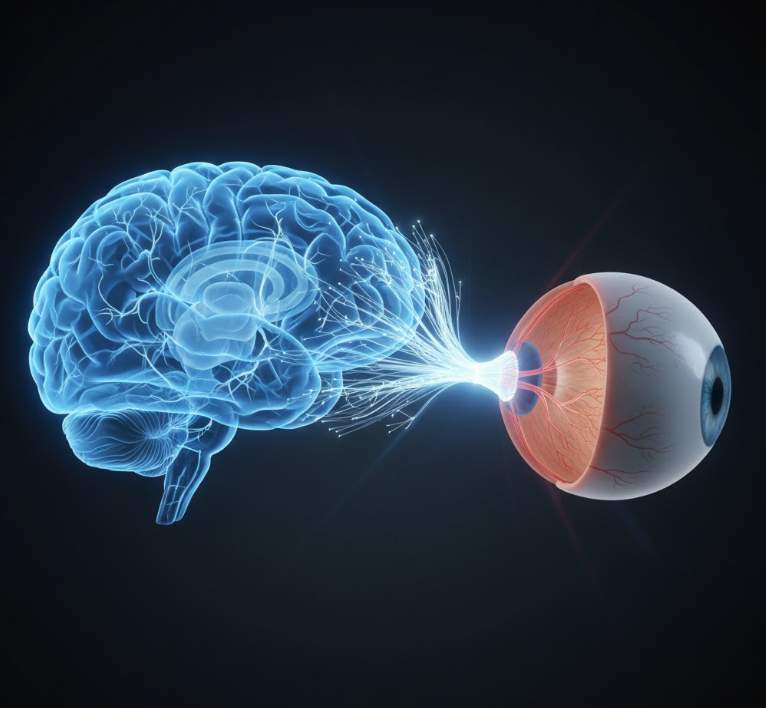
Vision and brain health are deeply connected, and your eyes often reveal the earliest signs of what’s happening inside your nervous system. Because the retina and optic nerve are direct extensions of the brain, changes in your vision can act as early biomarkers of neurological issues — long before symptoms like headaches, memory problems, or cognitive decline appear.
Most people think of vision problems as “eye issues,” but in reality, many are reflections of what’s happening in the brain. Blood flow, inflammation, neural signaling, and even early neurodegenerative changes often show up in the eyes first.
In this guide, you’ll learn exactly how the vision–brain connection works, which warning signs matter, what your eye doctor can detect during a routine exam, and science-backed strategies to protect both your eyesight and long-term neurological wellbeing.
The Neuro-Visual Axis: Understanding the Connection
The connection is direct: the retina, the light-sensing tissue at the back of your eye, is technically brain tissue, and the optic nerve is a bundle of central nervous system (CNS) fibers. When the brain experiences stress, inflammation, or degeneration, those changes often manifest in the eye first.
The Retina as a Biomarker for Systemic Diseases
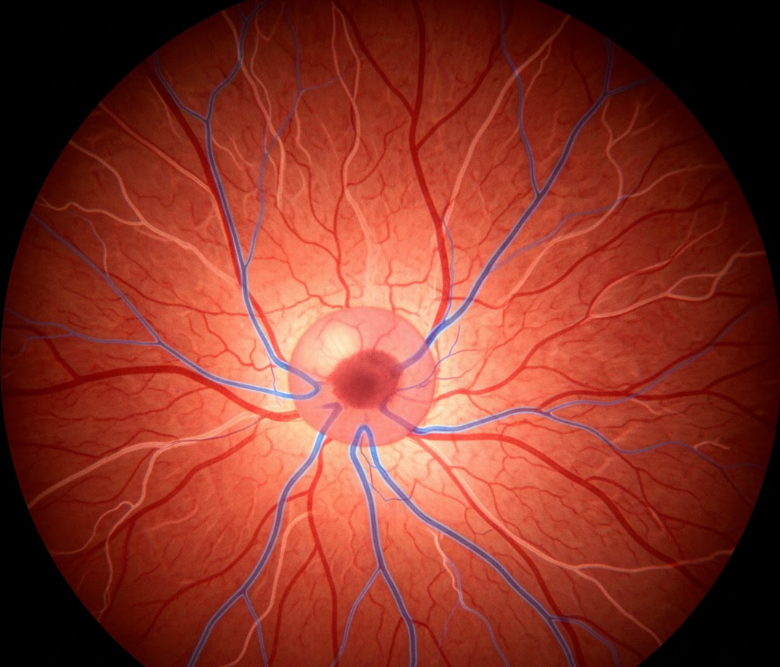
The small blood vessels that supply the retina—visible during a standard eye exam—are identical to those supplying the brain. Changes such as narrowing, blockages, or leakage in these retinal vessels can serve as early warnings for hypertension, stroke risk, and cerebral small vessel disease. Therefore, regular retinal imaging is rapidly becoming a key non-invasive tool in preventative neurology.
DID YOU KNOW? The optic nerve head (optic disc) is the only place in the body where you can view central nervous system tissue directly without surgery. This unique feature is what makes the retina an early-detection tool for neurological conditions.
5 Early Eye Signs That May Reflect Brain Health Issues
By performing a comprehensive eye examination, your eye care provider can detect subtle but critical changes associated with neurological decline. Here are five crucial early eye signs that highlight the Brain Health and Vision connection:
Retinal Thinning (Alzheimer’s and Dementia)
Studies have demonstrated that patients in the early stages of Alzheimer’s disease often exhibit measurable thinning of the retinal nerve fiber layer (RNFL), sometimes years before cognitive decline becomes severe. This thinning mirrors the neural loss occurring in the brain and is being actively researched as a potential early diagnostic marker.
Optic Neuritis (Multiple Sclerosis – MS)
Sudden, painful vision loss, often accompanied by pain with eye movement, can be a sign of Optic Neuritis. This is a common and often first presentation of Multiple Sclerosis, an autoimmune disease that attacks the myelin sheath protecting the nerve fibers of the CNS, including the optic nerve.
Changes in Eye Movement and Blinking (Parkinson’s Disease)
Parkinson’s disease, a disorder affecting motor control, can manifest in subtle but observable visual changes. Patients may experience difficulties tracking objects (saccadic dysfunction) or reading comfortably. Crucially, reduced blink rates—a classic symptom of Parkinson’s—often contribute to chronic dry eye disease.
Ocular Migraines and Visual Disturbances (Vascular Health)
Temporary visual disturbances, such as flashing lights, zigzag lines, or temporary partial blindness (ocular or retinal migraines), are often indicators of underlying vascular instability. While usually benign, frequent occurrences can signal issues with blood flow that require evaluation for broader vascular risks, which affect both the eye and the brain.
Papilledema (Increased Intracranial Pressure)
Swelling of the optic disc (where the optic nerve enters the eye) due to elevated intracranial pressure is called Papilledema. This is a severe medical emergency and can be an early sign of a brain tumour, cerebral hemorrhage, or idiopathic intracranial hypertension.
How to Protect Your Neuro-Visual Health
The best way to protect both your vision and your brain is through proactive, intertwined strategies.
Lifestyle and Nutrition Strategies
The same antioxidants and anti-inflammatory compounds that protect your macula (Lutein, Zeaxanthin, Omega-3s) also provide powerful neuroprotective benefits for the brain. A diet rich in leafy greens, fatty fish, and berries is your best defense against oxidative stress common to both eye and brain aging.
The Importance of Regular Comprehensive Exams
Because the eyes are the only place where CNS damage can be viewed non-invasively, regular comprehensive eye exams are the single most important preventative measure. Ensure your eye care provider includes detailed retinal imaging (e.g., Optical Coherence Tomography or OCT) to track the health of your optic nerve and retina.
The anatomical connection between the retina and the brain is the subject of extensive research. For the latest consensus on neuro-ophthalmology and the link between optic nerve health and the central nervous system, refer to the guidelines published by the American Academy of Neurology (AAN) on Neuro-Ophthalmology .
✅ FAQ — Vision and Brain Health
1. How are vision and brain health connected?
Vision and brain health are tightly linked because the retina and optic nerve are direct extensions of the central nervous system. Any change in brain function — including inflammation, impaired blood flow, or neurological disease — can show up early in your vision before other symptoms become noticeable.
2. Can eye problems be an early sign of brain disorders?
Yes. Many neurological conditions, such as multiple sclerosis, Alzheimer’s, Parkinson’s disease, and stroke, often produce early warning signs in the eyes. These may include blurred vision, optic nerve swelling, visual field loss, or difficulty with contrast and depth perception.
3. What eye symptoms indicate possible neurological issues?
Concerning symptoms include sudden blurry vision, double vision, eye pain with movement, visual field gaps, persistent floaters with flashes, trouble seeing at night, and changes in color perception. If these occur, schedule an urgent eye exam to rule out neurological causes.
4. Can an eye exam detect early brain disease?
Yes — modern eye exams can reveal early biomarkers of neurological decline. Using tools like OCT imaging, fundus photography, and visual field testing, doctors can detect microvascular damage, optic nerve thinning, retinal nerve fiber loss, and changes linked to Alzheimer’s, MS, and stroke risk.
5. How does poor blood flow affect vision and brain health?
Both the brain and retina rely on constant oxygen-rich blood supply. Reduced circulation — caused by hypertension, diabetes, high cholesterol, or autoimmune inflammation — can damage retinal vessels and increase the risk of cognitive decline, stroke, and optic neuropathy.
6. What lifestyle habits support both vision and brain health?
A Mediterranean-style diet, omega-3 intake, regular exercise, 7–9 hours of sleep, hydration, UV/light protection, blood sugar control, and stress reduction all support optimal visual and neurological performance.
7. When should I see a doctor about changes in vision?
Seek immediate medical attention if you notice sudden blurry vision, shadows in your visual field, flashes of light, severe headache with vision changes, double vision, or one-sided visual loss. These symptoms may reflect urgent neurological issues.
8. Can supplements improve vision and brain health?
Yes. Omega-3 fatty acids (DHA), lutein, zeaxanthin, curcumin, and B-vitamins play major roles in neural and ocular function. They help reduce inflammation, protect nerve cells, and support the visual–neural pathways. Always consult your doctor before starting supplements.
9. Is the “vision and brain health link” proven by research?
Absolutely. Dozens of neurological studies show that retinal nerve fiber thinning, macular pigment changes, and optic nerve abnormalities strongly correlate with early Alzheimer’s, Parkinson’s, multiple sclerosis, and vascular dementia. Your eyes often reveal what your brain is experiencing long before cognitive symptoms begin.
Conclusion
The undeniable Brain Health and Vision connection confirms that the eyes are not just mirrors of the soul, but literal windows to the brain. By recognizing early ocular signs and committing to a robust, preventative lifestyle, you are taking active steps to protect not only your sight, but your overall neurological wellbeing for decades to come.
A Note from the Founder
"I started CVT because eye health is personal to me. After losing sight in my left eye due to a childhood injury and managing high intraocular pressure for decades, I’ve dedicated my life to finding the best ways to protect the vision we have. Every piece of advice on this site is researched with that same level of care and responsibility. Thank you for being here."