
Introduction: Why Vision Therapy Matters
Our eyes are more than just organs that capture images—they are active participants in a complex visual system that coordinates with the brain to process and interpret the world around us. When this system is not working efficiently, it can result in eye strain, double vision, poor focus, or even learning difficulties.
Vision therapy is a non-surgical, customized treatment designed to improve visual skills and address problems that glasses, contact lenses, or surgery alone cannot fix. Unlike simple corrective lenses that sharpen vision, vision therapy retrains the brain and eyes to work together more effectively.
In this guide, we’ll cover what vision therapy is, the science behind it, who can benefit, the conditions it treats, and what results you can expect.
👉 If you’re interested in how eye health impacts daily life, check out our full guide on How Often Should You Get an Eye Exam?
What Is Vision Therapy?
Vision therapy (also called orthoptic training or visual training) is a structured program of visual activities prescribed by optometrists or ophthalmologists.
It’s often compared to physical therapy for the eyes and brain. Just as physical therapy can strengthen muscles and improve coordination, vision therapy enhances eye teaming, focusing, and tracking skills.
Key components of vision therapy include:
- Eye-tracking exercises (following moving objects accurately)
- Binocular vision activities (training both eyes to work together)
- Focusing drills (improving near-to-far vision shifts)
- Eye-hand coordination tasks
- Use of lenses, prisms, filters, and digital tools to stimulate visual processing
Programs are usually performed in-office under professional supervision, combined with at-home reinforcement exercises.
👉 Want to compare therapy with other correction methods? Don’t miss our article on Contact Lenses vs Glasses: Pros and Cons.
The Science Behind Vision Therapy
Vision is not just about the clarity of sight—it’s about how the brain processes information. Up to 80% of learning in children is visual, meaning that even small inefficiencies in vision can have a significant impact.
For example:
- If the eyes don’t work well together (binocular dysfunction), the brain may suppress one eye’s input, leading to lazy eye (amblyopia).
- If eye movements are inaccurate, reading can be slow and tiring.
- If focus cannot be maintained, near work (like studying or computer use) can trigger headaches and fatigue.
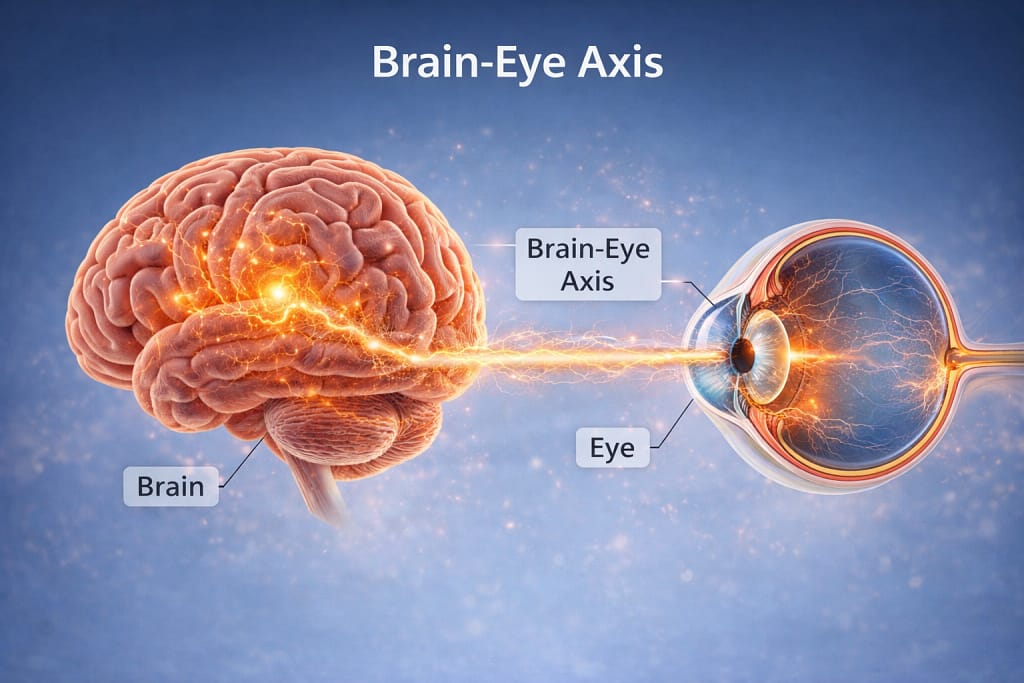
Vision therapy strengthens the connection between the eyes and the brain, improving both functional vision and comfort.
👉 Curious about how nutrition also supports your eyes? Read our detailed post on Antioxidants and Vision: How Vitamins A, C, and E Protect Your Eyes.
The ADHD & Dyslexia Connection” Many children misdiagnosed with ADHD or Dyslexia actually have underlying visual processing issues. Vision therapy doesn’t ‘cure’ ADHD, but it removes the visual barriers that mimic its symptoms, such as poor concentration and losing place while reading
Did You Know? 💡 Your eyes are responsible for about 80% of the information your brain receives. Vision therapy is essentially “brain training” because it focuses on the neuropathways between your retinas and the visual cortex!
Conditions Treated with Vision Therapy
Vision therapy is widely used for:
1. Amblyopia (Lazy Eye)
- Traditional treatment involves patching the stronger eye.
- Vision therapy provides more dynamic stimulation, encouraging both eyes to work together.
2. Strabismus (Eye Turn / Crossed Eyes)
- Helps align eyes without surgery in some cases.
- Improves binocular vision, reducing double vision and suppression.
3. Convergence Insufficiency
- Difficulty keeping the eyes turned inward for near tasks.
- Commonly causes eye strain, headaches, and blurred vision during reading or computer work.
4. Accommodative Dysfunction
- Problems focusing between near and far.
- Frequent in children and adults with prolonged screen exposure.
5. Visual Processing Disorders
- Often seen in children with reading or learning difficulties.
- Enhances visual memory, tracking, and comprehension.
6. Post-Trauma Vision Syndrome
- After concussions, strokes, or traumatic brain injury.
- Restores eye coordination, balance, and focus.
Who Can Benefit from Vision Therapy?
Vision therapy is beneficial for a wide range of individuals:
- Children with learning difficulties: Many cases of “reading problems” are related to undiagnosed vision issues.
- Adults with eye strain from digital devices: Helps improve focus and reduce headaches.
- Athletes: Enhances reaction time, depth perception, and hand-eye coordination.
- Patients with neurological conditions: People recovering from concussions, strokes, or brain injuries.
- Individuals with double vision or crossed eyes: Non-surgical management options are available.
👉 Children are often key candidates—see our full guide on Myopia Control for Kids: Atropine, Ortho-K & Outdoor Time

What to Expect During Vision Therapy
1. Initial Eye Examination
- Includes detailed testing beyond standard eye charts.
- Assesses eye coordination, depth perception, tracking, and visual processing.
2. Customized Treatment Plan
- Tailored to the patient’s condition and goals.
- May involve in-office visits (1–2 times per week) and at-home exercises.
3. Types of Exercises
- Using prisms to stimulate eye teaming.
- Computerized programs for focus and coordination.
- Eye-tracking games with moving targets.
- Balance and spatial awareness activities.

Vision Therapy Brock String Kit
A fundamental tool for improving binocular vision and convergence at home.
Get the Training Kit →4. Treatment Duration
- Typically lasts several months, depending on the severity of the condition.
- Progress is measured regularly to adjust the program.
Effectiveness of Vision Therapy: What Research Says
Numerous clinical studies show that vision therapy can be highly effective:
- The Convergence Insufficiency Treatment Trial (CITT) demonstrated significant improvement in children treated with office-based vision therapy.
- Patients with amblyopia have reported improved acuity and depth perception compared to patching alone.
- Adults with digital eye strain often experience reduced symptoms after consistent therapy.
While results vary, most patients report noticeable improvements in comfort, performance, and quality of life.
👉 For age-related challenges, explore Presbyopia: Why Reading Becomes Harder With Age.
Myths and Misconceptions About Vision Therapy
- “It’s only for kids.”
Not true—adults can also benefit from vision therapy. - “It can replace glasses or surgery.”
Glasses correct refractive errors (blurry vision), while vision therapy targets functional issues. - “It’s unproven.”
Scientific evidence supports its effectiveness for specific conditions like convergence insufficiency and amblyopia.
Integrating Vision Therapy with Lifestyle Changes
To maximize results:
- Take regular screen breaks (20-20-20 rule).
- Ensure proper lighting and posture while reading.
- Encourage outdoor play for children to promote healthy eye development.
- Combine with nutritional support (antioxidants, lutein, omega-3s).
👉 Lifestyle habits also affect sleep and recovery—discover more in The Role of Sleep in Maintaining Eye Health.
Vision Therapy vs. Eye Exercises (The Big Difference)” Home-based ‘pencil push-ups’ are often insufficient. Professional vision therapy involves specialized equipment like Gabor patches, balance boards, and computerized perceptual software that provides biofeedback to the brain
FAQ
- Q: How much does vision therapy cost?
- A: Costs vary by location and complexity, but a typical program can range from $100 to $250 per session. +1
- Q: Can adults benefit from vision therapy?
- A: Absolutely. While the brain is most “plastic” in childhood, neuroplasticity exists throughout life, making it effective for adults with stroke recovery or digital strain. +1
- Q: Is vision therapy the same as eye surgery?
- A: No. Vision therapy is non-invasive and focuses on muscle and brain coordination rather than physically changing the eye structure.
Conclusion
Vision therapy is more than eye exercises—it’s a powerful, science-backed way to retrain the brain and eyes for optimal performance. From children struggling with reading to adults experiencing digital strain, countless individuals can benefit from this non-invasive treatment.
By understanding who benefits, how it works, and what to expect, patients can make informed decisions about incorporating vision therapy into their overall eye health strategy.
A Note from the Founder
"I started CVT because eye health is personal to me. After losing sight in my left eye due to a childhood injury and managing high intraocular pressure for decades, I’ve dedicated my life to finding the best ways to protect the vision we have. Every piece of advice on this site is researched with that same level of care and responsibility. Thank you for being here."

