
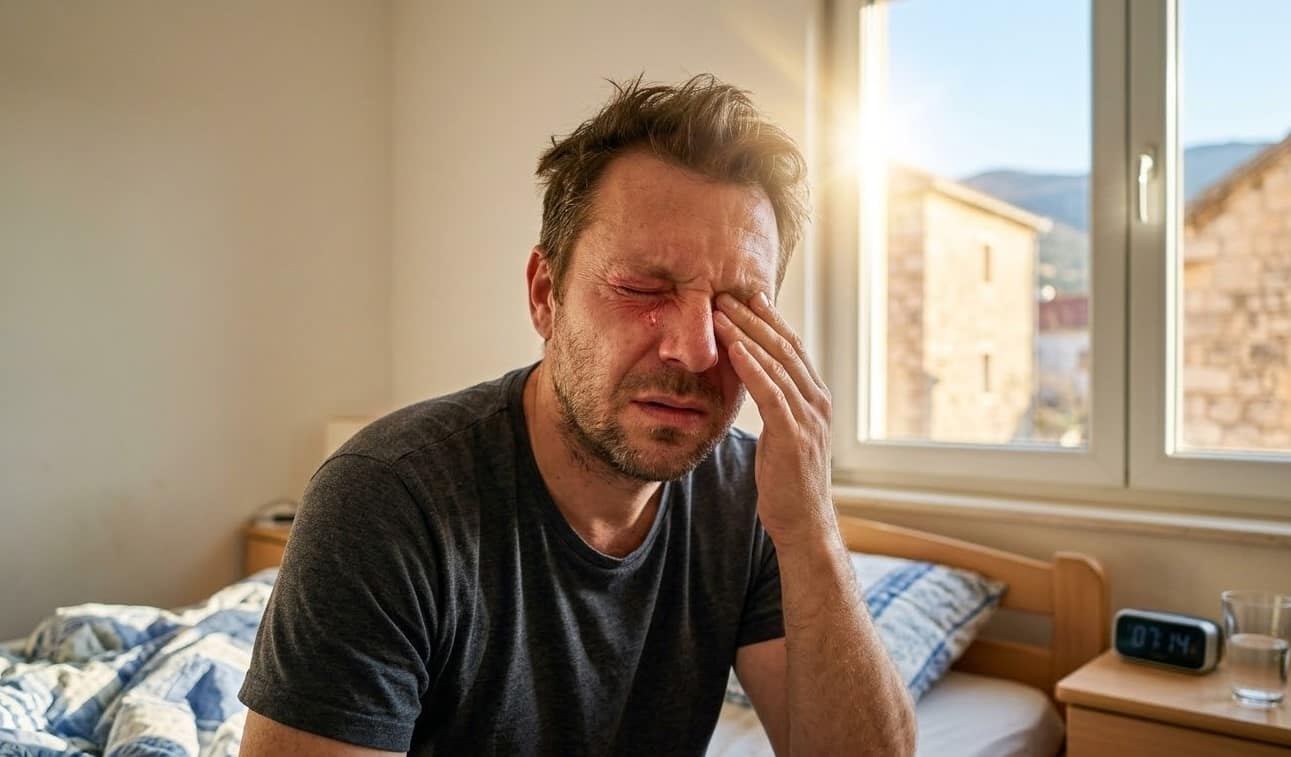
You went to bed early, slept 8 hours, but you still wake up asking: why eyes feel worse after sleep than they did the night before? If you regularly experience morning eye discomfort, you aren’t alone. Whether it’s redness, a gritty sensation, or blurred vision, understanding why your eyes feel worse after sleep is the first step toward restoring your tear film and digital wellness.
Morning irritation is rarely an isolated incident; it’s usually the final stage of daytime ocular stress. To see how your nighttime recovery connects to your daily habits, explore our Digital Eye Strain & Dry Eyes HUB. There, we break down the science of tear evaporation and how modern screens rewire your blink reflex.
Overnight Tear Film Breakdown
Your eyes are protected by a three-layer tear film:
- Lipid (oil) layer
- Aqueous (water) layer
- Mucin layer
When this system becomes unstable — especially in people with Meibomian Gland Dysfunction — tears evaporate too quickly.
During the day, blinking helps redistribute moisture.
At night, blinking stops.
If your tear film was already weak from screen overuse, sleep can actually worsen dryness instead of restoring it. If your oil glands are blocked, you will likely wonder why eyes feel worse after sleep, as the lack of blinking at night accelerates the evaporation of the water layer.
This is why in our Complete Guide to Dry Eye Syndrome, we explain that evaporation — not lack of tears — is often the main issue.
2. You May Sleep With Your Eyes Slightly Open
A surprising number of people experience nocturnal lagophthalmos — sleeping with partially open eyelids.
Even a tiny gap allows:
- moisture evaporation
- corneal exposure
- inflammation buildup
Symptoms include:
- immediate dryness upon waking
- light sensitivity
- redness concentrated in one area
🟢 Did You Know?
Up to 20% of adults may unknowingly sleep with partially open eyelids, increasing the risk of overnight dryness.
3. The Digital Eye Strain Rebound Effect
If you spend 6–10 hours per day in front of screens, your blink rate drops by up to 50%. Recent studies show that the ‘Blink Gap’—the time between blinks during intense screen use—causes microscopic dry spots on the cornea. These spots become inflamed during the night, which is a primary reason why your eyes feel worse after sleep even if you didn’t use a phone in bed
Reduced blinking leads to:
- unstable tear film
- increased inflammation
- micro-damage to ocular surface
By bedtime, your eyes are already compromised.
When sleep begins, the damaged tear film cannot repair effectively.
That’s why readers who follow our Blue Light Exposure Guide often report improvement once they reduce evening screen use.
And this is exactly why this article belongs inside our Digital Eye Strain & Dry Eyes Hub — because morning discomfort is often a delayed symptom of daytime screen abuse.
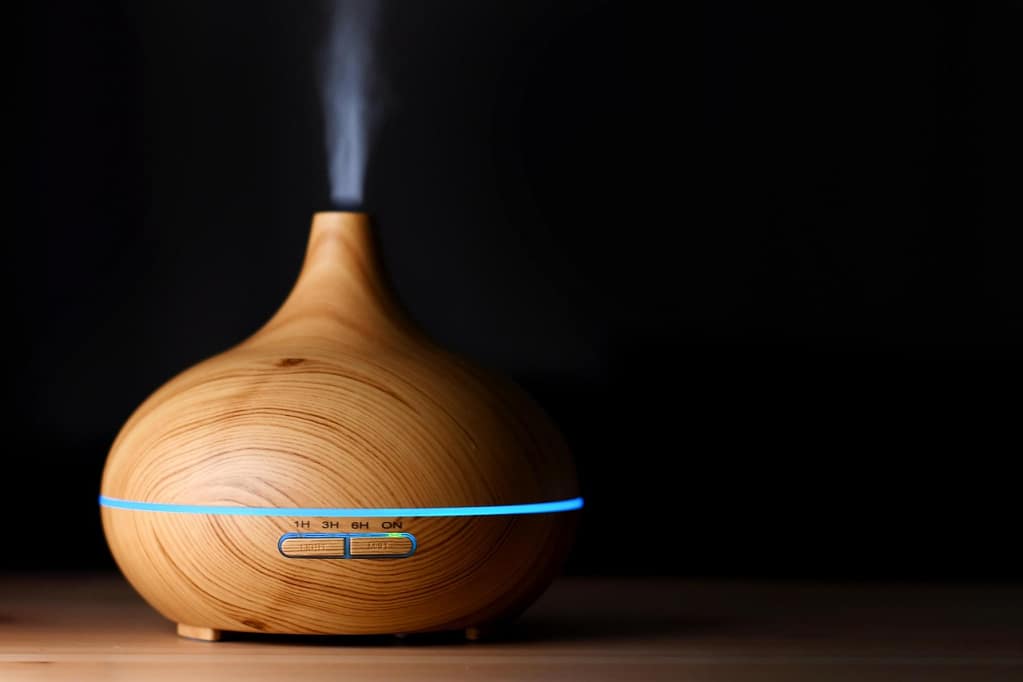
4. Low Bedroom Humidity
Air conditioning and heating systems reduce indoor humidity dramatically.
Dry air = faster tear evaporation.
Especially in winter months, you may notice:
- crusty eyelids
- burning sensation
- sticky feeling in morning
This is a purely environmental trigger — and one of the easiest to fix. Environmental factors like dry AC air are a common answer to why eyes feel worse after sleep, especially during winter months when indoor humidity drops below 30%.
5. Meibomian Gland Dysfunction (MGD)
Your eyelids contain oil-producing glands.
When these become blocked:
- oil layer thins
- tears evaporate faster
- inflammation increases
MGD is one of the leading causes of chronic dry eye. Clinical studies published by the American Academy of Ophthalmology demonstrate that stabilizing the lipid layer is the most critical factor in preventing overnight tear evaporation.

Morning Eye Relief Essentials
If why your eyes feel worse after sleep is due to blocked oil glands (MGD), a heated mask is the #1 clinical recommendation to restore your lipid layer overnight.
6. Nighttime Inflammation Peaks
Inflammatory markers can peak in early morning hours.
If your eyes are already irritated from digital eye strain, inflammation accumulates overnight.
This explains:
- red eyes after waking
- mild swelling
- sensitivity to light
7.Why Eyes Feel Worse After Sleep Despite Getting 8 Hours
REM sleep is when tissue repair happens.
If your sleep is fragmented:
- corneal cells recover slower
- tear production remains low
- inflammation lingers
So yes — you can sleep 8 hours and still wake up worse.
Quality matters more than duration.
Quick Fix Comparison
8. How to Fix Morning Eye Discomfort (Step-by-Step)
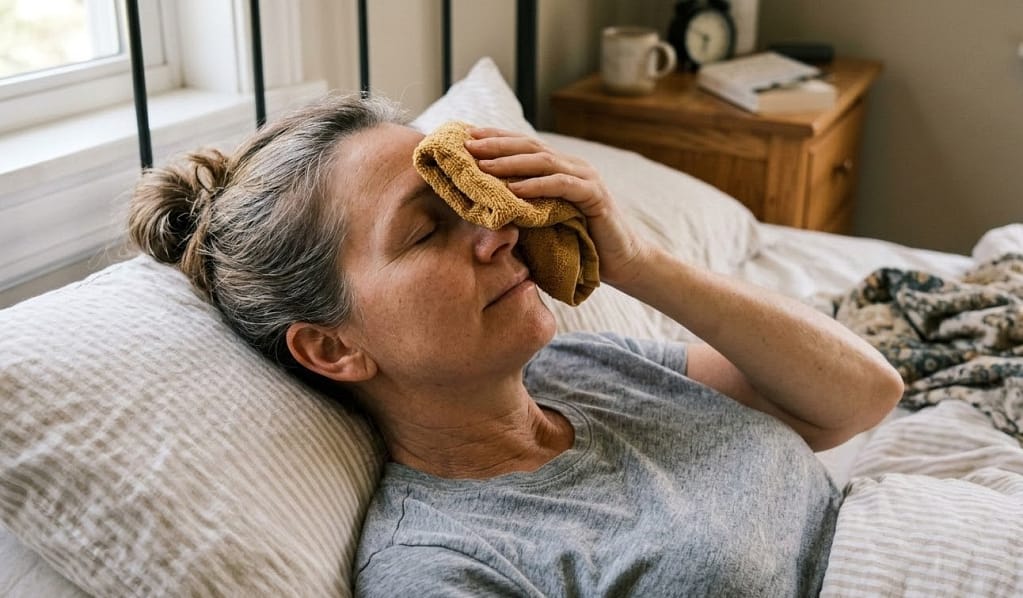
1. Warm Compress Every Evening
Improves oil gland flow and stabilizes tear film.
2. Reduce Screen Exposure 2 Hours Before Bed
This is one of the most powerful strategies explained in our Blue Light and Evening Screen Guide.
3. Use Preservative-Free Tears Before Sleep
Avoid vasoconstrictor “redness relief” drops.
4. Increase Bedroom Humidity
Target 40–50% humidity.
5. Blink Training Exercises
Rebuild tear film stability.
9. Morning Eye Discomfort Is a Symptom — Not the Root Problem
If eyes feel worse after sleep regularly, it’s rarely random.
It usually signals:
- unstable tear film
- digital overuse
- blocked oil glands
- environmental dryness
When you analyze why eyes feel worse after sleep, you realize it’s rarely a single issue but a combination of screen time and poor eyelid hygiene
FAQ
Q: Is there a quick fix for why eyes feel worse after sleep?
A: A warm compress in the evening is the most effective quick fix for why eyes feel worse after sleep, as it thins the oils in your eyelids and prevents overnight evaporation.
Q: Can sleeping position explain why eyes feel worse after sleep?
A: Yes, if your face is pressed against a pillow, it can cause “floppy eyelid syndrome,” which is one of the clinical reasons why eyes feel worse after sleep due to air exposure.
Q: Can your bedroom environment explain why eyes feel worse after sleep?
A: Absolutely. Factors like ceiling fans blowing directly on your face or low humidity levels are common reasons why eyes feel worse after sleep. These environmental triggers accelerate tear evaporation while your eyelids are still, leading to significant morning redness and a gritty sensation.
Q: Does screen time before bed influence why eyes feel worse after sleep?
A: Yes, there is a direct link. Intense blue light exposure and reduced blinking while scrolling at night weaken the tear film’s stability. This pre-existing daytime strain is often the root cause of why eyes feel worse after sleep, as the ocular surface fails to repair itself during the night.
Conclusion
If eyes feel worse after a full night’s sleep, your body is not failing to rest.
Your tear film is failing to recover.
In today’s digital world, eye recovery requires active support — not passive sleep.
By addressing evaporation, inflammation, and screen overuse, you can wake up with clearer, calmer, healthier eyes.
And that’s the real goal of everything we teach inside the Digital Eye Strain & Dry Eyes Hub.
A Note from the Founder
"I started CVT because eye health is personal to me. After losing sight in my left eye due to a childhood injury and managing high intraocular pressure for decades, I’ve dedicated my life to finding the best ways to protect the vision we have. Every piece of advice on this site is researched with that same level of care and responsibility. Thank you for being here."

