
Introduction: Why Nutrition Matters for Your Eyes
Your quest for understanding effective nutrition for vision and how diet impacts long-term eyesight begins right here, as we break down the foods and supplements proven by science to protect your eyes. Your eyes are constantly exposed to oxidative stress from light, screens, and the environment. Over time, this stress can lead to cataracts, macular degeneration, glaucoma, diabetic retinopathy, and chronic dry eyes.
For high-performance individuals looking to move beyond standard vitamins, our [Vision Therapy & Advanced Biohacking Hub provides deep-dive protocols on light therapy and the latest neuro-protective ocular technologies.
The good news? A diet rich in antioxidants, vitamins, minerals, and omega-3 fatty acids can dramatically reduce your risk of vision loss and even improve visual performance. In this guide, we’ll explore the best foods and supplements backed by science for lifelong eye health.
🚨 Quick Solution: Why Supplementation Matters Now
Your diet is your best defence, but achieving clinical doses of key nutrients like Lutein (10mg) and Zeaxanthin (2mg) can be challenging every day. If you are struggling with chronic dry eyes or high screen exposure, targeted supplementation is the most effective shortcut.
Recommended Comprehensive Supplement: Eyevita
If you are ready to start protecting your macula today with a formula that contains the perfect balance of Lutein, Zeaxanthin, and Omega-3, our team recommends Eyevita.
While fueling your body with the right nutrition for vision is essential, external factors like screen time also play a massive role in your ocular health. Many parents often ask, do smartphones damage children’s vision?—separating facts from myths is crucial for the next generation’s eye safety. Furthermore, even with a perfect diet, high-intensity screen use can lead to significant discomfort. We recommend pairing your nutritional intake with our expert strategies on preventing digital eye strain to maintain total visual comfort throughout the workday
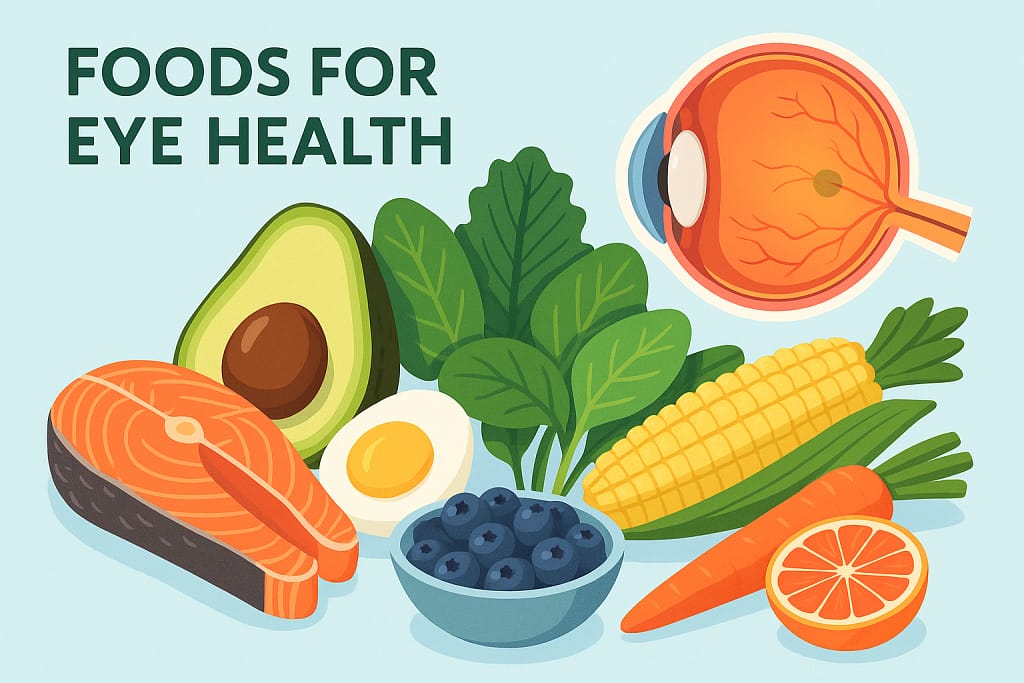
1. Leafy Green Vegetables: The Carotenoid Powerhouses
Leafy greens like spinach, kale, and collard greens are packed with lutein and zeaxanthin — carotenoids that protect the macula by filtering harmful blue light.
- Protect against age-related macular degeneration (AMD)
- Reduce oxidative stress in the retina
- Work best when eaten with healthy fats (olive oil, nuts, avocado)
Lutein and Zeaxanthin are fat-soluble. To absorb these nutrients effectively, always serve your salads or sautéed greens with a healthy fat like avocado, extra virgin olive oil, or walnuts.
Did You Know? 💡 Kale contains more lutein per gram than almost any other food on earth.
2. Carrots & Sweet Potatoes: Vitamin A Boost
Carrots and sweet potatoes are rich in beta-carotene, which the body converts into vitamin A, essential for retinal function.
- Prevent night blindness
- Support corneal and immune system health
- Work synergistically with zinc and vitamin E
Useful Tip: Roast sweet potatoes with olive oil to boost beta-carotene absorption.
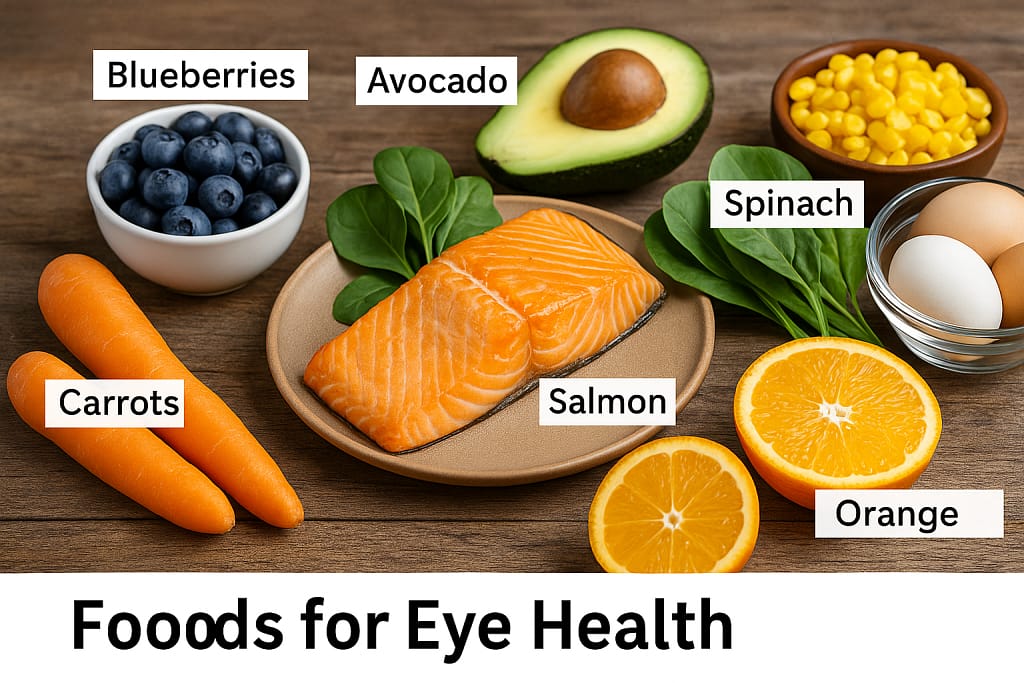
3. Fatty Fish: Omega-3s for Retinal Health
Salmon, mackerel, and sardines are loaded with omega-3 fatty acids (EPA & DHA), vital for retinal health and tear production.
- Relieve dry eye syndrome
- Improve visual development and retinal signaling
- Lower risk of AMD and diabetic retinopathy
Did You Know? 💡 The retina contains the highest concentration of DHA of any tissue in the body.
4. Eggs: The All-in-One Eye Food
Egg yolks are a compact source of lutein, zeaxanthin, vitamin A, zinc, and healthy fats.
- Enhance macular pigment density
- Support healthy night vision
- Help prevent cataracts
Useful Tip: Cook eggs on low heat to preserve carotenoids and vitamin A content.
5. Citrus Fruits & Berries: Vitamin C & Anthocyanins
Oranges, grapefruits, and berries provide vitamin C and anthocyanins that strengthen eye blood vessels and slow oxidative stress.
- Protect against cataracts
- Improve circulation in retinal tissue
- Support collagen production in the cornea
Did You Know? 💡 High vitamin C intake can lower cataract risk by up to 20%.
6. Nuts & Seeds: Vitamin E and Plant-Based Omega-3s
Almonds, walnuts, flaxseeds, and chia seeds are rich in vitamin E and ALA (a plant-based omega-3).
- Vitamin E reduces retinal oxidative stress
- Omega-3s improve tear quality and eye surface health
- Great for people who don’t eat fish
Zinc is the ‘courier’ for Vitamin A. It helps transport Vitamin A from the liver to the retina to produce melanin, a protective pigment in the eyes. You can find high levels of Zinc in oysters, beef, and pumpkin seeds
Useful Tip: One handful of almonds gives nearly half of your daily vitamin E needs.
While the AREDS2 formula proved the power of nutrition, you need a comprehensive, single solution that covers all bases:
- It secures your dose: It guarantees the exact clinical doses of Lutein, Zeaxanthin, Vitamins C & E, and Zinc that are necessary to slow AMD progression and filter blue light.
- It fights dry eyes: Unlike many standard macular formulas, Eyevita includes high-quality Omega-3 DHA to stabilize the tear film, addressing the most common complaint from screen users.
Don’t leave your eye health to chance. Make sure you are covered by a science-backed formula.
Did You Know? 💡 The AREDS2 clinical trial transformed eye care by proving nutrition can slow down macular degeneration.

NOW Foods Lutein & Zeaxanthin
A potent formula designed to build macular pigment density and protect against harmful HEV blue light.
❓ Frequently Asked Questions (FAQ)
Q1: Can diet really prevent vision problems?
A: Yes. A diet rich in antioxidants, omega-3s, and vitamins reduces risk of cataracts, AMD, and dry eyes.
Q2: What’s better for eyes — lutein or zeaxanthin?
A: They work best together and should be consumed in balance. Both protect the macula.
Q3: Are supplements safe for everyone?
A: Generally yes, but high doses of vitamin A and E can have side effects. Always follow recommended amounts.
Q4: How long until I notice results from diet changes?
A: Consistency is key — improvements are usually noticed after 3–6 months.
Q5: Do children need eye supplements?
A: Usually not — a balanced diet with fruits, vegetables, and fish is enough. Supplements are for at-risk adults.
Key Takeaway
In conclusion, mastering nutrition for vision is a lifelong commitment. By incorporating the ‘Big Six’—leafy greens, carrots, fatty fish, eggs, citrus, and nuts—into your daily meals, you create a biological shield for your eyes. When your diet falls short, high-quality supplements like Lutein, Zeaxanthin, and Omega-3 provide the clinical support needed to fight oxidative stress and preserve your sight for the years to come
A Note from the Founder
"I started CVT because eye health is personal to me. After losing sight in my left eye due to a childhood injury and managing high intraocular pressure for decades, I’ve dedicated my life to finding the best ways to protect the vision we have. Every piece of advice on this site is researched with that same level of care and responsibility. Thank you for being here."

