Introduction: Why the Cure to Digital Strain Isn’t a Pill, It’s the Sun
For decades, we’ve treated vision problems with glass lenses, drops, or expensive surgery. But the definitive cure for the modern epidemic of digital eye strain and progressive nearsightedness (myopia) is free, universally available, and remarkably simple: natural outdoor light. Your eyes and your brain possess a powerful chemical switch—Dopamine—and understanding how Outdoor Light Eye Health activates this switch is the single greatest biohacking tool you have to protect your long-term vision.
The Dopamine Hypothesis: The Single Most Important Reason to Go Outside
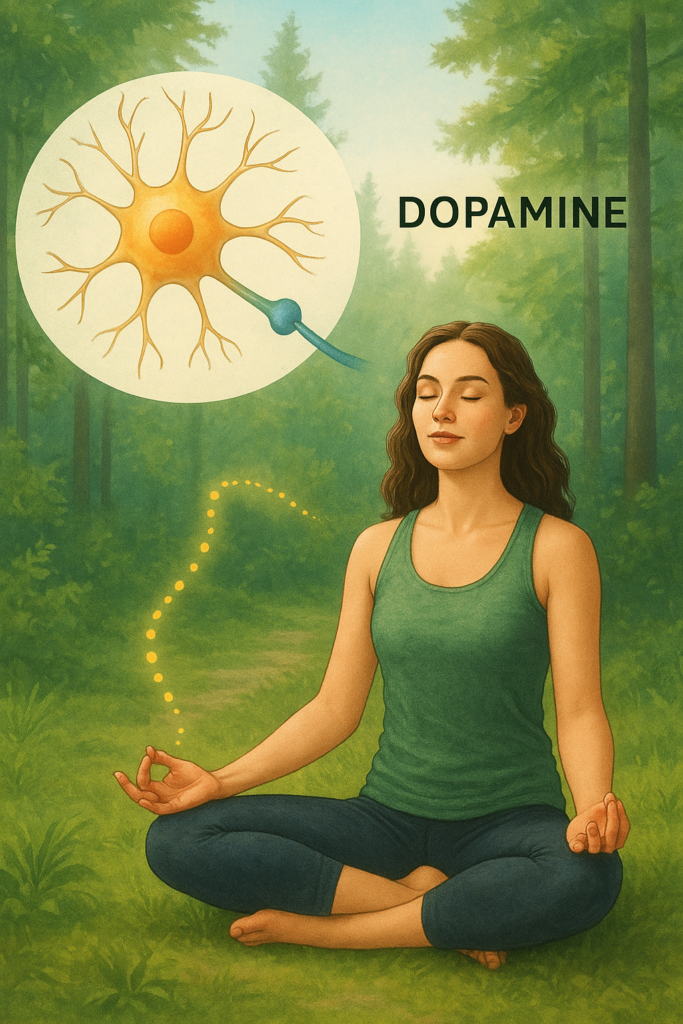
It sounds counterintuitive, but the key to healthy vision isn’t just what you see; it’s where you see it. The secret lies in a concept called the Dopamine Hypothesis of Myopia. When your retina is exposed to bright, natural light (which is far brighter than any indoor light, even on a cloudy day), it triggers a crucial release of Dopamine.
Dopamine, often associated with pleasure and reward, acts as a natural growth regulator within the eye. High levels of Dopamine prevent the eye from lengthening excessively. Myopia (nearsightedness) occurs when the eye grows too long, causing light to focus in front of the retina. By spending time outdoors, you naturally hit the brake on this pathological growth.
The “Magic 90 Minutes”: How Much Light Do You Need?
Research across the globe consistently points to a minimum effective dose: at least 90 minutes of daily exposure to light levels above 10,000 lux. For context:
- An average office desk: 300–500 lux
- A bright living room: 500–1000 lux
- Outdoors on a cloudy day: 10,000–25,000 lux
- Outdoors on a sunny day: 50,000–100,000+ lux
This means that simply being near a window is often not enough; you need to physically step outside to activate this protective mechanism.
DID YOU KNOW? Researchers have found that children who spend less than 8 hours per week outdoors are significantly more likely to develop myopia than those who spend 14 hours or more outdoors, regardless of their screen time. The key factor is light intensity, not just near-work avoidance.
(Source: For clinical data on the effectiveness of outdoor time for myopia prevention, see this report from the American Academy of Ophthalmology (AAO) .)
Dopamine vs. Screen Time: Breaking the Indoor Addiction Cycle
The irony is that artificial blue light from screens also releases dopamine, but in a way that promotes addiction, not health. Our previous article discussed the ‘Dopamine Loop’ that makes screens addictive. The high-intensity outdoor light provides the beneficial dopamine release necessary for structural Outdoor Light Eye Health, acting as a counter-signal to the strain and addiction caused by near-work indoors.
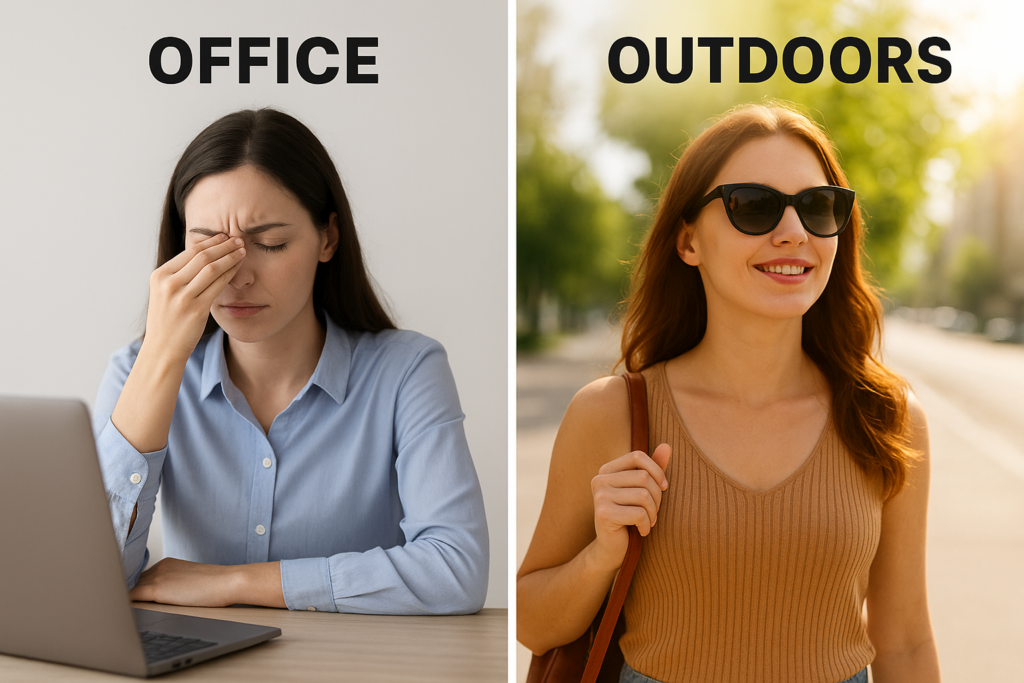
Image Keyword Search: side by side comparison office vs outdoors lux or woman walking outside with sun ALT Text (SEO Optimized): Illustration comparing the low lux levels of an office (300 lux) versus the high lux levels needed for Outdoor Light Eye Health (10,000+ lux).
5 Simple Ways to Integrate Natural Light into Your Day
You don’t need a lifestyle overhaul; you just need to weave light exposure into your existing routine.
- The Coffee Window Hack: Drink your morning coffee outside or near a window (facing the light) for 15 minutes. This sets your circadian rhythm and delivers powerful morning lux exposure.
- Walking Meetings: Whenever possible, take phone calls or short meetings while walking outdoors. Even 30 minutes adds significantly to your daily target.
- Lunch Break Lux Boost: Dedicate your 30-minute lunch break to sitting outside, away from your phone.
- Window Placement: Adjust your desk so your line of sight occasionally looks toward a window, ideally perpendicular to the light source.
- The Homework Rule (For Kids): Implement a simple rule: 20 minutes of outdoor play for every 60 minutes of reading or screen time.
🛠️ Recommended Biohacking Gear: Tools to Measure Your Light Exposure
If you’re serious about optimizing your Outdoor Light Eye Health, measurement is key. While the sun is free, knowing exactly how much lux you are getting, especially on cloudy days or early mornings, can ensure you hit your protective target.
BIOHACKING TIP: BEAT WINTER MYOPIA BLUES
On dark or rainy days, you can mimic the lux intensity needed for **Outdoor Light Eye Health** using a high-quality light therapy lamp. This helps sustain Dopamine release when you can’t get outside.
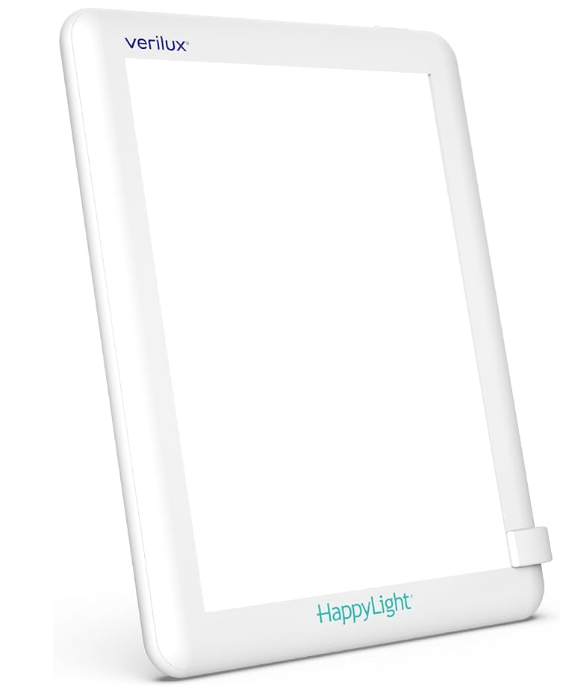 See Top-Rated Light Therapy Lamps →
Frequently Asked Questions (FAQ) About Outdoor Light and Vision
1. Does wearing sunglasses outside still provide the benefits for vision health?
**Yes and No.** You should always wear UV-protective sunglasses to shield your retina from direct sun damage (especially around midday). However, sunglasses significantly reduce the overall light intensity (lux) hitting your eyes. For the Dopamine effect—the growth regulation that stops myopia—it is best to remove your sunglasses briefly during walks or time spent in shaded outdoor areas, or wear contact lenses with UV protection but without tint.
2. Can I get enough outdoor light exposure just sitting by a window?
**No, generally not.** Standard window glass and polycarbonate materials filter out much of the beneficial light intensity (lux) and UV spectrum. Even a bright window only provides around 1,000 to 5,000 lux, while the required “Magic 90 Minutes” needs 10,000+ lux. To get the dopamine boost, you must physically step outside.
3. Is the Dopamine hack only for children, or does it work for adults too?
While the Dopamine Hypothesis is primarily studied in children regarding **myopia progression**, the benefits of high-intensity outdoor light exposure—including setting the circadian rhythm, boosting mood, and reducing eye strain fatigue—are absolutely vital for adults. It helps manage digital strain and promotes overall **Outdoor Light Eye Health** at any age.
4. Do overcast or cloudy days count toward the “Magic 90 Minutes” target?
**Yes, they do!** This is a common misconception. Even on a heavily overcast day, the outdoor light level is typically 10,000 to 25,000 lux—significantly higher than any indoor lighting setup. Cloudy days count fully toward your 90-minute goal for **Outdoor Light Eye Health**.
5. If I have a vision condition (like Glaucoma), is high-intensity light safe?
For most conditions, time spent outdoors is safe and encouraged, provided you follow standard sun safety (wearing hats and UV protection). However, if you have a pre-existing severe condition like glaucoma, cataracts, or retinal issues, **always consult your ophthalmologist** regarding light exposure recommendations.
Conclusion: Your Prescription is Free
You now hold the single most powerful, yet overlooked, secret to lifetime vision preservation: Outdoor Light Eye Health driven by Dopamine. Your prescription is simple, free, and incredibly enjoyable: Go outside. Commit to the “Magic 90 Minutes” daily to strengthen your eyes, break the screen addiction cycle, and secure a clearer future.
A Note from the Founder
"I started CVT because eye health is personal to me. After losing sight in my left eye due to a childhood injury and managing high intraocular pressure for decades, I’ve dedicated my life to finding the best ways to protect the vision we have. Every piece of advice on this site is researched with that same level of care and responsibility. Thank you for being here."