
Introduction
Why one eye is blurry and the other is fine is one of the most searched vision-related questions online—and for good reason.
Few things are more alarming than covering one eye and suddenly realizing that your vision is noticeably worse in the other. Many people discover the problem by accident. They might close one eye while reading, looking at a screen, applying makeup, or taking a vision test and suddenly notice that one eye sees clearly while the other appears blurred, hazy, distorted, or out of focus.
The experience can be frightening.
Your mind immediately jumps to worst-case scenarios. Is it permanent? Is something wrong with the retina? Could it be a stroke? Is blindness possible?
In many cases, the cause is harmless and treatable. However, there are situations where blurry vision in one eye may indicate a more serious issue that requires prompt medical attention.
Understanding the difference can help you respond appropriately instead of panicking.
Vision is one of the most complex systems in the human body. Clear sight depends on healthy tear production, a properly shaped cornea, a transparent lens, a functioning retina, healthy blood circulation, and a fully operational optic nerve. If any part of this chain is disrupted, the result can be blurred vision affecting one eye.
The challenge is that many different conditions can produce similar symptoms.
Someone experiencing temporary dryness may notice the exact same complaint as someone with a retinal problem:
“One eye is blurry but the other eye is perfectly fine.”
This guide explains the most common and uncommon reasons why one eye becomes blurry while the other remains normal, how to identify warning signs, and what steps you can take to protect your vision.
If your blurry vision is accompanied by headaches or eye strain, read our complete guide to Eye Pain, Headaches & Screen Fatigue.
What Does It Mean When Only One Eye Is Blurry?
When only one eye is blurry, the problem is usually occurring somewhere inside that eye or along the visual pathway connected to it.
Unlike general blurry vision affecting both eyes, unilateral blurry vision often points toward:
- eye surface problems
- corneal issues
- lens changes
- retinal conditions
- optic nerve problems
- circulation disturbances
The severity can range from minor irritation to a potentially sight-threatening condition.
The first step is determining whether the blurriness is:
Temporary
Symptoms come and go.
Examples:
- dry eyes
- eye fatigue
- migraines
- screen strain
Persistent
Symptoms remain present for days, weeks, or months.
Examples:
- cataracts
- refractive errors
- retinal disease
Sudden
Symptoms appear rapidly.
Examples:
- retinal detachment
- retinal vascular issues
- optic nerve conditions
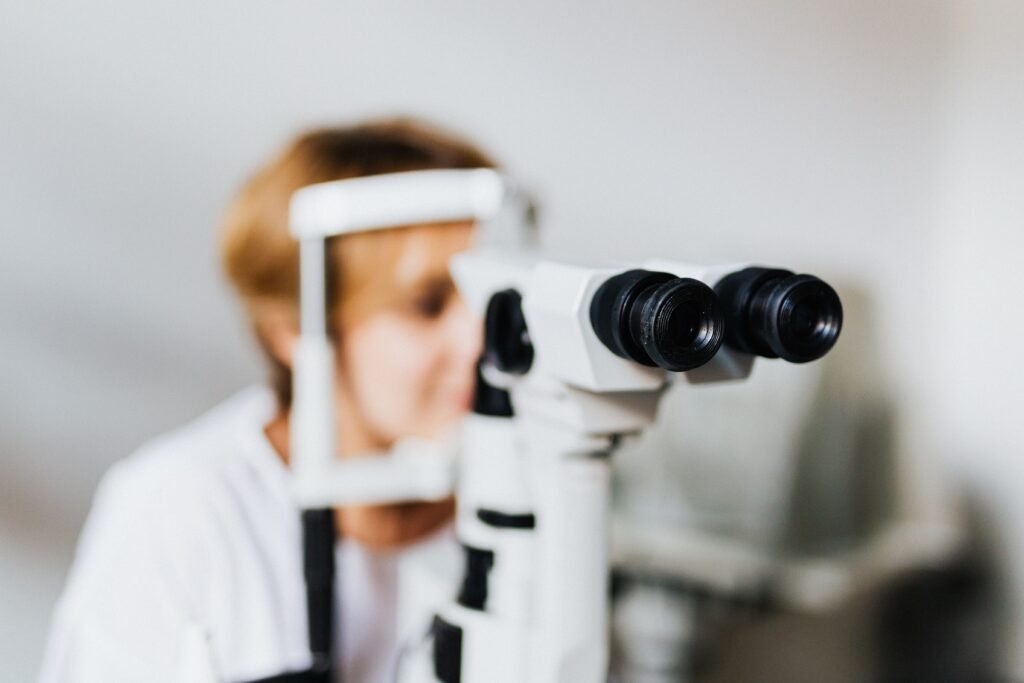
Many people do not realize they have blurry vision in one eye until they accidentally cover the stronger eye. The brain often compensates for vision loss by relying more heavily on the healthier eye.
Cause #1: Dry Eye Disease
One of the most overlooked causes of blurry vision in one eye is dry eye disease.
Many people assume dry eyes only cause discomfort, but unstable tear production can significantly affect visual clarity.
The tear film is the first optical surface that light passes through before entering the eye.
When that tear layer becomes uneven:
- vision fluctuates
- text becomes difficult to read
- screens appear fuzzy
- contrast decreases
Dry eye symptoms may include:
- burning
- stinging
- redness
- foreign body sensation
- intermittent blurring
Interestingly, dry eye often affects one eye more severely than the other.
This is why some people report:
“My right eye is blurry but my left eye is fine.”
or
“Only my left eye seems blurry.”
The problem may not be inside the eye itself but rather on its surface.
Cause #2: Digital Eye Strain
The modern lifestyle places enormous demands on the visual system.
Hours spent looking at:
- computers
- smartphones
- tablets
- televisions
can dramatically reduce blinking frequency.
Research shows people blink significantly less while concentrating on digital screens.
As blinking decreases:
- tears evaporate faster
- the eye surface becomes unstable
- visual clarity declines
Many individuals notice that one eye becomes blurrier than the other after a long workday.
This is especially common among:
- office workers
- programmers
- students
- gamers
- content creators

Cause #3: Refractive Error Differences Between Eyes
One eye may simply require a different prescription than the other.
This condition is known as anisometropia.
It occurs when one eye has:
- more nearsightedness
- more farsightedness
- more astigmatism
than the opposite eye.
Because the brain adapts gradually, some people do not notice the difference for years.
Common symptoms include:
- headaches
- eye fatigue
- depth perception issues
- blurry vision in one eye
Cause #4: Astigmatism
Astigmatism occurs when the cornea has an irregular shape.
Instead of being perfectly round, it becomes slightly football-shaped.
This causes incoming light to focus unevenly.
Symptoms include:
- blurry vision
- ghost images
- distorted letters
- halos around lights
Astigmatism frequently affects one eye more than the other.
Astigmatism is one of the most common reasons people experience blurry vision in only one eye. A simple eye examination can often identify and correct the issue.
Cause #5: Eye Allergies
Allergic reactions can temporarily affect vision quality.
When the eyes become inflamed:
- swelling develops
- tears change composition
- the corneal surface becomes irregular
This may create temporary blurry vision affecting one eye more than the other.
Common triggers include:
- pollen
- dust mites
- pet dander
- mold
Cause #6: Corneal Abrasion
Even a tiny scratch on the cornea can significantly affect vision.
Corneal abrasions may occur from:
- contact lenses
- fingernails
- dust particles
- accidental injury
Symptoms often include:
- pain
- tearing
- light sensitivity
- blurry vision

Cause #7: Cataracts
Although cataracts usually develop slowly, they may affect one eye earlier than the other.
The natural lens becomes cloudy, causing:
- blurry vision
- glare
- faded colors
- difficulty driving at night
Many patients first notice the problem when comparing one eye against the other.
For additional information about vision health and eye diseases, visit the National Eye Institute. You can also learn more about comprehensive eye examinations from the American Academy of Ophthalmology.Cause #8: Retinal Blood Flow Problems
The retina is one of the most metabolically active tissues in the human body.
It depends on a constant supply of oxygen and nutrients.
When circulation decreases, retinal cells begin functioning less efficiently.
Symptoms may include:
- sudden blurry vision
- dim vision
- dark spots
- reduced contrast
- distorted images
People with:
- diabetes
- hypertension
- smoking history
- cardiovascular disease
have increased risk.
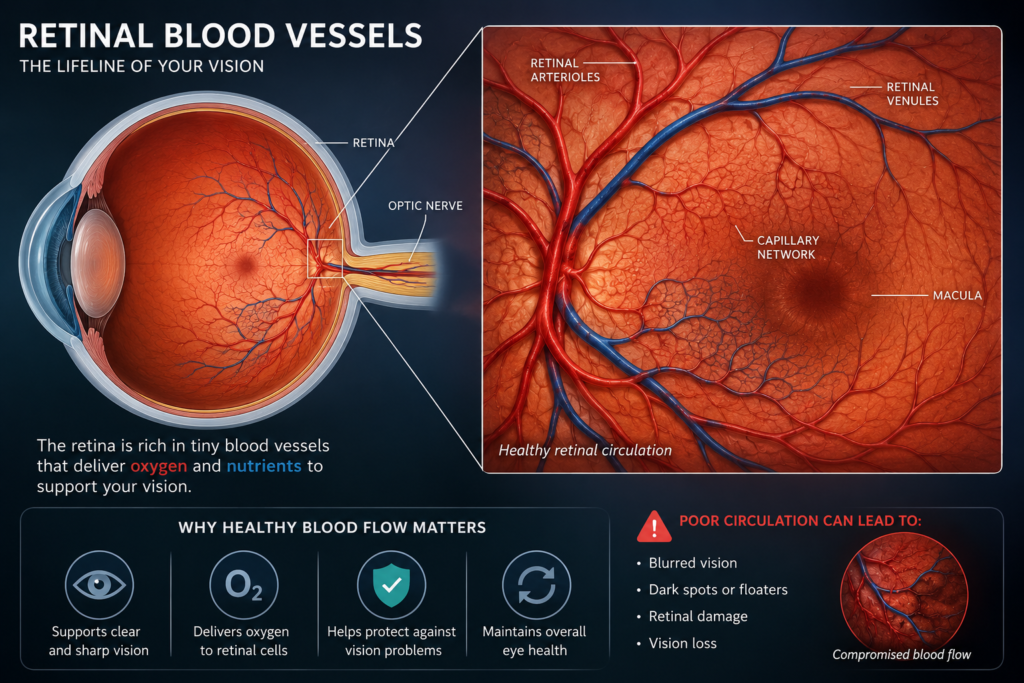
The retina consumes more oxygen than almost any other tissue in the body. Even minor circulation problems can affect visual clarity before other symptoms appear.
Cause #9: Macular Problems
The macula is responsible for:
- reading
- facial recognition
- fine detail vision
When the macula becomes damaged, people often describe:
“The center of my vision looks blurry.”
or
“Straight lines look distorted.”
Warning signs include:
- wavy lines
- distorted text
- central blur
- difficulty recognizing faces
Cause #10: Optic Nerve Disorders
The optic nerve acts as the communication cable between the eye and the brain.
If this connection becomes disrupted, vision quality can decrease dramatically.
Symptoms may include:
- blurry vision
- reduced color perception
- pain behind the eye
- visual field defects
Conditions affecting the optic nerve require professional evaluation.
If you are experiencing eye discomfort alongside blurry vision, read our guide on Eye Pain, Headaches & Screen Fatigue: The Definitive Work-From-Home Vision Survival Guide.
Cause #11: Migraine Aura
Many people associate migraines with headaches.
However, visual symptoms may occur even without head pain.
Common visual aura symptoms include:
- shimmering lights
- zigzag patterns
- temporary blurry vision
- blind spots
Symptoms usually resolve within an hour.
Cause #12: Contact Lens Problems
Contact lenses can cause blurry vision if they:
- dry out
- become damaged
- accumulate deposits
- fit improperly
Many users assume their prescription changed when the real problem is the lens itself.
Cause #13: Elevated Blood Sugar
High blood sugar temporarily changes fluid balance inside the eye.
This can alter focusing ability.
People with diabetes often experience:
- fluctuating vision
- temporary blur
- changing prescription needs
Cause #14: Retinal Detachment (Medical Emergency)
This is one of the most serious causes of sudden blurry vision.
Symptoms may include:
- flashes of light
- sudden floaters
- curtain-like shadow
- rapidly worsening vision
Immediate medical attention is required.
| Symptom | Possible Cause | Urgency |
|---|---|---|
| Temporary blur | Dry eye, eye strain | Low |
| Blur with headaches | Eye strain, migraine | Moderate |
| Blur with flashes | Retinal issue | High |
| Blur with pain | Corneal or optic nerve problem | High |
| Sudden severe blur | Retinal detachment or vascular event | Emergency |
👁️ Recommended for Heavy Screen Users

Long hours on screens can contribute to eye fatigue, tension, and discomfort. Many users report improved comfort and relaxation when combining healthy screen habits with a quality heated eye massager.
Check Current Price on Amazon →When Should You See an Eye Doctor Immediately?
Although many causes of blurry vision in one eye are relatively harmless, certain symptoms should never be ignored.
Seek urgent medical attention if you experience:
- Sudden vision loss
- Flashing lights
- A curtain or shadow over vision
- Sudden increase in floaters
- Severe eye pain
- Vision loss after an injury
- Sudden color vision changes
- Distorted central vision
- Blurry vision accompanied by weakness, facial drooping, or speech difficulties
These symptoms may indicate:
- Retinal detachment
- Retinal artery occlusion
- Optic neuritis
- Acute glaucoma
- Neurological emergencies
Early treatment dramatically improves outcomes.
Many serious eye diseases cause no pain during their earliest stages. Vision changes may be the only warning sign that something is wrong.
Can Blurry Vision in One Eye Be Reversed?
The answer depends entirely on the underlying cause.
| Cause | Usually Reversible? |
|---|---|
| Dry Eye Disease | Often Yes |
| Digital Eye Strain | Yes |
| Refractive Error | Yes |
| Astigmatism | Yes |
| Allergies | Usually Yes |
| Corneal Abrasion | Usually Yes |
| Cataracts | Surgical Correction |
| Blood Sugar Changes | Often Yes |
| Migraine Aura | Usually Yes |
| Retinal Disorders | Depends on timing |
| Optic Nerve Disorders | Depends on cause |
| Retinal Detachment | Better if treated early |
The earlier the diagnosis, the better the chance of preserving vision.
Daily Habits That Help Protect Vision
While not every cause can be prevented, these habits support long-term eye health.
Follow the 20-20-20 Rule
Every 20 minutes:
- Look 20 feet away
- For at least 20 seconds
This reduces focusing fatigue.
Blink More Frequently
Screen users often blink 50–60% less than normal.
Reduced blinking contributes to:
- Dryness
- Eye strain
- Temporary blur
Maintain Healthy Blood Flow
Good circulation supports:
- Retina health
- Optic nerve function
- Oxygen delivery
Helpful habits include:
- Regular exercise
- Hydration
- Blood pressure control
- Blood sugar management
Prioritize Sleep
The eyes perform critical repair processes during sleep.
Chronic sleep deprivation is linked to:
- Dry eyes
- Eye strain
- Blurred vision
- Poor tear quality
🔎 Related Eye Health Articles
FAQ SECTION
Is it normal for one eye to be blurry and the other clear?
Sometimes. Dry eyes, refractive errors, and eye strain can cause temporary blurry vision in one eye. However, sudden or persistent changes should be evaluated by an eye care professional.
Why is one eye blurry when I wake up?
Morning blurry vision may result from dry eyes, sleeping position, eyelid issues, or temporary tear film instability. If symptoms persist, schedule an eye examination.
Can stress cause blurry vision in one eye?
Stress can contribute to eye strain, migraines, and visual disturbances. While stress alone is not usually the direct cause, it can worsen underlying vision problems.
Can dehydration cause one eye to be blurry?
Yes. Dehydration can affect tear production and contribute to dry eye symptoms that temporarily reduce visual clarity.
Why does my vision become blurry after looking at screens?
Long screen sessions reduce blinking frequency, leading to tear film instability, eye strain, and temporary blur.
CONCLUSION
Experiencing blurry vision in one eye while the other remains clear can be unsettling, but it is a surprisingly common symptom with many possible explanations.
In some cases, the cause may be as simple as dry eye disease, digital eye strain, or an outdated prescription. In others, blurry vision can signal retinal disease, optic nerve problems, circulation issues, or other conditions that require prompt medical attention.
The key is understanding the context of your symptoms.
Temporary blurring after hours of screen use is very different from sudden vision loss accompanied by flashes of light or a curtain-like shadow.
Pay attention to warning signs, maintain healthy visual habits, and never ignore persistent changes in vision.
Your eyes work continuously every day, and even small symptoms can provide important clues about your overall eye health.
If one eye remains blurry for more than a few days—or if symptoms appear suddenly—schedule a comprehensive eye examination as soon as possible.
Protecting your vision today is far easier than trying to restore it later.
A Note from the Founder
"I started CVT because eye health is personal to me. After losing sight in my left eye due to a childhood injury and managing high intraocular pressure for decades, I’ve dedicated my life to finding the best ways to protect the vision we have. Every piece of advice on this site is researched with that same level of care and responsibility. Thank you for being here."