

Have you ever looked at a road sign while walking and noticed that it seems to jump? Perhaps the words on a page appear to shake when you move your head, or the world looks perfectly normal while you sit still but becomes blurry and unstable as soon as you start moving.
It can be a surprisingly unsettling experience.
When your surroundings appear to bounce, jiggle, or move even though the objects themselves are stationary, the symptom may be called oscillopsia. It is not a diagnosis on its own. Instead, it describes a visual disturbance that can occur when the systems responsible for stabilising your vision are not working properly.
For some people, the problem is related to the inner ear and balance system. For others, involuntary eye movements, neurological conditions, medication effects, or other medical issues may be involved.
The important thing is not to assume the worst—or to dismiss the symptom as ordinary eye strain.
This guide explains what oscillopsia feels like, why vision may bounce during walking, which warning signs require urgent attention, how clinicians investigate the cause, and what treatments may help.
Medical note: This article is educational and cannot diagnose the cause of an individual’s symptoms. New or unexplained bouncing vision deserves medical assessment.
Quick Answers: What You Need to Know
- What is oscillopsia? It is the perception that stationary surroundings are moving, bouncing, shaking, or vibrating.
- Why does my vision bounce when I walk? One possible explanation is a problem with the vestibulo-ocular reflex, which normally keeps images stable while your head moves.
- Can an inner-ear problem affect vision? Yes. The balance system in the inner ear helps coordinate eye movements with head movements.
- Can neurological conditions cause oscillopsia? Yes. Several neurological conditions can affect eye movements or the pathways that stabilise vision.
- Will it go away? That depends on the underlying cause. Some cases improve with treatment or rehabilitation; others may persist.
- When should I seek help? Sudden unexplained visual disturbance, particularly with double vision, difficulty walking, weakness, speech problems, or a severe new headache, requires emergency assessment.
What Is Oscillopsia?
Oscillopsia is a sensation in which the visual world seems to move when it should remain still.
People describe it in different ways. Some say the room appears to bounce up and down. Others notice that distant objects vibrate, street signs become difficult to read, or faces seem to shift when they walk.
The movement may be subtle or pronounced. In some cases, it occurs mainly during head movement. In others, the sensation can persist even when the person is sitting still.
Oscillopsia is a symptom rather than a disease. Its significance depends on the cause, how quickly it developed, and whether other symptoms occur alongside it.
That distinction matters because two people describing almost identical visual sensations may have very different underlying conditions.

What does bouncing vision feel like?
Common descriptions include:
- Objects seem to jump with each step.
- The horizon looks unstable when walking.
- Words appear to move when reading.
- Street signs become blurry during head movement.
- The surroundings seem to sway or vibrate.
- Vision feels less stable in a moving vehicle.
- Dizziness or unsteadiness occurs alongside the visual disturbance.
Not everyone experiences all these symptoms. Some people primarily notice unstable vision, while others also experience balance difficulties, nausea, or difficulty concentrating.
Why Does My Vision Bounce When I Walk?
Your visual system has to compensate constantly for movement.
When you walk, your head moves slightly with every step. When you turn to look at something, your head and eyes move together. Despite this movement, your brain normally keeps the visual world relatively stable.
One of the systems responsible for this is the vestibulo-ocular reflex (VOR).
The reflex links information from the inner ear’s balance organs to the muscles controlling eye movements. When your head turns, your eyes move in the opposite direction to help maintain a stable image.
For example, if you turn your head to the right while looking at a stationary object, your eyes automatically adjust to keep looking at it.
If this stabilising system is impaired, the eyes may not compensate adequately for head movement. The image can slip across the retina, making the environment appear to bounce or blur.
This is one important mechanism behind movement-related oscillopsia.
Your inner ear helps keep your vision steady
The vestibulo-ocular reflex coordinates head and eye movements so you can keep looking at an object while your head moves. When this system is impaired, some people experience bouncing or blurry vision during movement.
However, it is not the only explanation. Involuntary eye movements and other disorders affecting the visual or neurological systems can produce similar sensations.
The key clue: If your surroundings seem to bounce mainly when you walk or move your head, but the sensation improves when you remain still, tell your clinician. This pattern can help guide the assessment, but it does not establish a diagnosis by itself.
What Causes Oscillopsia?
There is no single cause of oscillopsia. The following possibilities illustrate why a proper examination is important.
1. Inner-ear and vestibular disorders
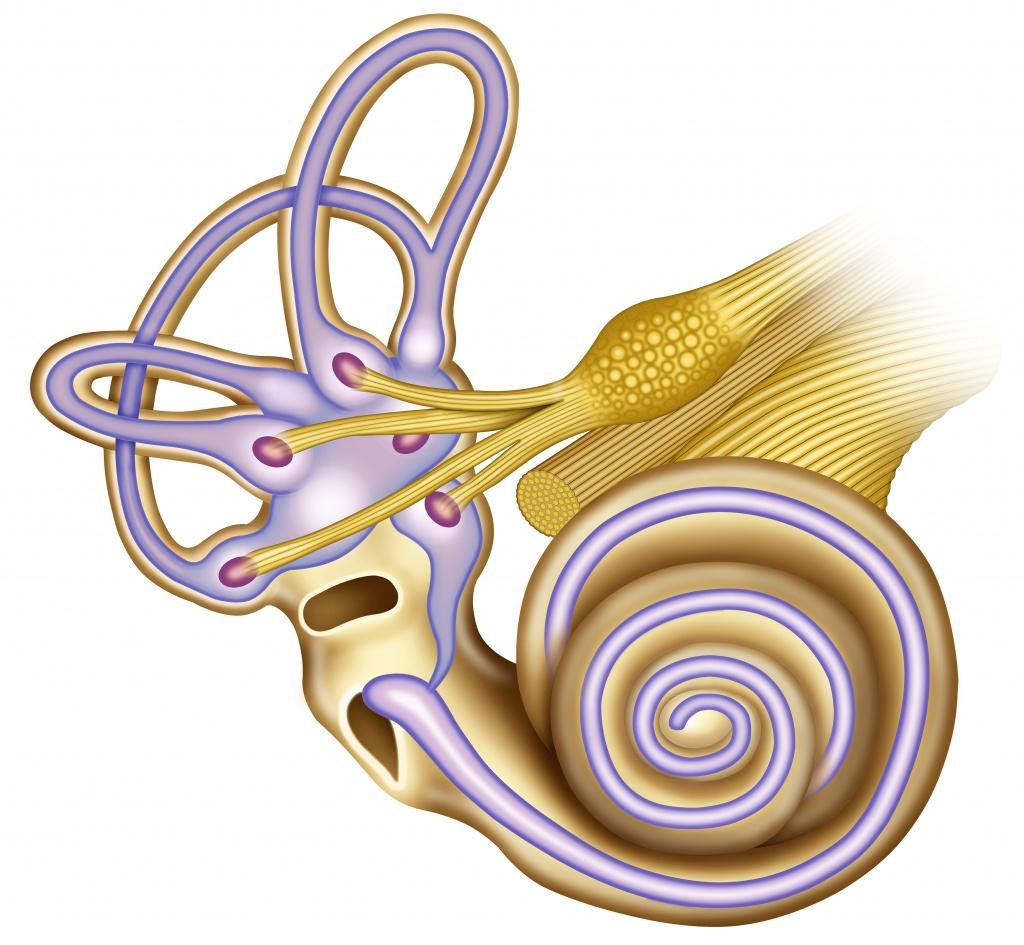
The vestibular system helps the brain understand head movement and maintain balance. It also contributes to stable vision.
When vestibular function is impaired, a person may feel unsteady and notice that objects move during head movement.
Possible causes include disorders affecting the vestibular organs or nerves, certain infections, and damage to the balance system following illness or injury.
Bilateral vestibular dysfunction—when both sides of the vestibular system are affected—is a recognised cause of movement-related bouncing vision.
2. Nystagmus and involuntary eye movements
Nystagmus refers to involuntary, repetitive eye movements. Depending on its type and cause, it may make the visual environment appear to move.
Some people experience oscillopsia even when their head is still because the eyes themselves are moving abnormally.
Nystagmus can be present from birth or develop later in life. Acquired nystagmus warrants appropriate assessment because it can be associated with medication effects, vestibular problems, or neurological disease.
3. Neurological conditions
The brainstem, cerebellum, and other parts of the nervous system help coordinate eye movements, balance, and visual stability.
Conditions affecting these systems can sometimes produce oscillopsia.
Examples include multiple sclerosis and other disorders affecting the nervous system. Stroke and other serious neurological conditions must also be considered when symptoms begin suddenly or occur with additional neurological warning signs.
Having bouncing vision does not automatically mean that a person has a serious neurological disease. It does mean that unexplained symptoms should not be diagnosed through online information alone.
4. Head injury or concussion
A head injury can affect the systems responsible for balance, visual tracking, and coordination.
Some people notice difficulty focusing, dizziness, or unstable vision after a concussion or other head trauma.
If bouncing vision develops after a head injury, seek medical advice promptly. A significant injury or symptoms suggesting a neurological emergency require emergency care.
5. Medication-related effects
Certain medications can affect the vestibular system or eye movements.
For example, some aminoglycoside antibiotics can damage inner-ear structures responsible for balance. Other medicines may contribute to abnormal eye movements or dizziness in particular circumstances.
The relationship depends on the medication, dose, duration of treatment, and individual health factors.
If your symptoms began after starting a medicine or changing a dose, tell your prescribing clinician. Do not stop a prescribed medication without medical guidance.
6. Other medical causes
Some cases may be associated with metabolic problems, vitamin deficiencies, or other conditions affecting the nervous system.
These possibilities cannot be distinguished reliably from symptoms alone. A clinician may recommend blood tests or other investigations when the medical history and examination suggest they are appropriate.
The same visual symptom can have different causes
Bouncing vision may be associated with vestibular dysfunction, involuntary eye movements, medication effects, or neurological conditions. The pattern of symptoms can guide an examination, but it cannot establish the diagnosis on its own.

Oscillopsia vs. Blurry Vision vs. Vertigo
These symptoms can overlap, but they are not interchangeable.
| Symptom | What a person may experience | Important distinction |
|---|---|---|
| Oscillopsia | Stationary objects appear to bounce, shake, or move | The visual environment seems unstable |
| Blurry vision | Objects appear out of focus or lack clarity | The image is unclear rather than necessarily moving |
| Vertigo | A spinning sensation involving the person or surroundings | The main sensation is false movement or rotation |
| Double vision | One object appears as two images | The problem involves seeing duplicated images |
| Lightheadedness | Feeling faint or as though you might pass out | The sensation differs from visual bouncing |
These symptoms may occur together. For example, a vestibular disorder can cause both dizziness and unstable vision.
If you are unsure how to describe your symptoms, explain what you see, when it happens, and whether the problem stops when you remain still.
When Is Bouncing Vision an Emergency?
This is the most important section for anyone experiencing a new visual disturbance.
Seek emergency medical care if sudden bouncing or unstable vision occurs with any of the following:
- New weakness or numbness, particularly on one side of the body.
- Difficulty speaking or understanding speech.
- Sudden inability to walk normally or severe loss of coordination.
- New double vision or sudden loss of vision.
- A sudden, severe headache.
- New confusion, fainting, or other concerning neurological symptoms.
These signs may indicate a serious condition, including a stroke. Do not drive yourself to the hospital.
New, unexplained bouncing vision without these warning signs still warrants prompt medical assessment, particularly if it persists, worsens, follows a head injury, or affects your ability to walk safely.
Do not wait for an online article or home remedy to establish whether a new symptom is harmless.
When bouncing vision needs urgent attention
Sudden visual disturbance with new weakness, difficulty speaking, severe loss of coordination, or sudden double vision may indicate a medical emergency. Seek emergency care rather than waiting for a routine appointment.

How Is Oscillopsia Diagnosed?
The goal of an assessment is to identify why the visual environment appears unstable.
1. Medical history
Your clinician may ask:
- When did the symptoms first begin?
- Did they start suddenly or gradually?
- Does the bouncing occur only when walking or moving your head?
- Does it happen while sitting still?
- Have you experienced dizziness, hearing changes, headaches, or double vision?
- Have you recently had an infection or head injury?
- Have you started a new medication or changed a dose?
These details help determine which causes need to be investigated.
2. Eye and neurological examinations
The clinician may assess visual acuity, eye alignment, eye movements, coordination, balance, and other neurological functions.
The specific examination depends on your symptoms and medical history.
An eye examination can help identify abnormalities in eye movement or other visual problems, but some causes require assessment beyond the eyes themselves.
3. Vestibular and balance testing
When a vestibular problem is suspected, a specialist may assess how the inner ear responds to head movement and how well the eyes compensate.
Further testing may be recommended to investigate vestibular function and balance.
4. Imaging or blood tests
Depending on the findings, a clinician may recommend MRI or other imaging, laboratory testing, or additional specialist investigations.
Not everyone needs every test. The appropriate work-up is based on the suspected cause and the urgency of the symptoms.

What Treatments Can Help Oscillopsia?
Treatment depends on the underlying cause. There is no universal medication, exercise, or supplement that reliably treats every form of oscillopsia.
Treating the underlying condition
If a specific medical condition or medication effect is identified, management focuses on that cause.
For example, a clinician may review potentially contributing medicines, investigate a suspected deficiency, or arrange treatment for an identified neurological or vestibular disorder.
Never begin prescription treatment or change an existing medication on the basis of an online article.
Vestibular rehabilitation
For selected vestibular disorders, a trained clinician may recommend vestibular rehabilitation.
This form of rehabilitation can include individualised exercises designed to improve gaze stability, balance, and tolerance of movement.
The programme depends on the diagnosis, physical abilities, and symptom pattern. Exercises that are appropriate for one vestibular condition may be unsuitable for another.
Do not attempt aggressive head-movement exercises to treat unexplained new bouncing vision without appropriate assessment.
Vision-related treatment
Depending on the underlying disorder, an eye specialist may consider specific optical or other treatments.
For some conditions involving abnormal eye movements, specialised approaches may reduce symptoms or improve visual function. The potential benefits vary by diagnosis.
Ordinary reading glasses, blue-light glasses, and over-the-counter eye drops should not be assumed to correct oscillopsia unless a clinician identifies a separate problem for which they are appropriate.
Practical steps to improve safety
While awaiting assessment:
- Avoid driving if your vision is unstable or you cannot see the road clearly.
- Use handrails on stairs and take extra care on uneven surfaces.
- Sit down if you feel unsteady.
- Improve lighting around steps and walkways.
- Ask someone to accompany you if walking alone feels unsafe.
- Record when the symptoms occur and what other symptoms accompany them.
These measures do not treat the underlying cause. They are intended to reduce immediate risks while you obtain appropriate medical care.
Plug-In Night Light
A night light can improve visibility along a hallway or near stairs at night. It does not treat oscillopsia, but appropriate lighting may help make movement around the home easier.
View options on Amazon →As an Amazon Associate, we may earn from qualifying purchases.
Can Oscillopsia Go Away?
The outlook depends on why it occurs.
Some causes are treatable, and symptoms may improve when the underlying problem is addressed. In selected vestibular disorders, rehabilitation can help improve balance and visual stability during movement.
Other causes may be more persistent and require longer-term management.
It is therefore not possible to predict an individual’s recovery based only on the description of bouncing vision.
A useful first step is to establish the cause, understand which treatments are appropriate, and monitor whether symptoms improve or change.
Questions to Ask Your Doctor
If you are preparing for an appointment, consider asking:
- What conditions could explain my bouncing vision?
- Does the pattern suggest an eye-movement or vestibular problem?
- Do I need a neurological or vestibular assessment?
- Could one of my medications be contributing?
- Would any tests help identify the cause?
- Is it safe for me to drive, exercise, or work while I have these symptoms?
- Would vestibular rehabilitation or another treatment be appropriate?
Bring a list of your medicines and describe the timing of your symptoms as accurately as possible.
Symptom Tracking Journal
A simple notebook can help you record when bouncing vision occurs, how long it lasts, possible triggers, and questions to discuss with your healthcare professional.
View options on Amazon →As an Amazon Associate, we may earn from qualifying purchases.
Frequently Asked Questions
Why does my vision bounce when I walk but stop when I sit down?
One possible explanation is impaired vestibular function. The vestibulo-ocular reflex normally helps keep vision stable while your head moves during walking. If that system is not functioning properly, objects may appear to bounce with movement. This pattern is not diagnostic on its own, so new or unexplained symptoms should be assessed.
Can anxiety cause oscillopsia?
Anxiety can intensify awareness of physical symptoms and may accompany dizziness or other uncomfortable sensations. However, new bouncing vision should not automatically be attributed to anxiety. A clinician should assess the visual disturbance and consider its possible causes.
Is oscillopsia a sign of multiple sclerosis?
Oscillopsia can occur with multiple sclerosis, but it has many other possible causes, including vestibular dysfunction and abnormal eye movements. The symptom alone cannot establish whether someone has multiple sclerosis.
Can oscillopsia be caused by an inner-ear problem?
Yes. The inner ear contains structures that help the brain coordinate balance and eye movements. When vestibular function is impaired, vision may become unstable during head movement.
Should I drive with bouncing vision?
If your vision is unstable, objects appear to jump, or you cannot reliably see road signs, do not drive until you have obtained appropriate medical advice and can do so safely. Sudden symptoms accompanied by neurological warning signs require emergency care.
Which doctor treats oscillopsia?
Depending on the suspected cause, assessment may involve an ophthalmologist, neuro-ophthalmologist, neurologist, or ear, nose, and throat specialist with vestibular expertise. A vestibular rehabilitation therapist may also be involved in selected cases.
Conclusion: Do Not Ignore New Bouncing Vision
Seeing the world bounce when you walk or move your head can be unsettling, especially when you cannot explain why it is happening.
Oscillopsia describes this sensation, but the term alone does not reveal the cause. Problems involving the inner ear, eye movements, the nervous system, and certain medications can all contribute.
The most useful next step is not to guess which condition you have. It is to recognise the symptom, understand when it needs urgent attention, and obtain an appropriate assessment.
If your vision has recently become unstable, arrange medical evaluation promptly. If the change is sudden or occurs with neurological warning signs, seek emergency care.
Your vision should help you move through the world with confidence. When it no longer feels stable, finding the reason is more important than trying to ignore it.
A Note from the Founder
"I started CVT because eye health is personal to me. After losing sight in my left eye due to a childhood injury and managing high intraocular pressure for decades, I’ve dedicated my life to finding the best ways to protect the vision we have. Every piece of advice on this site is researched with that same level of care and responsibility. Thank you for being here."